










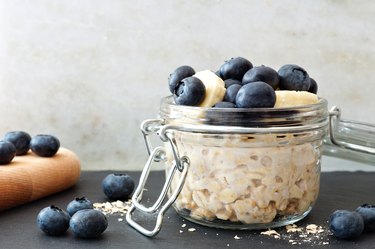













Ghrelin is a hormone that the body uses to stimulate hunger and increase food intake. Ghrelin normally rises prior to a meal and falls shortly after nutrients begin to be absorbed into the body. As you reduce food intake and fat mass while on a diet, ghrelin levels might rise, slowing fat loss and raising the risk of regaining weight. Eating frequently and taking in plenty of nutrients, especially protein, will help you achieve lasting success on your diet.
Identification
Ghrelin is secreted by cells in the stomach and intestines, as well as the hypothalamus in the brain. In addition to stimulating hunger, ghrelin stimulates the release of growth hormone from the pituitary gland, inhibits the release of fat stores for energy and reduces the sensitivity of mechanoreceptors in the stomach that signal once the stomach is full. To regulate hunger, ghrelin acts on receptors in the hypothalamus, known to regulate energy intake and expenditure, as well as the hippocampus and other areas in the limbic system associated with reward and learning.
Dieting and Ghrelin
Although the stimulation of growth hormone levels might help the dieting progress, inhibition of fat utilization can prevent your from meeting your diet goals. Lowering food intake, missing meals and losing fat all increase the amounts of ghrelin levels in the blood. Ghrelin is thought to work in opposition to leptin, a protein produced by body fat that decreases appetite. Obese people tend to have lower ghrelin levels and higher leptin levels. A 2011 study in the "Journal of Clinical Endocrinology and Metabolism" found the lower leptin levels and higher ghrelin levels in obese people predicted successful weight loss but also a lower metabolic rate.
Controlling Ghrelin with Food Choices
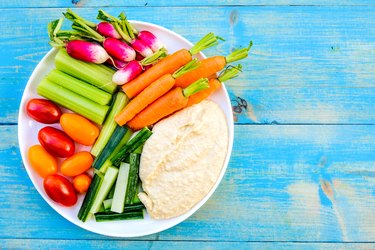
Your body has intricate systems to maintain body weight through feast and famine; you must overcome these systems in order to achieve lasting weight loss. According to a 2002 study in the "New England Journal of Medicine," ghrelin rises significantly with fat loss from diet but not after gastric bypass. This suggests that the fullness of the stomach inhibits ghrelin; eating high-fiber foods such as fruits and vegetables might reduce ghrelin following a meal. A 2011 study in the journal "Metabolism" suggests that high-protein foods also might inhibit ghrelin levels, at least in those with type 2 diabetes.
Overcoming Ghrelin
The best way to continue to control food intake on a diet is to eat smaller controlled portions regularly, not missing meals. A 2011 study in the "Journal of Nutrition" found that although increasing meal frequency did not improve 24-hour ghrelin levels, reducing feeding frequency greatly increased it. The reduction in metabolic rate accompanied by high ghrelin levels can be overcome by increasing physical activity throughout the day and maintaining an exercise routine.
References
- "New England Journal of Medicine"; Plasma Ghrelin Levels after Diet-Induced Weight Loss or Gastric Bypass Surgery; Cummings et al.; 2002
- Colorado State University: Ghrelin; R. Bowen; October 11, 2009
- "Journal of Nutrition"; The Effect of Eating Frequency on Appetite Control and Food Intake: Brief Synopsis of Controlled Feeding Studies; Leidy and Campbell; 2011
- "Obesity Facts"; Ghrelin: New Molecular Pathways Modulating Appetite and Adiposity; Nogueiras, Williams and Dieguez; 2011
- "Journal of Clinical Endocrinology and Metabolism"; Role of Baseline Leptin and Ghrelin Levels on Body Weight and Fat Mass Changes After an Energy-restricted Diet Intervention in Obese Women: Effects on Energy Metabolism; Labayen et al.; 2011
- "Metabolism"; Effect of a High-protein Diet on Ghrelin, Growth Hormone, and Insulin-like Growth Factor-i and Binding Proteins 1 and 3 in Subjects with Type 2 Diabetes Mellitus; Gannon and Nuttall; 2011


Member Comments