



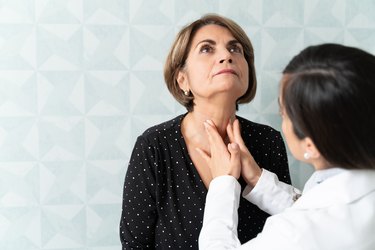











Phytoestrogens, or plants with estrogenic properties, have been used to treat symptoms of menopause such as hot flashes. Just like soy, these herbs contain isoflavones, which are plant chemicals that cause estrogen-like effects in your body. Evidence that plants with estrogenic properties help alleviate menopausal symptoms is mixed, however, and side effects and safety concerns exist, according to University of Maryland Medical Center. Always talk to a doctor before trying a new supplement.
Herbs
Herbs with estrogenic properties commonly used to relieve menopausal symptoms include ginseng, dong quai, licorice root and black cohosh. Other herbs that have estrogenic activity include alfalfa, chaste tree berry, flax, verbena, motherwort, damania, hops, oregano and thyme.
Effects
Phyotestrogens don't all work the same in your body. Some -- such as licorice, red clover, dong quai, black cohohsh, damania, motherwort and verbena -- bind to estrogen receptors and have estrogen-promoting effects. Others, including oregano and thyme, actually act estrogen inhibitors, which some diets emphasize to combat exposure to environmental estrogens. Estrogen inhibitors also may help inhibit estrogen-sensitive tumors, though more research is needed, according to "The Anti-Estrogenic Diet," by Ori Hofmekler and Rick Osborn. Some herbs with phytoestrogens, such as red clover and licorice, also may inhibit progesterone.
Considerations
Because there is no strong scientific evidence that herbs with estrogenic properties provide benefits for menopausal women, and due to the potential for adverse effects, you should use caution in taking herbs with estrogenic properties, recommends P. Amato, lead author for a 2002 study published in the journal "Menopause." Phytoestrogens that promote estrogen in your body may increase the effects of estrogens prescribed by your doctor, including birth control pills and hormone replacement therapy. If you have a hormone-sensitive condition such as breast cancer you should not use herbs that may have hormonal effects, note George T. Grossberg and Barry Fox, authors of "The Essential Herb-Drug-Vitamin Interaction Guide." For example, the estrogenic effects of some herbs, like black cohosh, can raise your risk for breast cancer metastis. Herbs with phytoestrogens also may cause side effects. For example, red clover can lead to rashes, headaches and nausea. Chaste tree berry can cause depression, appetite loss, a rash and diarrhea. Black cohosh can cause vomiting, nausea and diarrhea and may adversely affect your liver. All herbs carry the potential for allergic reactions. Talk to your doctor before taking any herbal supplement.
Forms
Herb that contain phytoestrogens come in many forms. You will find pills, teas, infusions, fluid extracts and tinctures. The quality of your herbs varies; there is no regulation of herbs in the United States, notes "Menopause Answer Book," author Marsha Lynn Speller. Speller recommends tinctures as the most effective method for taking herbs.
References
- "Menopause"; Estrogenic Activity of Herbs Commonly Used as Remedies for Menopausal Symptoms; P. Amato, et al.; 2002
- "The Essential Herb-Drug-Vitamin Interaction Guide"; George T. Grossberg and Barry Fox; 2007
- "Menopause with Science and Soul"; Judith Boice; 2007
- "The Anti-Estrogenic Diet"; Ori Hofmekler and Rick Osborn; 2007
- University of Maryland Medical Center: Red Clover
- "Menopause Answer Book"; Marsha Lynn Speller; 2004


