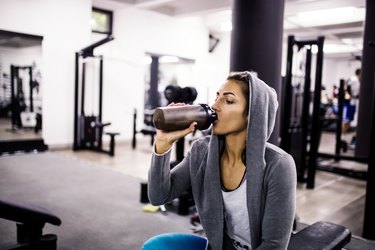
If you're feeling thirsty, you may be dehydrated. When it comes to replenishing your fluid losses, you may wonder whether you would be better off with plain water or Gatorade for dehydration. Well, that depends, but in most cases, water makes the best choice for rehydration.
Dehydration occurs when a person loses more fluid from his body than he takes in. Symptoms include, but are not limited to, having a dry, sticky mouth; tiredness or lethargy; thirst; muscle weakness; headache; and dizziness or lightheadedness. Drinking water or sports drinks regularly can help to prevent and treat mild dehydration, but there is some dispute as to which is better.
Video of the Day
Video of the Day
Read more: How to Tell if You Are Dehydrated
Possible Causes of Dehydration
The causes of dehydration range from simply not hydrating enough during hot weather or exercise to fluid loss that occurs as a result of illness, such as with vomiting, diarrhea and fever. Thirst occurs naturally when you are sweating due to climate or exercise, and it is generally a good guide to use when measuring fluid intake.
Chronic dehydration can also affect blood glucose levels, causing them to spike, especially if you have diabetes.
When illness occurs, however, thirst may not be a factor; therefore, it's important to take in fluids regardless of whether you feel thirsty. Even when vomiting occurs, it's important to rehydrate with as much fluid as often as possible.
Dehydration Due to Illness
Drinking water is a safe, healthy treatment for dehydration caused by symptoms of illness in adults. Other fluids, including fruit juices or carbonated and caffeinated beverages, may actually worsen diarrhea, furthering a person's dehydrated state.
Gatorade Benefits
Loss of water due to sweating because of climate conditions or exercise can lead to mild dehydration. It was for this purpose that Gatorade was invented in the 1960s by a group of scientists at the University of Florida. Gatorade is essentially flavored water that contains sodium, a key electrolyte lost when you lose water.
Hydrating with Gatorade vs. water before and during a sporting event has been shown to increase a player's level of endurance and strength during play. However, there is little evidence that Gatorade is more beneficial than water when treating dehydration caused by anything other than sweating.
Read more: How to Hydrate When Dehydrated
Special Considerations for Children
Children are at higher risk for more severe forms of dehydration. When a child becomes sick, her body is less likely to recover from the rapid fluid loss that occurs from fever, vomiting and diarrhea.
Rehydration products may help children with illnesses, to help prevent and treat dehydration. However, Gatorade is not designed to replace fluids lost due to illness and is not recommended to prevent or treat dehydration in sick children.
Special Considerations for Older People
Older people are more susceptible to dehydration due to a number of factors, including decreased thirst; changing water metabolism; loss of physical and/or mental autonomy; illnesses characterized by tremor, such as Parkinson's disease; fear of incontinence; and weight loss.
Water is ultimately the best way to stay hydrated for older people, although Gatorade could be used to stimulate thirst due to its sodium content. Older people should drink small amounts continuously throughout the day, not a massive amount all at once.
Read more: Pros and Cons of Gatorade