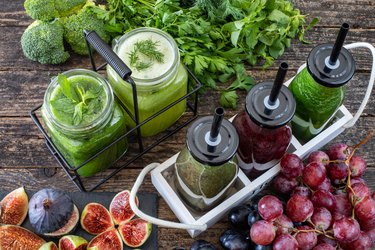
Juicing raw vegetables is a quick and easy way to get more vital nutrients into your body. Raw vegetable juice offers many benefits, but shouldn't replace whole vegetables or other healthy foods in your diet.
Tip
Raw vegetable juice complements a healthy diet and helps promote a healthy gut and heart.
Video of the Day
Benefits of Raw Vegetable Juice
Drinking raw vegetable juice offers a number of general benefits to your overall health. With freshly juiced veggies, you increase your consumption of this essential food group. The Centers for Disease Control and Prevention reported in November 2017 that only one in every 10 adults meets the federal fruit or vegetable guidelines.
Video of the Day
Through vegetable juice recipes that include lots of colorful varieties, such as greens, carrots and beets, you improve your intake levels. You should still strive to eat plenty of whole veggies too, as they offer fiber that slows digestion so you stay full longer and help keep your digestive tract moving.
If you often buy a lot of vegetables with the hope of increasing your intake but find they only go bad in your fridge, turn to juicing. Juicing raw vegetables is a great way to use up your extra produce so the nutrients flood your body, rather than the trash.
Read more: Do I Eat While Juicing?
When it comes to nutrients, raw vegetables are full of them. These include antioxidants, vitamins, minerals and phytonutrients. The vast nutrients provided by vegetables help reduce inflammation and improve your immune response.
Consuming more of these plant-based compounds, write researchers in a review published in the European Journal of Nutrition in January 2016, helps reduce complications from cardiovascular disease and reduces your risk of developing high blood pressure, osteoporosis, overweight and obesity, dementia and some cancers.
Warning
Although raw vegetable juice complements a complete, healthy diet, the National Center for Complementary and Integrative Health strongly recommends against using raw vegetable juice for a “detox” or “cleanse” program. The programs usually tout consuming juice only and no other food for an extended period of time. No research supports claims that such plans can support long-term health or toxin reduction.
Raw vegetable juice is only as healthy as the produce you put into it, too. Make sure you use ripe vegetables without bruising or signs of mold. The U.S. Food and Drug Administration also advises you to wash your produce thoroughly, even if you plan to peel it, before juicing.
Juicing Boosts Your Gut Microbiome
Your gut contains bacterial cells that make up what's known as your gut microbiome. The quality of these cells directly affects your digestion and good health. Imbalances in your gut microbiota can cause gastrointestinal conditions, including inflammatory bowel disease, and are linked with conditions including obesity and Type 2 diabetes, explains a review published in Integrative Medicine in December 2014.
The benefits of vegetable juice in the morning — or, frankly, any time of day — may be that it boosts the integrity of your gut microbiota. Vegetable juice, explains research published in May 2017 in Scientific Reports, provides polyphenols, nitrates and oligosaccharides, which may have a prebiotic-like effect. Prebiotics are plant fibers that encourage the growth of healthy bacteria in your gut.
In this research, the scientists found that a three-day juice-based diet altered the microbiota in the intestine to make it more amenable to weight loss and fat oxidation. Stabilizing your gut microbiome improves your overall health.
Vegetable Juice for Cardiovascular Health
Eating more vegetables can reduce your risk of cardiovascular disease, as they contain vitamins and essential polyphenols. Research in the International Journal of Molecular Science published in March 2017 shows that drinking vegetable juice can positively affect cardiovascular risk factors.
Vegetable juice recipes that contain a wide variety of produce may be most beneficial, the scientists conclude, because they contain a variety of vitamins, minerals and other nutrients to maximize the cardiovascular benefits.
A paper in Current Pharmaceutical Design published in December 2018 explain a little more about the heart-healthy effects of polyphenols found in vegetables (and their juice) as well as in fruits, legumes, chocolate and some beverages such as coffee and wine. The researchers confirmed that polyphenols have the ability to ameliorate cardiovascular risk factors by helping to lower blood pressure, improve blood vessel function and reduce inflammation.
Some of the best raw vegetables to juice to benefit from polyphenols include spinach, lettuces and carrots, explains research in Nutrients in June 2019.
- U.S. Food and Drug Administration: "Safe Handling of Raw Produce and Fresh-Squeezed Fruit and Vegetable Juices"
- Scientific Reports: "Health Benefit of Vegetable/Fruit Juice-Based Diet: Role of Microbiome"
- International Journal of Molecular Sciences: "Effects and Mechanisms of Fruit and Vegetable Juices on Cardiovascular Diseases"
- National Center for Complementary and Integrative Health: "'Detoxes' and 'Cleanses': What You Need To Know"
- Centers for Disease Control and Prevention: "Only 1 in 10 Adults Get Enough Fruits or Vegetables"
- European Journal of Nutrition: "Increasing Vegetable Intakes: Rationale and Systematic Review of Published Interventions"
- Integrative Medicine: "Part 1: The Human Gut Microbiome in Health and Disease"
- Current Pharmaceutical Design: "Polyphenols: Potential Use in the Prevention and Treatment of Cardiovascular Diseases"
- Nutrients: "Systematic Review on Polyphenol Intake and Health Outcomes: Is There Sufficient Evidence to Define a Health-Promoting Polyphenol-Rich Dietary Pattern?"