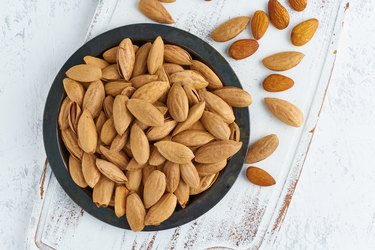
Nutrient-rich almonds are recommended as part of a heart healthy diet. If you have acid reflux, you may wonder if you can eat almonds for heartburn or worry that they might aggravate your symptoms. Almonds have beneficial properties — nuts are a good source of fiber and also help control appetite.
Almonds are also a low-acid food, which might play a role in acid reflux symptom management. However, almonds are high in fat, which may worsen symptoms in some people, and if you're allergic, you should avoid almonds.
Video of the Day
Video of the Day
Ultimately, pay attention to your symptoms to determine how this nutritious nut fits into your acid reflux diet plan. According to Mayo Clinic, symptoms of acid reflux can include burning in the chest — particularly after eating, difficulty swallowing and regurgitation of food.
Almonds and Acid Reflux
Acid reflux occurs when the lower esophageal sphincter, located at the top of the stomach, does not close properly and the stomach contents back up into the esophagus and throat. These stomach contents can be very acidic, and when regurgitated, can cause pain and discomfort.
You may have heard that almonds can help with acid reflux. While almonds have many health benefits, there is lack of quality research specifically pertaining to almonds and acid reflux. However, based on their nutrition profile, almonds could have a positive impact on acid reflux disease.
Consider the Benefits of Almonds
According to 2013 clinical guidelines published by the American College of Gastroenterology (ACG), losing weight is a key lifestyle strategy to prevent or improve acid reflux. A June 2014 review published in The American Journal of Clinical Nutrition concluded that despite their fat content, nuts may enhance weight loss when part of a reduced calorie diet.
Nuts help control appetite, one of the reasons for this benefit, since calorie intake is reduced after eating nuts. Eating a handful of almonds daily may indirectly help acid reflux if part of a successful weight loss plan.
Eating foods high in fiber can also prevent constipation. While this may not directly help acid reflux symptoms, fiber can help achieve normal bowel movements, easing digestive symptoms such as bloating and abdominal discomfort.
Include Alkaline Foods
Almonds, as well as almond butter and almond milk, are relatively alkaline foods, especially when compared to higher acid foods such as tomatoes, onions and citrus fruits. According to the International Foundation for Gastrointestinal Disorders, acidic foods may irritate the already inflamed esophagus and limiting these foods may benefit some acid reflux sufferers.
In addition, eating lower acid foods may reduce acidity of the stomach contents, so if reflux occurs, less irritation and damage takes place. Although quality research is not available on the benefits of a low-acid diet in acid reflux management, some people may find symptom relief when they eat lower acid foods.
Avoid Potential Problems
Because of a lack of research showing improvement in symptoms, ACG's clinical guidelines do not recommend the inclusion of specific foods to help acid reflux, nor do these guidelines support universal avoidance of common trigger foods such as acidic or high fat foods. While almonds may have helpful properties, they're also a significant source of fat — and fat delays stomach emptying.
The contents of a full stomach are more likely to reflux up into the esophagus, so large amounts of almonds or any nuts could worsen your symptoms. Also, eating large quantities of almonds or almond butter right before bed can pose a problem — nighttime acid reflux is more likely if you eat within two to three hours of bedtime.
Read more: 4 Unwanted Side Effects of Eating Too Many Almonds
Take These Precautions
According to the International Foundation for Gastrointestinal Disorders, being overweight can make reflux worse. Diet and lifestyle measures such as weight reduction may be the first level of treatment to improve your acid reflux.
In addition, acid-blocking medications are commonly used to manage symptoms. Beyond these basics, through tracking your symptoms, you may be able to identify foods that improve or worsen your acid reflux. Almonds and other nuts can be a healthy addition to your diet if you tolerate them and eat moderate portions.
However, tree nuts, including almonds, are a common cause of food allergies, which could lead to a fatal reaction. If almonds have not been a part of your diet in the past, a slow introduction may be wise. If your reflux symptoms are severe or frequent, work with your doctor on a management plan. Acid reflux can lead to serious health problems if untreated.
- American College of Gastroenterology: "Diagnosis and Management of Gastroesophageal Reflux Disease"
- The American Journal of Clinical Nutrition: "A Review of the Effects of Nuts on Appetite, Food Intake, Metabolism, and Body Weight"
- Mayo Clinic: "Gastroesophageal Reflux Disease (GERD)"
- International Foundation for Gastrointestinal Disorders: "Diet Changes for GERD"
- International Foundation for Gastrointestinal Disorders: "Diet & Lifestyle Changes"
Is this an emergency? If you are experiencing serious medical symptoms, please see the National Library of Medicine’s list of signs you need emergency medical attention or call 911.