













































Heart Rate During a Bikram Yoga Class

Heart Rate During a Bikram Yoga Class
Photo Credit Jupiterimages/Photos.com/Getty Images

The 105-degree Fahrenheit heat of a typical Bikram hot yoga class facilitates stretching and induces an elevated heart rate as your body circulates extra blood to the skin's surface to keep itself cool. Founder Bikram Choudhury said that the heat component mimics the climate of his native India and helps detoxify yogis' bodies through sweat. The way you practice, among other factors, determines how high your heart rate goes during the 90-minute sequence.

Aerobic Intensity

Bikram yogis perform Choudhury's copyrighted 26-posture beginner series using the same sequence every time. Theory holds that each posture builds on the one that preceded it and prepares your body for the next one in an orderly, scientific manner. Bikram Yoga Decatur estimates that students raise their heart rates to aerobic levels "for at least 20-25 minutes, depending on your level of effort" and can burn 600 calories or more. Hot Yoga on 17th in Calgary provides a chart showing that 115-pound, 38-year-old woman achieved an average heart rate of 138 beats per minute in a 90-minute "traditional hot yoga" class, although it's unclear whether that class used the official Bikram sequence because studios unlicensed by Bikram headquarters may not use the Bikram name and usually make small modifications to their hot yoga classes.

Cardio-intensive Postures

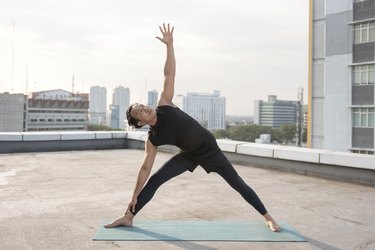
The postures of the standing series, which constitute roughly the first half of class, make the most demands on your cardiovascular system and are designed to elevate the heart rate for maximum internal heat. Bikram yogis try to hold balancing postures such as Standing Head to Knee Pose and Standing Bow Pulling Pose, for example, for an initial set lasting 60 seconds and a second set that lasts 30 seconds. Heart rate further increases through Balancing Stick pose until it peaks in Triangle Pose, which Bikram theory considers the "summit" of the standing postures. The following pose, Standing Separate Leg Stretching Pose, lowers the head below the heart to moderate your heart rate, and the second half of class consists of postures you perform while either lying or sitting on the floor. The floor postures are intended to focus less on heart rate and more on deep, internal work.

Target Heart Rate

By working hard in the postures, you can increase your heart rate for greater potential fat burn or cardiovascular conditioning. Strive to hold the postures until the teacher releases you, and focus on full contraction of the relevant muscles, particularly in balancing postures that require a locked knee. Your maximum heart rate is 220 minus your age for men; 226 minus your age for women. Working at 60 percent to 70 percent of that number will enable you to burn fat, and 70 percent to 80 percent gets you to cardio territory.

Considerations

There is no prohibition against bringing a heart monitor to a Bikram yoga class, and some students have been known to do so, particularly pregnant women. In his book "Bikram's Beginning Yoga Class," Choudhury recommends that people with heart health or high blood pressure issues practice Bikram yoga only with a doctor's approval. He also advises such patients to hold each posture for only five counts at a time, resting and repeating as necessary for the recommended duration of the pose. If these considerations apply to you, let your Bikram instructor know prior to class. As with any exercise, stop practicing and check with your doctor if you experience chest discomfort, nausea, pronounced dizziness or related symptoms.

References

Article reviewed by Jenna Marie Last updated on: Sep 6, 2011

Must see: Photo Galleries

Member Comments