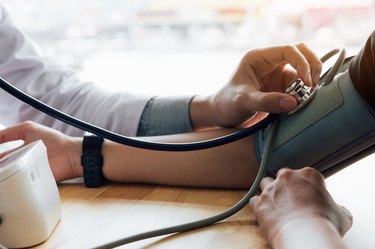
Blood pressure drugs can definitely be lifesavers. But they also come with side effects, complicating the adoption of any blood pressure drug regimen. And if someone accidentally or intentionally takes more medication than they're supposed to, the result could be dangerous.
Side Effects Can Occur
Video of the Day
"Any time you take any medication, you are at risk for having side effects," notes Willie E. Lawrence Jr., MD, chief of cardiology for Midwest Heart & Vascular Specialists in Kansas City, Missouri. "That's always a possibility."
Video of the Day
Even when taken exactly as prescribed, blood pressure drugs can sometimes trigger weakness, fatigue, dizziness, fainting and a dry cough, notes Harvard Health Publishing. The U.S. National Library of Medicine (NLM) further cites diarrhea, constipation, nervousness, headaches, nausea, skin rash, erection problems and weight changes as additional possible concerns.
That said, not everyone will experience all, or even any, side effects. But Gregg Fonarow, MD, director of the Ahmanson-University of California Los Angeles Cardiomyopathy Center, cautions that, in general, "excess dosing of blood-pressure-lowering medications can lower blood pressure and cause symptoms like dizziness or passing out."
"And, if blood pressure remains low for a prolonged period, this can damage the kidneys and other organs," he notes.
Read more: What is Normal for Blood Pressure?
Risks With Certain Drugs
The various kinds of blood pressure drugs carry different risks.
Diuretics. Sometimes referred to as water pills, diuretics are popular because they effectively help reduce arterial wall pressure by helping the kidneys excrete excess salt (sodium) and water, the American Heart Association (AHA) notes.
Examples include chlorthalidone (Hygroton), chlorothiazide (Diuril), hydrochlorothiazide (Esidrix and other brands), indapamide (Lozol) and metolazone (such as Mykrox).
Dr. Lawrence points out that "if a patient takes a diuretic for high blood pressure control, there's a risk for triggering dehydration." In turn, dehydration can increase the risk for issues ranging from minor headache to heat stroke, the AHA warns. Diuretics can also cause excessive urination, notes Harvard Health.
Beta-Blockers. These drugs lower blood pressure by blocking the effects of epinephrine (also known as adrenaline), thereby reducing your heart rate and blood output. The AHA warns that these medications can also trigger insomnia, depression and cold hands and feet, and both the AHA and Harvard Health highlight erectile dysfunction as another concern. The U.S. National Library of Medicine warns that taking too much of a beta-blocker can result in poisoning.
Examples include drugs such as acebutolol (Sectral), atenolol (Tenormin), metopolol (including brands like Lopressor) and bisoprolol (Zebeta).
Calcium Channel Blockers. This type of blood pressure medication helps to relax arteries by blocking calcium from clogging up the heart and its pathways. By keeping calcium from entering the smooth muscle cells of the heart and arteries, your heart rate is reduced and your blood pressure lowered. However, Harvard Health notes that they can also provoke leg swelling, in which case you should consult your doctor.
Examples, according to the AHA, include amlodipine besylate (such as Norvasc), bepridil (Vasocor), diltiazem hydrochloride (including brands such as Cardizem CD and SR), felodipine (Plendil) and isradipine (DynaCirc).
ACE Inhibitors. The way that ACE inhibitors lower blood pressure is by blocking a chemical that causes arterial narrowing, the AHA explains. But Harvard and AHA experts warn that these drugs can give rise to a chronic cough, a skin rash, a loss of taste and even kidney damage. In addition, taking excessive amounts of an ACE inhibitor can lead to a dangerous build-up of potassium, according to the University of Maryland Poison Center.
Examples of ACE inhibitors include benazepril hydrochloride (Lotensin), captopril (Capoten), enalapril maleate (Vasotec) and fosinopril sodium (Monopril).
Read more: How the DASH Diet Can Lower Blood Pressure
Bottom Line on Blood Pressure Medications
The good news is "if you take any of these blood pressure drugs as prescribed, there is almost zero risk that you will overdose," Dr. Lawrence says.
"Blood pressure medications are never given on an 'as needed' basis," he notes. "You are always instructed to take the same dose of whatever drug you're prescribed every single day. And if you do that, you will stay safe."
Read more: 5 Effects of High Blood Pressure
- Willie E. Lawrence Jr., MD, FAHA, FACC., chief of cardiology, Research Medical Center, Midwest Heart & Vascular Specialists, Kansas City, Missouri
- Gregg Fonarow, MD, director of the Ahmanson-University of California Los Angeles Cardiomyopathy Center
- Harvard Health Publishing: "Controlling Blood Pressure with Fewer Side Effects"
- American Heart Association: "Types of Blood Pressure Medications”
- American Heart Association: "Staying Hydrated - Staying Healthy"
- Mayo Clinic: "Choosing Blood Pressure Medications"
- U.S. National Library of Medicine: "Beta-blockers Overdose"
- Maryland Poison Center: "ACE Inhibitor Overdoses"
Is this an emergency? If you are experiencing serious medical symptoms, please see the National Library of Medicine’s list of signs you need emergency medical attention or call 911.