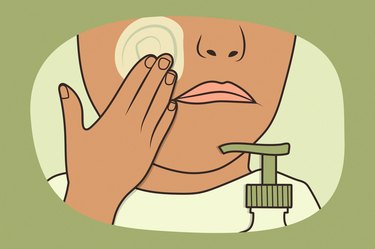
Clay treatments for facial imperfections are about much more than playing in the mud. This natural compound can be used to rid the face of impurities related to acne, excess oil production and dead skin buildup. Different types of clay have different beneficial properties, therefore picking the right kind for acne-prone skin will help you experience the best results possible.
Significance
Natural clay is rich in minerals and enzymes, which can enhance the skin's appearance. The enzymes can cause chemical reactions in the skin, such as enhanced circulation, as well as the removal of dead skin cells that can build up on acne-prone skin and cause pimples, blackheads or whiteheads. Minerals also help to rid the face of dirt and other impurities, which can improve the skin's appearance.
Types
Clay is in a number of acne treatments, ranging from spot treatments to creams, cleansers and lotions. Perhaps its best-known use is in clay masks, which are often called "mud" masks. You can apply the clay to facial acne and body acne. Green or red clays are age-old beauty treatments for problem skin, while other types, such as white or pink clays, are useful for more sensitive skin types.
Effects
Clay's natural properties make it a good treatment for acne. Because clay acts as a natural drying agent, it helps to pull acne-causing oil and dirt out of the pores. The clay absorbs the oils, resulting in smoother, less oily skin. Clay also has exfoliating properties, meaning it helps to rid the skin of dead skin cells. Because these cells can block the pores, just as oil and dirt can, it is useful for clearing acne.
Safety
Because clay is a natural substance, it is considered safer and gentler on the skin than products that contain chemical ingredients or acids. Clay's natural detoxifying properties allow it to reduce acne's appearance while not damaging the skin. However, because it does have drying properties, use a moisturizer following application.
Recommended Uses
Because clay treatments are natural, they are considered safe for daily use, providing you don't not experience excessive dryness--which can result in more frequent breakouts because the face produces more oil to compensate. Clay is often mixed with other chemicals or compounds, so thoroughly read any ingredients list and directions for recommended use before using a clay product.


Member Comments