










Although tofu alone can be bland, it absorbs spices and other flavors well, which makes it a good addition to stir fries and other dishes, such as kabobs. Kabobs originated in Turkey with lamb skewered and grilled. Today's kabo...
While many types of protein powders are available -- milk protein, beef protein and soy protein, for example -- you may find vegetable protein preferable if you're vegetarian, are lactose intolerant or simply enjoy the taste. A...
Kosher dills are pickled cucumbers with garlic and dill flavors. Kosher dills get their name from their roots in Jewish neighborhoods of New York, and not because they have been prepared under supervision of a rabbi according t...
Using a juicer is a way to create vegetable juice, and many recipes are available that allow you to mix and match different vegetables, increasing the nutrition you get from your juice. Good choices include beets, carrots, bell...
Generally formed into patties, vegetable egg foo young imparts nutritional value that includes macronutrients like protein and carbohydrates. You also take in vitamin C, a critical nutrient for your health.
In many cases, some of the produce commonly blended to form vegetable juice is not technically a vegetable at all. Tomatoes, for example, are a prominent vegetable juice ingredient, but they are actually fruits. However, the ac...
Dill is a familiar aromatic herb used to flavor dishes such as dill pickles, salads, soups and cucumbers. Along with being tasty and attractive, fresh dill weed is high in a variety of essential nutrients. For the most health b...
The Chinese use a number of vegetables in their cuisine. Knowing the nutritional information for some of these vegetables may inspire you to substitute one of these healthy choices for your usual vegetable repertoire.
Edo sushi, which refers to raw fish and rice, is the sushi with which Americans are most familiar. Fish is often an ingredient in Japanese sushi, but vegetarian rolls are also available. These rolls usually include a combinatio...
Many vegetables work well in the grill and most contain plenty of nutrition as well. The exact amount of nutrients in a vegetable skewer varies depending on which vegetables you use. Good choices include squash, potatoes, mushr...
You may think of dandelions as uninvited weeds in your yard, but they have a long history as a medicinal herb. Dandelions are also called lion's tooth and swine's snout, according to the University of Maryland Medical Center. T...
Like other brightly colored fruits and vegetables, tomatoes provide a wealth of nutrition -- including age- and cancer-fighting antioxidants -- with very few calories and fat grams. Tomatoes and tomato products such as pasta sa...
Rainbow chard, sometimes sold under the name "Bright Lights," is a mixture of chard varieties with red, orange, yellow or white colored stalks. Use highly nutritious rainbow chard as you would spinach. The mildly flavored le...
Sayur kari contains coconut milk, peanut oil, potatoes, onions, cabbage and a variety of Indian spices. Sayur kari is calorie-dense due to the inclusion of the coconut milk and peanut oil, and the vegetables in the dish provide...
Most people either love onions or hate them, because their flavor is strong and their smell is stronger. Whatever type is your favorite, onions are nutritionally beneficial and contain fiber, protein and minerals. They also del...
Root vegetables aren't the most flavorful bunch, but their natural sweetness emerges when you roast them and they soften and begin to caramelize. They make an especially suitable side dish when the higher price of other vegetab...
Getting your children to eat their vegetables may be challenging at times, but the key to improving your child's intake is to set a good example and to keep vegetables readily available. Vegetables provide your children with a ...
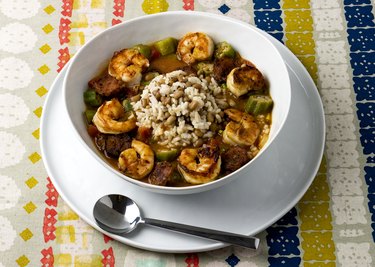
Okra is a pod vegetable that is most commonly used to prepare gumbo. Pickling it is another popular way to eat okra. Okra contains several nutrients that support good health. Look for fresh okra in the fall during harvest seaso...
Department of Agriculture. Topping your pizza with vegetables instead of meat can reduce calories and increase your pizza's nutritional value. But pizza can still be high in calories, fat and sodium. Knowing the nutrition infor...
Jicama, which resembles a turnip, is also known as the yam bean or Mexican potato, and is common in Latin American cooking. You may eat this vegetable raw as a crisp snack -- it has a flavor similar to the water chestnut -- or ...
Parsnips are a member of the umbelliferae family of vegetables, related to carrots, fennel, celeriac and parsley root. This creamy white root vegetable is low in calories, fat and sodium, naturally cholesterol-free, and high in...
You can enjoy these pods as part of a main dish, or as a vegetable side dish. You'll find this vegetable works as a "powerhouse of valuable nutrients," reports the University of Illinois. Specific nutrition facts varies dependi...
Knorr Vegetable Soup is a convenience food, a dehydrated soup available in 1.4-oz. packets containing enough to make four servings, or in 19-oz. canisters.
It contains dehydrated vegetables, including carrots, onions, tomatoe...
While it is true that many white foods, such as white bread and baked goods, are full of empty calories, not all white foods are void of nutrients. Cauliflower, for instance, is a white vegetable that provides a variety of nutr...
Most yams sold in the United States are grown in the Caribbean and imported. There are over 150 varieties of this starchy vegetable, with interior colors ranging from white, to purple, to brown. Some varieties are sweeter than ...
Veggie kabobs make an excellent appetizer for a summer barbecue or even a light main dish that's full of both flavor and nutritional value. They're also a versatile choice: with the bounty of summer vegetables available at farm...
Tomatillos, also called husk cherries and tomato verde, resemble a tiny, green tomato, but the flavor could not be more different. The tart taste is more reminiscent of an herbed lemon. Mexican cuisine commonly utilizes the tom...
However, you should always rinse bagged spinach in case it has been contaminated with a food-borne pathogen. A serving of Dole baby spinach is 3 ounces, which equates to 1 1/2 cups. Other brands' nutrition information may vary ...
Spices sometime find their way into the pickling mix as well. This dish has been eaten for thousands of years, although it is thought to have been brought to America by the Pennsylvania Dutch settlers in the 1700s. Sauerkraut i...
Habanero peppers typically range from 100,000 to 300,000 Scoville heat units, which means this is one hot pepper; it is among the hottest available chiles. The habanero, meaning "from Havana," is native to Cuba, but you can gro...
Escarole, a broad-leafed endive variety, resembles radicchio but imparts a less bitter taste. This cool weather vegetable, sometimes called Batavian endive or scarola, can be added to salads when it is picked young. More mature...
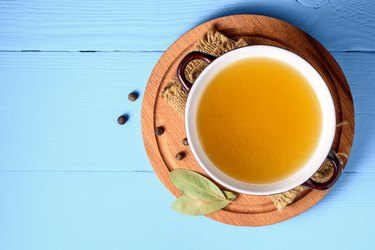
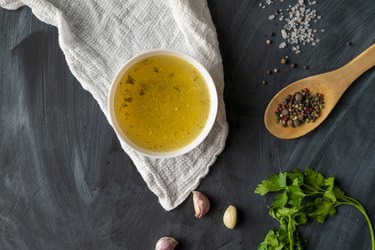
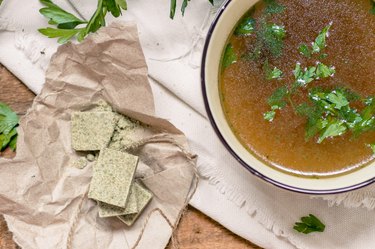
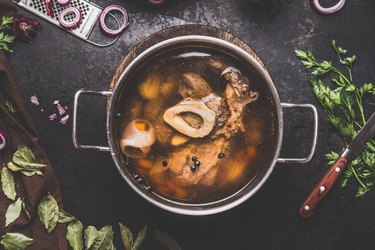
Vegetable broth is an excellent kitchen staple. It adds an interesting flavor when used in place of water when making pasta, rice, and crackers, or when cooking vegetables.
Nothing says Italian like a serving of lasagna with its layers of noodles, cheese, tomato sauce, vegetables and meat. But most lasagnas contain high amounts of calories, fat and sodium. You may consider choosing a vegetable las...
Lo mein refers to a Chinese noodle dish. It features a soft wheat noodle stir fried with vegetables, soy sauce, hoisin sauce, ginger and other spices. Vegetable lo mein may be a tasty way to eat more vegetables, but it can be h...
For vegetarians, vegans and people who are trying to cut back on red meat, textured vegetable protein, or TVP, is a useful and delicious addition to a healthy diet. However, while its nutritional benefits are plentiful, there a...
Consume approximately nine to 13 servings of fruits and vegetables a day to meet the U.S. Department of Agriculture's recommended guidelines. Vegetables are generally low in calories, promote weight loss and should be a fundame...
While this root vegetable is available all year round, the best harvest for jewel yams occurs from September through March. This vegetable has an orange flesh with a darker orange skin. The nutritional value of jewel yams makes...
Radishes are a type of root vegetable that has a skin of red, purple or white and a crisp white interior. Related to mustard, radishes may have a peppery bite or may have a mild flavor, depending on the variety. Raw radishes ca...
A freezer stocked with frozen vegetables and a cupboard packed with canned vegetables make it easy for a family with a full schedule to get their daily requirements for veggies and the nutrition benefits they offer.
Chickpeas are a vegetarian source of protein. One cup supplies more than 25 percent of the dietary reference intake, or DRI, for protein as well as more than 40 percent of the DRI for fiber. Percentages listed are for adults yo...
Drying is the oldest form of food preservation. Freshly picked vegetables contain more nutrients than any preserved form of the same product, however, drying the produce for storage retains many vitamins and minerals which woul...
Picked 15 to 35 days after planting instead of the 40 days or more that normal spinach requires, baby spinach tends to be smaller, sweeter and more tender. The nutritional content is typically the same as more mature spinach. T...
If you plan to eat the veggies, this is bad. If you plan to use the liquid, it can serve as the stock for vegetable soups and other recipes. Swanson Broth provides nutrition information for its commercial broth recipe, which ca...
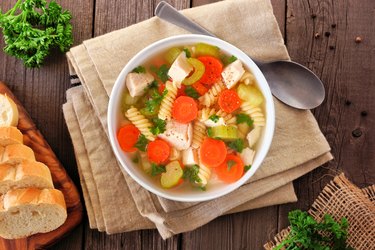
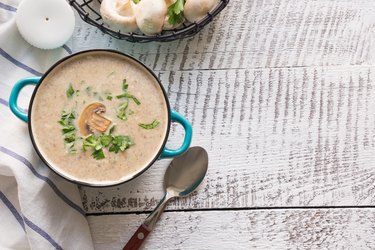
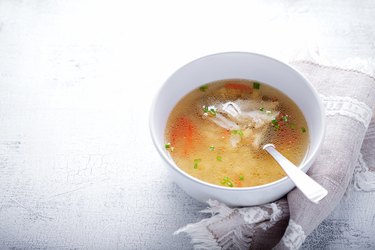
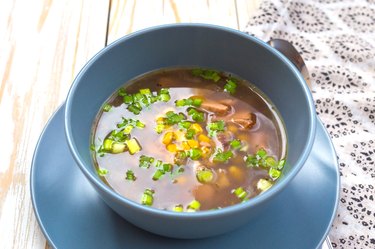
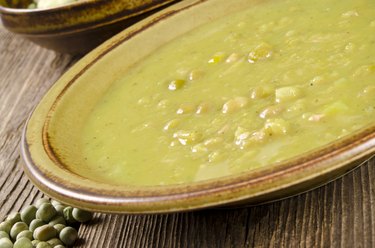
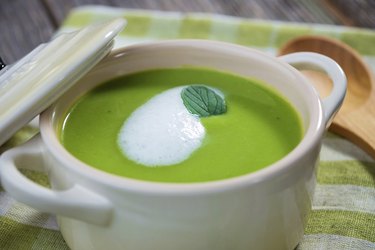
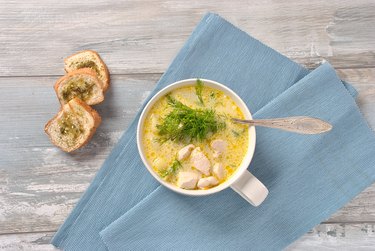
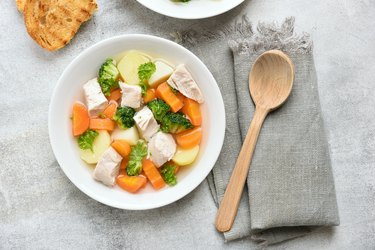
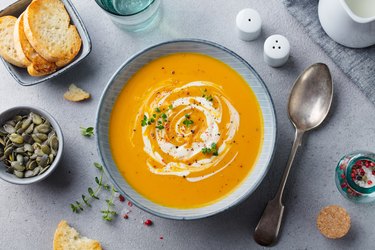
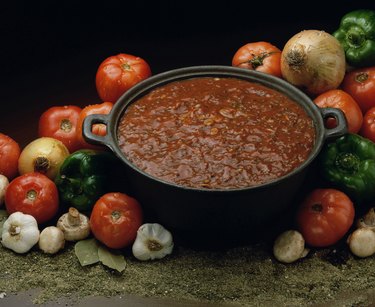
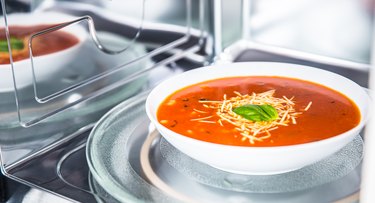
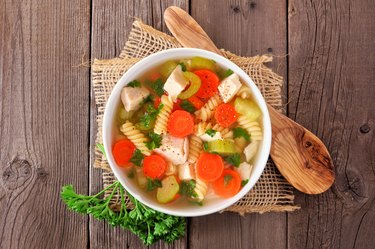
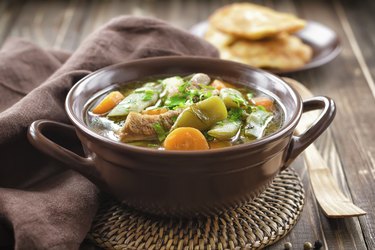
Vegetable soup consists of a savory broth containing various types of cooked vegetables. While different recipes call for different vegetables, carrots, tomatoes, peas and green beans are common ingredients. While vegetable sou...
While green cabbage is the most commonly eaten variety, red cabbage offers more nutritional benefits as well as a hearty, robust flavor, according to the World's Healthiest Foods website. Red cabbage contains a type of group of...
Purple cauliflower is similar to white cauliflower in appearance, but the name gives away its main difference. The vibrant purple color not only adds beauty but nutrition as well. The purple hue is a result of flavonoids and vi...
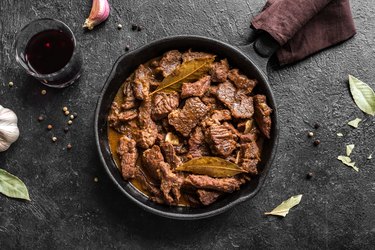
Basic ingredients include beef chuck, barley, carrots, celery, onion, corn, peas, tomatoes, herbs and spices. Each brand or recipe for the soup has different ingredients, and thus a different nutrition profile. The U.S. Departm...
Turnips are a low calorie source of potassium and vitamin C. Like other root vegetables such as potatoes and rutabagas, turnips are usually eaten cooked. Values listed are for 1 cup of cubed, boiled turnips. Dietary reference i...
Modern science has discovered that garlic's potent antioxidants and other nutritional components may help prevent and treat diseases such as cancer and high blood pressure. Please consult your physician before attempting home t...
Zucchini are a type of summer squash, traditionally harvested between May and July. All parts of the zucchini are edible including the flesh, green skin and seeds and it can be eaten raw or cooked. Like other varieties of summe...
Jicama is a root vegetable that resembles a very large potato or brown turnip. When eaten raw, it has a mild flavor with a crisp texture, not unlike an unripe pear. Eat it raw, sprinkled with salt and lime juice, or use it as a...
An onion can be a powerful vegetable, not only because of its strong taste and smell, but also because of its high antioxidant levels. Onions come in a range of colors, including red, white and yellow, but all feature a pungent...
The majority of the artichokes grown in the United States are grown in Monterey County, California, on artichoke farms. When you buy an artichoke you should choose one that is dark green and has tight leaves. When the leaves op...
Although cabbage may smell like rotten eggs when even slightly overcooked, cabbage is a flavorful vegetable rich in a variety of essential nutrients. Like other cruciferous vegetables, green, red or purple cabbage offers your b...
Parsnips are sweet in flavor and can be eaten raw or cooked. The parsnip is native to Europe and Asia and was introduced to North America in the 17th century. Nutritional values are based on a one cup serving of raw parsnips.
Kale was brought to the United States by English settlers in the seventeenth century. Kale should be purchased when it has deeply colored leaves and hardy stems. The peak season for kale is the middle of winter to the beginning...
It is classified as algae. Kelp helps with proper metabolism due to the high content of iodine and also is used as a salt substitute. Calorie King provides nutritional data on raw kelp. The values are based on a 1-ounce serving...
You can eat carrots raw, and they're common ingredients in salads. You can also serve carrots as a side dish by steaming or boiling them. Carrots are high in complex carbohydrates like most root vegetables, and they're high in ...
Leeks belong to the Allium family of vegetables and look similar to giant green onions. The dark-green leaves are thick, and they grow in a folded pattern, one overlapping the next, on top of a stout white stem. You can eat lee...
In the United States, edamame is a little-known vegetable. But this green soybean has been part of the Asian diet for thousands of years. It grows in clusters on bushy branches and is picked while the bean is still young and g...
It's commercially cultivated and is popular with home gardeners. Beets are a common ingredient in salads, and you can also serve them as a side dish. Like most root vegetables, beets are high in complex carbohydrates and low in...
Even if you are perfectly healthy, you might be interested in nutrients because you want to make sure you stay that way. Although in general vegetables are a healthy choice, there are ways to find out the specific nutrients tha...
Leeks, botanically known as allium ampeloprasum, are related to onions, but have a more delicate flavor than their tangier cousins. You can eat the bulbs cooked or raw; the green leaves--edible but more pungent--are normally u...
Traditionally, it is white in color. Cauliflower lacks the green chlorophyll found in other cruciferous vegetables because the plant's large leaves shield it from the sun during growth. However, cauliflower is not pale in terms...
The first record of celery being used for food was in France in 1623, and it wasn't until the 17th century that the stalks and leaves were eaten, according to the Texas A&M Department of Horticultural Sciences. Celery is a ...
It is sold in bags and comes in the form of a caramel-colored, dried, crumbly, almost pebble-like consistency. TVP does not need to be refrigerated until after it is cooked. Although TVP is not widely used in restaurants or by ...
As any rabbit knows, carrots are a fun, delicious and nutritious food. This root crop grows underground and is easily recognizable by its long, pointy shape and distinct orange color, although breeding programs have now develop...
Vegetables are a vital component in any healthy diet, and carrots can be a great way to satisfy daily dietary requirements. The baby carrot is an increasingly popular type of vegetable that is low in calories and full of nutrie...
Inside is a pale green, crunchy flesh, as well as seeds that are soft and edible. Its high water content provides a moist and cooling taste. In addition to their soothing flavor, cucumbers offer unique nutritional health benef...
A survey completed by the United States Department of Agriculture indicated that vegetable consumption was declining and intake of deep green and deep yellow vegetables was continuously low. This has an unfortunate impact on we...
Asian vegetables, such as shiitake mushrooms and Japanese eggplants, are low in calories, but very nutrient dense. Many Asian vegetables have antioxidants and healthy phytochemicals that are not typically found in vegetables in...
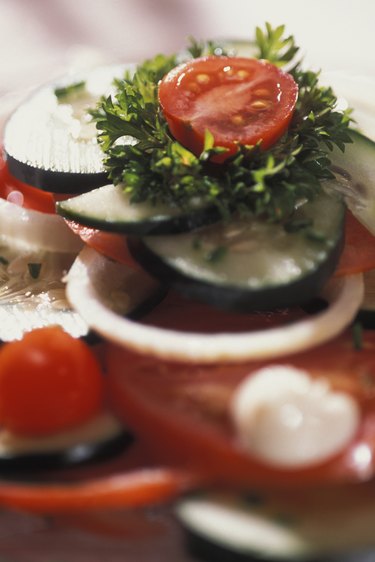
Vegetables are nutrient-dense and satisfying, especially in their raw form. Not all vegetables are created equal, so be sure to refer to a nutritional chart for raw vegetables to get exact information on the nutritional content...
If you're watching your weight and including a variety of vegetables in your diet, the American Heart Association recommends including leafy green vegetables such as spinach to provide a good source of vitamin A, vitamin C and ...
Endive is a leafy vegetable with the scientific name Cichorium endivia. There are two types of endives: Curly and escarole. Curly endive has a narrow leaf and is sometimes called chicory. Escarole is a broad-leafed endive that ...
In addition to being naturally cool, cucumbers can be a good addition to a healthy diet. Though they're often considered vegetables, cucumbers, like all foods that carry their own seeds, are actually a fruit.
Vegetables can be used to enhance your health or aid in the improvement of certain existing health problems. Vegetables contain vitamins and minerals such as vitamins A, C, K, B1, B2, B6, pantothenic acid, folate, potassium, ir...
The fruit of eggplants is often large and decidedly egg-shaped, although there are varieties that are long, curved and slender. The eggplant skin color can range from creamy white to deep purple. Eggplant tends to be less nutri...
Kohlrabi, a member of the turnip family, has been a popular vegetable in Europe since the 16th century but didn't make its way into American kitchens until the 19th century, and is still unfamiliar to many home cooks. The globe...
A sunchoke, also known as a Jerusalem artichoke, is a tuber vegetable that is a nutritious addition to salads, sandwiches and other meals. Mix and match sunchokes with other fresh fruits and vegetables to create a healthy meal.
Mache is a type of lettuce that is available in many specialty grocery stores. Also known as lamb's lettuce, corn salad, field salad, or field lettuce, mache grows in rosettes or loose bunches.
Vegetable shortening is a common ingredient in recipes, usually outdated, as it is not recommended as part of a healthy diet, according to The Mayo Clinic.
Most canned vegetables are picked and manufactured near the farms where they're grown, so they may lose some of their nutrients, but retain some of their vitamins by the time they arrive at the supermarket. Fresh vegetables lo...