


















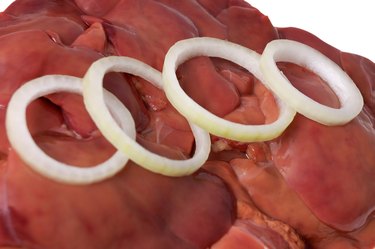








Chronic cirrhosis, which is ongoing inflammation and scarring of the liver over many years, leads to liver failure. The liver is the largest and most vascular organ in the body. The liver performs over 400 functions that involve storing blood and nutrients, manufacturing and secreting bile and filtering wastes and toxins from the blood. Because of these functions, end-stage symptoms of cirrhosis of the liver involve multiple body systems.
Ascites
Ascites is the buildup of fluid in the abdominal cavity. Donna D. Ignatavicius, MS, RN, and M. Linda Workman, Ph.D, authors of "Medical-Surgical Nursing: Critical Thinking for Collaborative Care," explain why cirrhosis causes fluid accumulation in the abdominal cavity. In end-stage cirrhosis the liver can no longer synthesize albumin (protein), which plays an important role in fluid balance within the body. When blood levels of albumin get too low, fluid moves from inside the blood vessels to other spaces in the body, such as the abdomen.
Another factor that leads to ascites is that inflammation and scarring inside the liver prevent the normal flow of blood in and out of the organ. Pressure builds up in the portal vein (a major blood vessel that brings blood to the liver), which causes fluid to leak into the abdominal cavity, worsening ascites. As more fluid collects in the abdomen, blood pressure may begin to fall, which triggers the renin-angiotensin system. This system tells the kidneys to retain sodium and water in hopes to elevate blood pressure. Unfortunately, when liver failure has caused low-albumin blood levels and portal hypertension has altered pressure levels in the abdomen, the only thing that happens is more fluid being drawn into the abdomen; ascites worsens.
Hepatic Encephalopathy
End-stage symptoms of cirrhosis of the liver include hepatic encephalopathy. The National Liver Foundation explains that this brain dysfunction is believed to occur because of high levels of toxins in the blood such as ammonia. Confusion, stupor, seizures, coma and death result from encephalopathy.
Respiratory Insufficiency
Respiratory insufficiency simply means inadequate breathing. Ascites can cause a very large and distended abdomen that puts pressure on the diaphragm, making it very hard to breathe. Hepatic encephalopathy can also affect the respiratory drive center in the brain, causing respiratory insufficiency.
Coagulation Disorders
The liver produces bile, which is needed for proper absorption of fat-soluble vitamins such as vitamin K. Vitamin K is needed to form clotting factors. In liver failure, bile cannot be properly produced or secreted, so vitamin K cannot be absorbed, and clotting disorders occur. The result is easy bruising and bleeding. Hemorrhage is a life-threatening possibility.
Esophageal Varices
Clotting disorders and portal hypertension caused by cirrhosis lead to swollen and dilated veins in the esophagus called esophageal varices. Esophageal varices can rupture, causing hemorrhage if not diagnosed early and repaired.
Renal Failure
A serious complication of end-stage liver disease is renal failure. Low blood pressure can happen during end-stage liver cirrhosis because of ascites, anemia or bleeding. It can be an acute emergency or become an ongoing chronic problem. Both instances of low blood pressure can lead to kidney failure.
References
- The National Liver Foundation: "Anatomy and Physiology of Liver: Liver Diseases"
- "Medical-Surgical Nursing: Critical Thinking for Collaborative Care"; Donna D. Ignatavicius, MS, RN, & M. Linda Workman Ph.D; 2006


