
















































While beauty and skin care products make up a multi-billion dollar industry, great-looking skin doesn't need to cost much at all. It begins with informed lifestyle decisions and basic skin care measures at home. By providing the skin with the nourishment and hydration it needs, and by protecting it from the elements that threaten it, skin can keep a healthy and youthful appearance for many years.
Protect Skin from the Sun
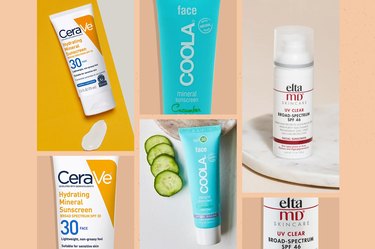
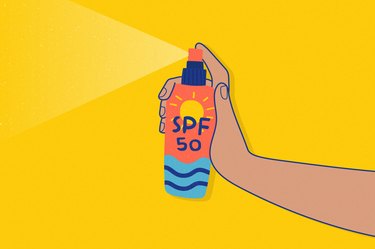
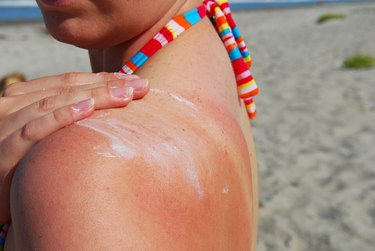
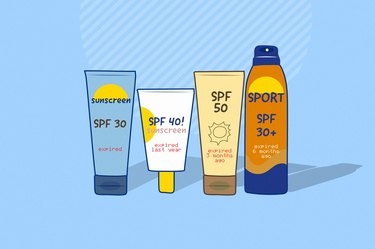
The Mayo Clinic identifies sun protection as the most important measure for healthy skin. In addition to skin cancer risks, the sun's ultraviolet radiation can lead to age spots, freckling, dry skin, and the loss of skin elasticity (and the resulting leathery texture and wrinkles). Limit time in the sun between 10 a.m. and 4 p.m., when the sun's light is strongest. Cover your skin as much as possible with clothing and hats. Use sunblock with both UVA and UVB protection, and an SPF greater than 15. Sunblock should be applied half an hour before going out, and reapplied every two hours or after swimming or sweating.
Eat Right
Certain foods promote a youthful, healthy skin appearance, as reported by UC Berkeley. In particular, antioxidant vitamins A, C and E are believed to contribute to great-looking skin. Eat fresh fruits and vegetables rich in vitamins A (like carrots, sweet potatoes, mangoes and dark, leafy greens) and C (like citrus, berries, tomatoes and broccoli). Many nuts and seeds provide vitamin E. Additionally, omega-3 fatty acids are believed to benefit the skin. Certain fish like salmon and herring, walnuts and flax seed are good dietary sources.
Keep Skin Hydrated
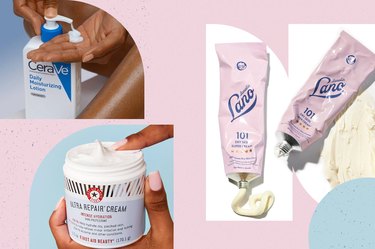
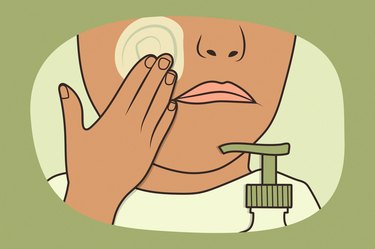
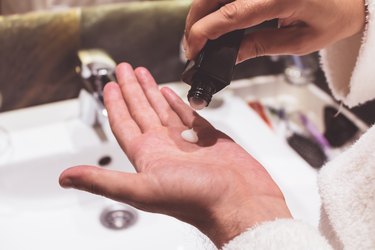
Dry skin is unpleasant-looking and an irritation. The Cleveland Clinic recommends lukewarm baths that don't last longer than 10 minutes, followed quickly by application of a moisturizer to prevent dry skin. It also suggests using heavy emollient creams or ointments during cold weather and lotions with less body during warm weather. Running a humidifier in your bedroom at night will also help, especially when humidity is low.
Don't Smoke
Smoking constricts blood vessels, obstructing the flow of oxygen and nutrients to the skin, and it damages the fibers that provide skin's elasticity, explains the Mayo Clinic. Additionally, the repetitive motions of taking drags of cigarettes and squinting to avoid smoke in the eyes contributes to facial wrinkles. The result of smoking is much like accelerated aging of the skin.
Manage Stress
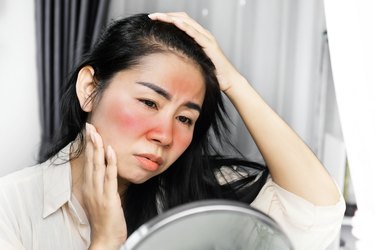
Stress can aggravate the skin and lead to flare-ups of skin conditions like psoriasis, rosacea, eczema and acne, according to University of Miami's Miller School of Medicine's dermatology professor Flor A. Mayoral, M.D. Stress triggers increased production of the hormone cortisol and skin oils, and this is believed to be the primary mechanism by which stress damages skin, as addressed in Science Daily. Enjoyable activities, exercise, deep breathing and meditation are ways of managing stress, and you can talk to a mental health professional for additional coaching if necessary.


Member Comments