













































Safety Tips for Stretching Exercises for Kids

Safety Tips for Stretching Exercises for Kids
Photo Credit big stretch image by Lisa Eastman from Fotolia.com

Although exercise for kids often takes on unstructured forms, it's important to ensure that kids maintain activities that incorporate the three elements of fitness--endurance, strength and flexibility. Flexibility can be improved with stretching exercises that can easily be done by kids of any age. Following guidelines for stretching safely will reduce risk of injury, increase ability to complete exercises and improve range of motion and coordination.

Stretch While Warm

In years past, many coaches and physical education teachers recommended stretching before any activity. But it's actually better to engage in some sort of activity that increases heart rate and warms up the muscles before stretching. Many professionals recommend waiting to stretch at the end of the workout or between activities, when muscles are at their warmest. The President's Council for Physical Fitness and Sports states, "warmed-up tissues are less likely to be injured and the placement of stretching within the workout does not affect gains in static flexibility." Stretching before warming up increases risk for pulled muscles and doesn't promote increased flexibility, so it's best to wait until the end or at least warm up for five to 10 minutes before stretching.

Stretch Slowly, Hold and Breathe

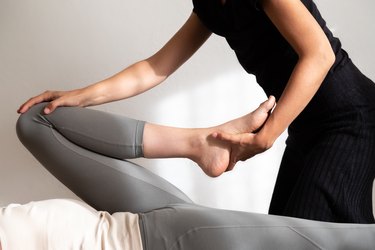
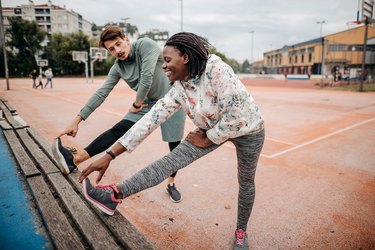
The safest form of stretching, especially for kids, is slow static stretching. Reach unassisted to the furthest point possible and hold the stretch for 15 to 30 seconds minimum. Avoid bouncing or jerking motions, and focus on holding the position steadily at a point that is mildly uncomfortable. Inhaling and exhaling slowly and deeply can further help to experience the full benefit of the stretch. Other forms of more intense assisted stretching commonly used in sports, such as isometric and proprioceptive neuromuscular facilitation (PNF), are not recommended for children. These types of stretching incorporate resistance against the bones and muscles and are not safe until bones are fully developed.

Full Body Stretching

Even if kids are doing sport-specific training, such as football practice, it's important to stretch more than just the throwing arm. The Nemours Foundation recommends, "Even if you are a righty, it doesn't mean that you should neglect the left side of your body. Make sure you stretch both sides equally, so all of your muscles are evenly ready for action." Kids should focus on stretching all parts of the body, including shoulders, arms, back, upper legs, and lower legs. Sport-specific stretches can be incorporated more frequently on days when those activities are performed, but other parts of the body should not be ignored and left out of the regular stretching routine.

References

Article reviewed by Eric Lochridge Last updated on: May 4, 2011

Must see: Photo Galleries

Member Comments