

















































What Causes Oily Hair & Skin?

What Causes Oily Hair & Skin?
Photo Credit skin care image by anna karwowska from Fotolia.com

Beneath the skin's surface lies a series of organs known as the sebaceous glands. These glands pump sebum, or skin oil, composed of fat and dead cells, through the pores of your skin to lubricate and protect the epidermis from dehydration and environmental forces like wind and heat. Factors such as heredity, puberty, humidity and poor cleaning habits may contribute to the production of oily skin and hair.

Dihydrotestosterone

Board-certified dermatologist Dr. Audrey Kunin of DERMAdoctor.com says the androgenic hormone dihydrotestosterone (DHT), regulates the activity of your sebaceous glands. In fact, the more DHT your body produces, the more oil your pores will secrete. The level of DHT produced by your body depends mostly on your family's history of oily skin and hair.

Puberty

DHT does not appear until puberty. Then events such as a woman's menstrual cycle may accelerate the production of DHT and oily skin. Boys with overactive hormones and individuals who use steroids will have higher levels of DHT, which in turn causes an increase in oil production. Although the body produces oil before puberty, puberty along with the increase in DHT causes the greatest rise in oily skin and hair.

Humidity

Hot, damp conditions can increase the production of oil and sweat. In contrast, dry conditions would allow sweat to evaporate from the skin. Any heat-inducing activity, such as exercise or wearing warm clothes, will increase the excretion of sweat and oil from your pores. As you push the oil aside with your hands, it will spread from your face to your hair. Nevertheless, KidsHealth.org points out that oily hair prevents breakage from the elements and may not actually be such a bad thing.

Brushing

The sebaceous glands pump oil onto the outer layer of the skin, but they do not pump it onto your hair. Any oil on your hair comes from the motion of your hands from one greasy surface to another, from the hair coming in direct contact with the scalp or from brushing. As you brush your hair, whether with your hands, a comb or a brush, the oil from the skin on your scalp connects to the brush and then to the strands of your hair. Although this may temporarily provide an oily shine, over time, oil concentrations can make hair appear greasy and unkempt.

Poor Hygiene

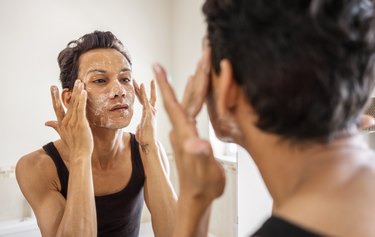
Aside from regular sebaceous gland production, oily skin and hair results from a lack of cleaning. That is, the less you wash your face and hair, the more oil builds up, producing a greasy shine. Although oil protects the skin, it may also block pores and appear unsightly. Therefore, wash and shampoo as necessary to reduce excess concentrations of oil.

References

Article reviewed by Debbie Sprong Last updated on: Apr 12, 2010

Must see: Photo Galleries

Member Comments