











































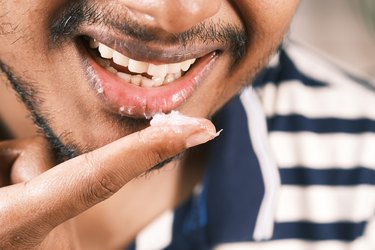
There's a reason the brown spots that sometimes appear on your upper lip are nicknamed age spots--they usually make their appearance around the time your first wrinkles start to show up, and they may be caused by some of the some factors. Age spots, also known as liver spots, may be subtle or obvious, but they are rarely welcome.
Identification
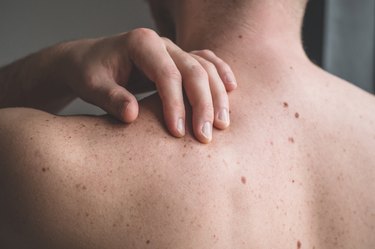
Brown spots appear when your skin starts producing extra melanin in concentrated areas, according to the Mayo Clinic. It may take years of exposure to ultraviolet light before dark spots appear, and the sensitive skin on your upper lip and face--along with the backs of your hands and forearms--is one of the first places to show those telltale spots. They usually appear on your skin as flat, oval spots.
Causes
There are several possible culprits for the dark spots that crop up on your upper lip, Deborah Sarnoff, M.D., clinical associate professor of dermatology at New York University Medical Center, says in "O," the Oprah magazine. A combination of high estrogen levels can cause dark patches to appear on your skin, and so can inflammation from tweezing, waxing or acne treatments. Exposure to sunlight in combination with either of these factors can lead to the appearance of brown spots on your upper lip. These spots are more likely to show up as you age.
Prevention/Solution
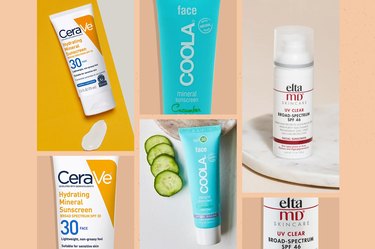
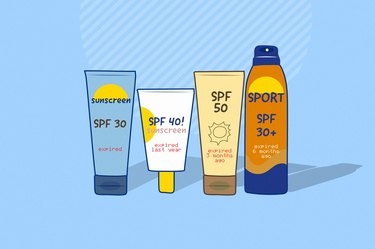
The most effective way to prevent brown spots from appearing is to apply sunscreen every single day, beauty editor Valerie Monroe writes in "O." Wearing a hat and avoiding spending too much time during the sun's most intense hours--between 10 a.m. to 4 p.m.--can also help prevent spots. If you do end up with spots, Monroe recommends treating them with a fading cream containing hydroquinone or kojic acid combined with a retinoid cream or serum to make them less noticeable.
Considerations
If you have very fair skin or if you have a history of serious tanning or sunburns, you may be more prone to develop age spots. You may also want to avoid sun exposure after beauty treatments when your skin is most sensitive.
Warning
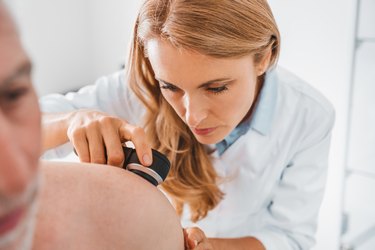
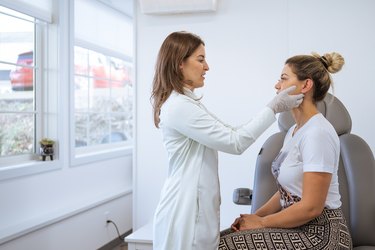
Age spots aren't a serious health problems, but other marks on your skin that can look like age spots may be, according to the Mayo Clinic. If your age spots have irregular edges, change in size, are sensitive to touch or have a raised surface, ask your doctor to check them out. He may do a biopsy to rule out more serious problems, including skin cancer.


Member Comments