








































Coffee & Cholesterol Levels

Coffee & Cholesterol Levels
Photo Credit coffee in coffee image by Maria Brzostowska from Fotolia.com

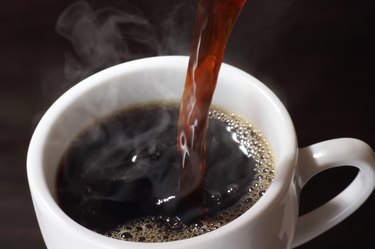
Medical researchers discovered in the 1980s that your blood's cholesterol levels increase when you drink coffee, but couldn't figure out why because consuming other drinks with caffeine had no impact on cholesterol. In the 2000s, researchers learned that cafestol and kahweol, two compounds in coffee--both regular and decaffeinated versions--are responsible for the coffee-cholesterol connection, but can be removed during the filtering process.

Cholesterol Dangers

High total cholesterol levels, as well as high "bad" cholesterol levels and low "good" cholesterol levels, increase your risk of heart disease. The recommended cholesterol levels depend on your age and gender, but "Controlling Cholesterol" author Kenneth Cooper's general advice is to try to keep your total cholesterol below 200 mg per dL, your "bad," or low-density lipoprotein, known as LDL, cholesterol below 130 mg per dL, and your "good," or high-density lipoprotein, known as HDL, cholesterol higher than 50 mg per dL if you're a woman and higher than 40 mg per dL if you're a man.

Unfiltered vs. Filtered Coffee

Drinking unfiltered, boiled coffee caused total cholesterol levels to increase by 23 mg per dL and LDL cholesterol levels to increase by 14 mg per dL, according to an analysis of 14 clinical studies. The same 14 studies showed that filtered coffee caused total cholesterol to rise by only 3 mg per dL, and had no effect on LDL cholesterol, reports "Coffee," a 2008 article from the Linus Pauling Institute. The institute reported that filtering coffee removes most of the two cholesterol-causing compounds called cafestol and kahweol.

Effect on Total Cholesterol

The more coffee you drink, the higher your total cholesterol, according to a study of 40,000 men and women at the Kaiser Permanente Medical Center. Men's average cholesterol rose from 216.3 mg per dL for non-drinkers to 219.5 mg for those who drank less than one cup daily, and 225.9 mg per dL for those who drank more than six cups daily. Women's average cholesterol rose from 219.6 mg per dL for zero cups, 222.6 mg per dL for less than one, and 225.4 mg per dL for more than six.

Effect on Bad Cholesterol

Your bad cholesterol level will only begin to rise after you have had more than two cups of coffee per day, according to a Stanford University Medical School study that was published in the March 8, 1985 edition of the "Journal of the American Medical Association." The study found no connection between coffee and "bad" cholesterol levels among light coffee drinkers, reported "Controlling Cholesterol."

Misconceptions

Caffeine was ruled out as the cause of coffee's cholesterol-raising effect in 1986, reported "Controlling Cholesterol." A study by the Honolulu Heart Program that was published in the "American Journal of Epidemiology" in 1986 showed that cholesterol levels increased from 210 mg per dL for non-drinkers to 220 mg per dL for people who drank nine cups of coffee daily. The same study showed that "there was no such relationship between cholesterol levels and tea or cola consumption."

Considerations

Instant coffee does not raise cholesterol because "the manufacturing process removes nearly all" of coffee's cafestol and kahweol, according to "The Best of Health." In 2007, a study by the Baylor College of Medicine concluded that "cafestol is the most potent dietary cholesterol-elevating agent known." The study was printed in the July 2007 issue of "Molecular Endocrinology."

References

Article reviewed by Roman Tsivkin Last updated on: May 10, 2010

Must see: Photo Galleries