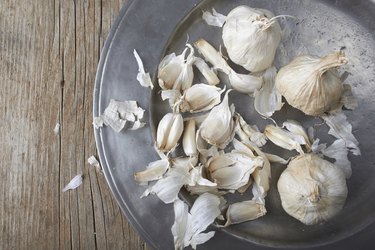
People have used garlic for centuries for both medicinal purpose and to flavor foods. Its long history of offering potential health benefits has led to the creation of garlic pills.
Though generally considered safe for consumption, there are some garlic side effects and interactions you should consider before taking garlic pills.
Video of the Day
Video of the Day
Tip
Though garlic is generally safe to consume, garlic supplements have some side effects that can be serious, including an increased bleeding risk and drug interactions. You should talk to your doctor prior to taking any herbal supplements.
Read more: Which Is Healthier, Raw or Cooked Garlic?
Garlic Can Cause Stomach Issues
One of the biggest disadvantages of eating raw garlic is that you are more likely to have an upset stomach, diarrhea, gas or heartburn. Because of these digestive effects, some people use garlic to cleanse their systems. Like with raw garlic, there is also risk that you will develop an upset stomach, heartburn or other stomach complications from taking a garlic pill.
According to a review of studies published in January-February 2014 issue of the Avicenna Journal of Phytomedicine, most people who reported side effects from taking garlic pills reported stomach issues as a mild complaint. Some people may experience more severe stomach discomfort and gas from garlic. If this happens to you, it is possible you have a food intolerance to garlic. This is most common if you have IBS.
If you experience any discomfort or side effects in your stomach, you should stop taking the garlic pill. You may also want to talk to your doctor regarding food intolerances.
Garlic Increases Bleeding Risk
Probably the most serious side effect of taking garlic pills is a potential increased risk of bleeding. Several of the compounds in garlic prevent platelet clotting. Because of this anti clotting effect, the U.S. Department of Health and Human Services, if you take garlic pills, you should stop taking them prior to surgery. If you are scheduled for surgery, you should stop taking any garlic pills or supplements for a few weeks prior to the surgery.
The same anti clotting effect may put you at higher risk of nose bleeds while taking garlic supplements. A May 2013 study in the_ Laryngoscope_ mentions that garlic and other foods with natural anti-platelet properties may increase nose bleeds. If you find that you have increased nose bleeds after starting to take garlic supplements, you should reduce your intake.
If you are planning on taking garlic pills, you should speak to your doctor before you start, especially if you take blood thinners such as warfarin. Also, you may be at a higher risk of developing nose bleeds.
Garlic Can Make You Smell
Garlic is well known for causing you to have bad breath or even body odor after eating it. This is one of the disadvantages of eating raw garlic as raw garlic can increase these effects. According to Oregon State University, a compound called allicin is responsible for causing your bad breath or body odor.
Allicin exists inside another sulfur compound in garlic. You inadvertently release allicin from garlic when you chew or mince it. This allicin makes the sulfuric smell seep into your skin and through your pores, causing the bad breath and body odor associated with garlic.
But allicin is not entirely bad. In fact, according to Oregon State University, allicin is one of the compounds that may give garlic some of its health benefits. As a result, companies that make garlic pills often try to help in the release of allicin into the body. Because of this, you still may experience bad breath or body odor from consuming a garlic pill.
Read more: Foods to Eliminate Body Odor
Garlic and Medication Interaction
It is always important for you to discuss any supplements you take or plan to take with your doctor. This includes garlic pills and supplements even though you may think they are harmless because they are natural and garlic is found in food. Not telling your doctor you are taking garlic pills can increase the risk of adverse interactions between the supplements and any prescription medications.
In addition to increasing bleeding risks, garlic can interact with other drugs as well. According to the U.S. Department of Health and Human Services, garlic pills can interfere with the effectiveness of saquinavir, which is used to help treat HIV infections.
According to July 2017 research published in American Family Physician, garlic interferes with any medications that are transported by P-glycoprotein. This plays an important role in transporting certain drugs to your organs. If you take Crestor, Prograf or other drugs that rely on these receptors, you should not take garlic supplements.
- Oregon State University: "Garlic and Organosulfur Compounds"
- U.S. Department of Health and Human Services: "Garlic"
- Avicenna Journal of Phytomedicine: "Garlic: A Review of Potential Therapeutic Effects"
- American Family Physician: "Common Herbal Dietary Supplement-Drug Interactions"
- The Laryngoscope: "Lifestyle and Dietary Influences on Nosebleed Severity in Hereditary Hemorrhagic Telangiectasia"