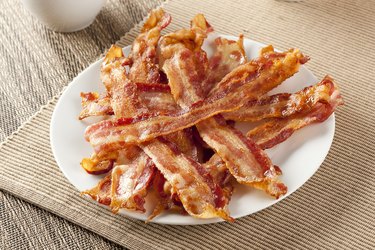
Americans love their bacon. The average American eats an estimated 18 pounds of the stuff every year, per the Foundation For Economic Education. Despite its popularity, you'd be hard-pressed to find someone claim bacon to be a health food.
If you enjoy eating bacon — whether as part of a bacon-and-eggs breakfast or on your sandwich at lunch or dinner — you'll want to do so in moderation, as the meat is high in fat, calories and sodium.
Video of the Day
Video of the Day
What Is Canadian Bacon vs. American Bacon?
Canadian bacon (which is just called "bacon" in Canada) comes from the loin of the pig — behind the shoulder — while regular American bacon comes from the pig belly, per Berkeley Wellness.
Canadian bacon, ham and regular bacon are all cured meats. Canadian bacon is usually sold fully cooked and has less fat and fewer calories than conventional American bacon.
As you'll see below, a single slice of Canadian bacon contains fewer grams of fat and calories than conventional bacon, but it still hosts plenty of sodium. This is important to keep in mind when deciding how many slices to add to your plate.
Related Reading
Nutrition and Calories in Bacon
One slice of raw, cured pork bacon, equal to 28 grams, contains:
- 110 calories
- 10.4 g fat
- 3.5 g saturated fat
- 210 mg sodium
- 0 g carbohydrates
- 4 g protein
Calories in Crispy Bacon
One 12-gram slice of pan-fried, crispy bacon contains 54 calories and 4 grams of fat — less than raw bacon because the fat cooks down.
Lean Canadian Bacon Nutrition
One slice of raw Canadian bacon, equal to 28 grams, contains:
- 31 calories
- 0.7 g fat
- 213 mg sodium
- 0.4 g carbohydrates
- 5.8 g protein
Turkey Bacon as a Healthier Alternative
Turkey bacon is made from ground dark and light turkey meat. Although it's still not considered a health food, turkey bacon can be a better alternative to standard American and Canadian bacon. As you'll see below, it contains fewer calories and grams of fat than does conventional breakfast meat.
Turkey Bacon Nutrition Info
One slice of raw turkey bacon, equal to 28 grams, contains:
- 40 calories
- 1.5 g fat
- 200 mg sodium
- 1 g carbohydrates
- 6 g protein
- The Huffington Post: 9 Unfortunate Truths About Juicy, Scrumptious Bacon
- USDA: "Pork, cured, bacon, unprepared"
- USDA Nutrient Database: Basic Report: 42130, Turkey Bacon, Cooked
- Foundation For Economic Education: "15 Economic, Historical, and Health Facts about Bacon"
- Nutrition Value: "Raw Canadian Bacon"