































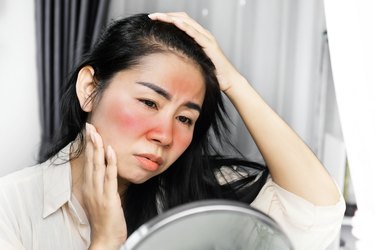











Eczema, or atopic dermatitis, is a chronic skin disease that affects an estimated 15 million Americans, according to the American Academy of Dermatology. Eczema causes red, itchy and inflamed patches on the skin that may swell, scale, crack and weep. When eczema occurs on the eyelids or the area around the eyes, rubbing and scratching can lead to potentially serious infections or cause a loss of eyelashes and eyebrow hair, according to the Mayo Clinic. Prevention and treatment of eczema involves uncovering and avoiding triggers, hydrating the skin and using topical or oral steroids to control inflammation and ease symptoms.
Step 1
Apply cool compresses to your eye area to soothe discomfort and itching and to reduce swelling. Dampen a small towel with cool water and apply it to your eyes for 15 to 20 minutes as needed.
Step 2
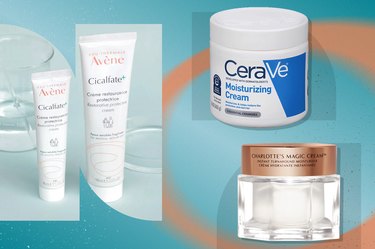
Avoid long, hot showers and harsh soaps, as these may worsen eczema and associated skin irritation and itching. Air-dry your skin, and apply a water-based moisturizing lotion immediately after showering. While oil-based ointments are often the most effective against eczema, these moisturizers may clog pores and contribute to acne. Most moisturizers are safe for use in the eye area, provided the product does not make contact with the inside of the eye. Moisturizers that contain preservatives or fragrances are more likely to cause skin irritation or trigger an allergic reaction, as the skin around the eyes is thinner and more sensitive than the skin elsewhere on the face.
Step 3
Change your eye makeup and skin care creams to determine if any of these products may be causing or contributing to your eye eczema. The chemicals and fragrances in many cosmetics and skin products can cause eczema flare-ups in sensitive people.
Step 4
Apply an over-the-counter, low-dose corticosteroid cream to the skin around your eyes to reduce redness and inflammation. Use the cream two to four times per day, or as directed by your doctor. Do not get the cream in your eyes. The American Academy of Dermatology warns that topical steroid medications may increase your risk of cataracts and glaucoma when applied topically around the eyes.
Step 5
Visit your dermatologist for a stronger topical medication or for a course of oral steroids to treat eczema that fails to respond to home treatments. Oral medications, such as methylprednisolone and prednisone, may cause significant side effects in some people and should therefore only be used when truly necessary.
Step 6
Take an antihistamine medication to relieve the itching association with eczema. Antihistamines may cause drowsiness and are best taken soon before bed. These medications are especially beneficial if itching and scratching are interfering with your sleep quality.
Step 7
Use a prescription immunomodulator medication to control your eczema symptoms. Immunomodulators, such as pimecrolimus and tacrolimus, are approved for the treatment of eczema in adults and children over the age of 2 years. These drugs may be beneficial at relieving acute symptoms when other treatment options have failed, but the Mayo Clinic warns against using them for prolonged periods due to their effect on the immune system.
Step 8
Undergo allergy testing to uncover any allergic triggers for your eczema. According to the National Institute of Arthritis and Musculoskeletal and Skin Diseases, environmental and food allergies may contribute to eczema around the eyes. If an allergy to a specific substance is determined, your doctor can prescribe allergy medication to ease your symptoms.
Things You'll Need
- Moisturizing ointment
- Over-the-counter corticosteroid cream
- Over-the-counter antihistamine


Member Comments