




























































End of Life Signs

End of Life Signs
Photo Credit Jupiterimages/Photos.com/Getty Images

The end of life is a natural experience we all will face at some point. The Hospice Foundation of America states that the dying patient usually exhibits signs and symptoms prior to death. This is called the dying process. Understanding the dying process helps calm the fears of both caregivers and terminal patients.

Food and Fluid Intake

The intake of food and fluid at the end of life usually decreases. Many patients report a lack of interest or appetite at the end of life. This is the natural response of a body whose organ systems are slowing. Food and fluids may be difficult for the body to metabolize at this stage. The Hospice Foundation of America reports that giving forms of artificial food and hydration may cause more discomfort and prolong suffering.

Breathing Changes

When death appears imminent, breathing changes will occur. Breathing becomes more shallow, and its rate may increase or decrease. A congested sound, typically called "a death rattle," may occur. The death rattle is caused by the patient's inability to swallow saliva. The saliva sits in the back of the throat, and the sound results from the patient breathing through the saliva. This is not painful or uncomfortable for the patient. "Gone From My Sight," a book on the dying process, lists increasing periods of apnea as a common part of the dying process. Apnea is a short gap between breaths. The time between breaths becomes longer and longer until breathing stops.

Decreased Urine

The book "Core Curriculum for Oncology Nursing" lists decreased urine output as a sign of impending death. The body produces less urine because of organ system shutdown. The kidneys cease functioning and no longer produce urine. Another reason for decreased urine output is that fluid intake is usually reduced. It is not uncommon for a patient to produce no urine for one to two days before death.

Decreased Circulation

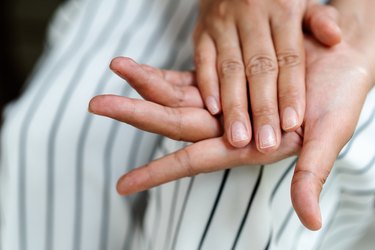
Blood circulation decreases in the dying patient. This is evident in several ways. "Gone From My Sight" describes symptoms of these changes in circulation, including coolness in the hands and feet and discoloration of the skin. Nail beds and lips may appear blue or purple due to lack of oxygenation. Legs often show signs of mottling--a purple, blotchy appearance due to decreased circulation. These changes in circulation point to approaching death.

Level of Consciousness Change

According to the Hospice Foundation of America, levels of consciousness change and fluctuate. The dying patient tends to be drowsy, sleeps more and appears to be disconnected from family and friends. It is not uncommon for dying people to have hallucinations or see visions of those who have died before them. Often when death is near, the dying become unresponsive and seem to be in a coma-like state. It is believed that even in this unresponsive state, however, patients can still hear those who speak to them.

References

Article reviewed by LynMarie Lee Last updated on: Mar 7, 2011

Must see: Photo Galleries