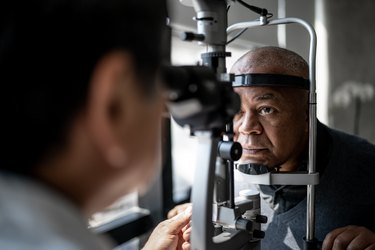
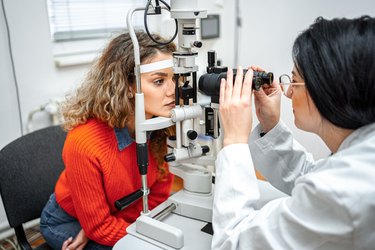























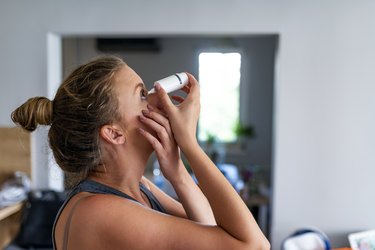













Glaucoma is caused by a buildup of intraocular eye pressure to the point of damaging the optic nerve. Left untreated, the disease destroys peripheral vision until the world appears to be viewed through a tunnel. Over time, blindness may result. Glaucoma is typically treated with surgery and/or eye drops that lower pressure in the eye. Alternative treatments include techniques to reduce stress and high blood pressure, improving nutrition and consuming medical marijuana.
Reducing Stress
Because glaucoma is a progressive disorder that can result in blindness, people at risk or who have the diagnosis should be regularly monitored by an ophthalmologist. In fact, ideally we should all have an annual glaucoma screening performed. However, people with glaucoma can also focus on reducing stress to prevent and alleviate the symptoms. Optometrist Marc Grossman of VisionWorksusa.com reports that high levels of stress have been associated with glaucoma because stress causes shallow breathing, reducing oxygen to the brain. Robert Abel, Jr., M.D., author of "The Eye Care Revolution," writes that stress not only affects the brain, but also affects the eye receptors. The cones and rods are the visual receptors that respond to light stimulation. Dr. Abel recommends reducing stress with deep breathing, visual imagery, meditation and exercise.
Nutrition and Vitamins
Glaucoma is associated with high blood pressure. However, according to the National Eye Institute, not everyone with increased blood or eye pressure develops glaucoma. Some people may develop glaucoma without increased eye pressure. A diet that lowers blood pressure is good for the eyes. According to Phyllis A. Balch, CNC, and James F. Balch, M.D., authors of "Prescription for Nutritional Healing," vitamin supplementation has been demonstrated to lower intraocular pressure and that foods rich in bioflavonoids, including fruits and vegetables, help vitamin C to work effectively. Dr. Abel recommends eating plenty of foods that contain potassium and magnesium and avoid extra salt, which can raise blood and internal eye pressure. He also points out that the Inuits of Alaska have a low rate of glaucoma because they consume fish oil rich in fatty acids. Other vitamins supplements he recommends include Vitamin A, B, D and E.
Medical Marijuana
Balch and Balch report that several studies have shown that smoking marijuana can help reduce intraocular pressure. However, they do not recommend it due to its tendency to increase heart rate, as well due to its status as an illegal drug in most parts of the country. According to the Glaucoma Research Foundation, most of the research on medical marijuana took place before current medications came on the market, medications that have fewer side effects than the older ones. The only medical marijuana currently approved, Marinol, was developed to reduce nausea during chemotherapy treatments and does not appear to be more effective than other medication options.
References
- Glaucoma Research Foundation: Medical Marijuana
- Glaucoma
- "Glaucoma: What You Should Know"; National Eye Institute; 2003
- "The Eye Care Revolution"; Robert Abel, Jr., M.D.; 1999
- "Prescription for Natural Cures"; Phyllis A. Balch CNC and James F. Balch, M.D.; 2004


