








































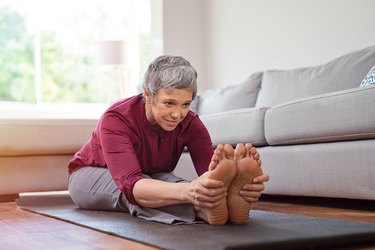










A sudden painful tightness in a muscle is a muscle cramp. The calf muscles in the lower leg are an area that commonly cramp, especially after exercising. A common reason for having a muscle cramp in the legs is tight calf muscles, according to the Merck Manuals. Other conditions may also increase the risk of developing leg cramping but activities, such as stretching before exercising and avoiding the use of caffeine and cigarettes, can help prevent leg cramping.
Medical Conditions
Individuals with inadequate blood supply to the legs can experience leg cramping. Medical conditions such as a narrowing of the arteries, also referred to as arteriosclerosis, decreases the normal blood supply to the legs. The decreased blood can cause cramping in the legs, especially when exercising, according to the Mayo Clinic. Medical conditions such as a bulging disc in the back compresses the nerves in the spine that lead to the legs. Compressing the nerves in the spine can cause leg cramps that become worse when walking and exercising. Other medical conditions that frequently produce leg cramps include thyroid disorders, kidney damage, hypoglycemia and diabetes.
Diet
Diets depleted of minerals, such as calcium, potassium or magnesium, may cause leg cramping. Foods and beverages high in the necessary minerals include bananas, dairy products, prune juice and beans.
Inadequate amounts of fluid intake increases the risk of dehydration, too. The dehydration can cause muscle cramping. Drinking adequate amounts of water, especially in warm weather and while exercising, will help prevent muscle cramps in the legs.
Pregnancy
Pregnant women may experience leg cramps. As the uterus grows, the pressure may cause pain down the legs or cramping in the muscles of the leg, according to the Cleveland Clinic. To help prevent muscle cramping during pregnancy, women need to increase daily calcium intake. Exercising, stretching and massaging may help relieve the cramping, also. A pregnant woman also needs to avoid crossing her legs and lying on her back. Lying on her back increases the weight and pressure placed on the veins in the body from the enlarged uterus, which increases the risk of leg cramping.
Medications
Some medications, such as diuretics that treat high blood pressure, may deplete the body of potassium. The medications increase the amount of urine the body produces to rid it of fluid to help the heart pump better. But the fluid contains potassium that the body needs to prevent leg cramps. Also, medicines that help treat high cholesterol may damage muscles, which increases the risk of cramping.
In addition, caffeine and nicotine are drugs that can cause constriction of blood vessels and increase the risk of cramps.


