







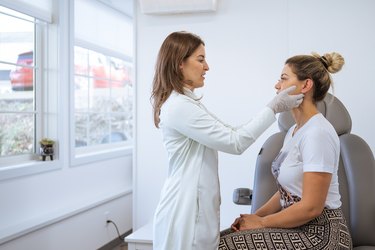


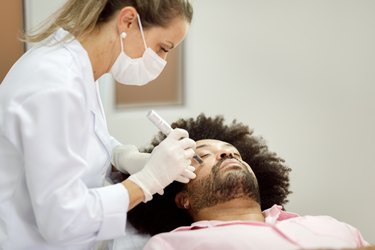

























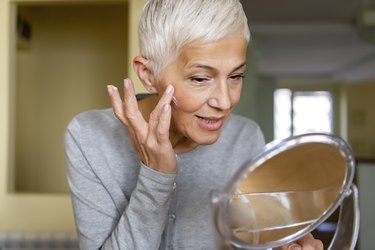





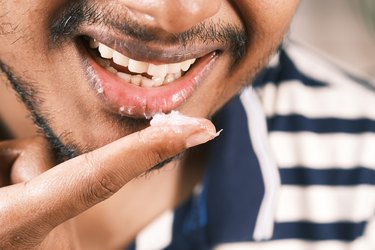
Lactic acid is derived from milk and works as a form of alpha hydroxy acid, according to the University of Maryland Medical Center. It's sometimes added to facial skin care peels, which are designed to be smeared onto your skin and left on for a certain amount of time before being peeled off. Such peels are popular due to their benefits for your skin's overall health.
Melanin Inhibition
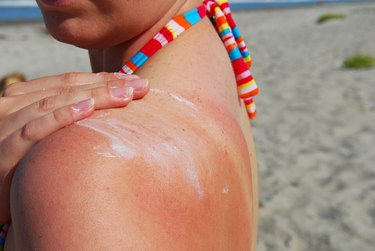
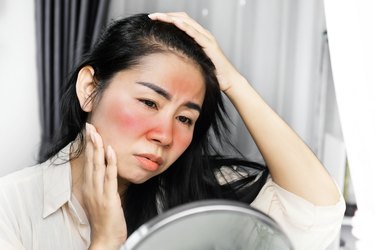
Melanin is your skin's pigment. Overproduction, often attributed to your skin's exposure to the sun, can lead to discolorations like brown spots or splotches. Lactic acid at a strength of 4 to 10 percent can help "directly inhibit melanin formation," creating a "formidable" tool for lightening or removing skin discolorations, according to skin care expert Paula Begoun in "Don't Go to the Cosmetics Counter Without Me."
Diminished Wrinkles
Lactic acid peels exfoliate your skin's surface and help improve skin cell turnover rates. The removal of skin cells can help encourage the skin's production of natural elastin and collagen. This in turn may help reduce the appearance of wrinkles and fine lines, reports the University of Maryland Medical Center.
Improved Texture
As your skin gets older, it can become uneven, thick and rough. Writing for "Elle" magazine, dermatologist Jeanine Downie says that a lactic acid peel can improve your skin's texture by sloughing off the top surface of the skin. This can help alleviate roughness, encouraging your skin to remain smooth and flawless. For the best results, Begoun says the peel or facial treatment should have lactic acid at a minimum concentrated strength of 5 percent, though she says optimal results require a concentration of 8 to 10 percent.
Better Product Absorption
If you're treating your skin with topical ointments, serums and creams, a buildup of debris, oil and dead cells can decrease your skin's ability to absorb the topical treatment. The regular use of lactic acid may enhance your skin's absorption rates by removing the particles that may block optimum absorption, helping you get the most out of your other skin care treatments.
References
- "Don't Go to the Cosmetics Counter Without Me"; Paula Begoun; 2009
- University of Maryland Medical Center: Skin Wrinkles and Blemishes
- "Elle" Magazine: Perfect Skin


Member Comments