































































Sunburn & Itching

Sunburn & Itching
Photo Credit frau mit strohhut image by Michael Verstegge from Fotolia.com

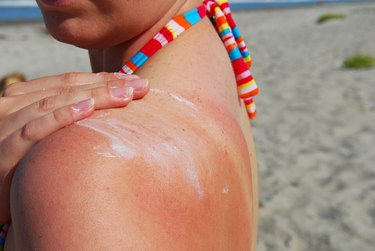
Sunburn is a form of skin damage caused by overexposure to sunlight and its harmful ultraviolet rays. It typically arises within several hours after exposure and continues for a period of days or weeks. In addition to other symptoms of sunburn, you may develop itchy skin. You may also develop itching as a symptom of chronic dry skin after sunburn.

Causes

Your skin contains protective pigment cells called melanin, according to the U.S. National Library of Medicine's Medline Plus. Sunburn occurs when your skin receives more ultraviolet light than your pigmentation can absorb or reflect. If your skin contains low amounts of melanin, it may burn in as little as 15 minutes of noonday sunlight. If your skin has high amounts of melanin, you may sustain the same level of exposure for hours without developing a sunburn. In addition to sun exposure, you can develop moderate or severe sunburn from exposure to the ultraviolet sources in tanning lamps or tanning beds.

Risk Factors

In addition to low melanin content, Medline Plus lists sunburn susceptibility factors that include exposure to sunlight between late morning and mid afternoon, living at high altitudes or closer to the equator, use of medications such as doxycycline, and exposure to sunlight reflected off of snow, water or sand. Since roughly 80 percent of sunlight penetrates cloud cover, you can also get a sunburn on cloudy days, University of Iowa Healthcare explains. Children and infants are particularly susceptible to sunburn.

Symptoms

Symptoms of sunburn include skin itching, redness and soreness, according to University of Iowa Health Care. Medline Plus reports additional potential symptoms that include skin that is warm to touch, skin peeling that arises within days after sun exposure and blisters that may arise within hours or days after exposure. In some cases, you may also develop a severe reaction called sun poisoning, with symptoms that include chills, fever, rash or nausea.

Treatments

Ease or relieve sunburn-related skin itching by applying calamine lotion to the affected area, according to the University of Wisconsin at Madison. Also apply lotions that contain pramoxine, such as Sarna. In addition, you can treat itching with an oral antihistamine such as Benadryl, notes the University of Iowa Healthcare. However, if you choose an antihistamine, be aware that they can cause significant drowsiness. Make sure to avoid driving or using heavy machinery while taking these medications.

Effects

Dry, wrinkled skin can develop as a complication of sunburn, according to the Mayo Clinic. Dry skin can in turn lead to itching. You can relieve this itchiness by applying cool compresses to your affected skin. In addition, you can increase the moisture content in your skin through the daily use of alcohol-free moisturizers and bath oils, as well as through the use of air humidifiers and adequate daily intake of water, Medline Plus explains.

References

Article reviewed by Jenna Marie Last updated on: Jun 18, 2010

Must see: Photo Galleries