





















































More than 1.5 million species of fungi exist, and of those, about 400 have been diagnosed as the cause in cases of human disease. Fungi are capable of emitting poisons, called mycotoxins. These fungal toxins can appear in the food chain as a result of fungal infections in crops, either by being consumed directly by humans or by being used as livestock feed. Limiting exposure to fungi, yeasts and fungal mycotoxins in foods can greatly improve health quality.
Yeasts
Fungi include molds, yeasts and mushrooms. Yeasts are unicellular fungi that have the ability to ferment sugars for producing alcohol, so a diet high in sugar promotes the growth of yeast. For example, the yeast Saccharomyces cervisiae, or Baker's yeast, is used to ferment the sugars of rice, wheat, barley, corn and alcoholic beverages and is often the yeast used to make dough rise. Yeasts have a symbiotic relationship with humans, meaning they are mutually dependent. Yeast infections, called candidiasis, can grow on the skin surfaces and intestinal tracts and are typically from the fungus Candida albicans. The Candida yeast can also cause thrush of the mouth and diaper rash in infants.
Molds
Most molds require oxygen for growth. They thrive in an acidic environment, and they expand with moisture and heat, making foods an excellent environment for proliferation. Both yeasts and molds can contaminate foods, causing deterioration or decomposition. The food can become slightly blemished with visible mold, or the food product can be affected with toxic metabolites, or mycotoxins, which are not visible to the naked eye. Most mycotoxins are heat stable and are not destroyed during the cooking process. Even though the mold may be destroyed with heat, the toxin can still be present.
Fungal Toxins in Foods
In 2002, Dr. Ruth Etzel published in the Journal of the American Medical Association that "mycotoxins are capable of causing illness and death in humans and animals and are common contaminants in corns and grains." Following a diet to eliminate yeast and molds includes limiting consumption of corn, beer, peanuts and wheat. The Colorado Department of Agriculture reports that one of the most carcinogenic substances known to man, a mycotoxin called Aflatoxin, is commonly found in corn, peanuts, wheat, rice, tree nuts, milk, eggs and cheese. Furthermore, a toxic metabolite of the Fusarium mold called vomitoxin, which causes gastrointestinal illness, is detected in corn, wheat, bran, rice, flour, barley, malt and beer. This same fungus, Fusarium, also emits a toxin called fumonisin, which, again, primarily contaminates corn and corn-based products, including popcorn, corn tortillas and corn oil.
Antifungal Foods
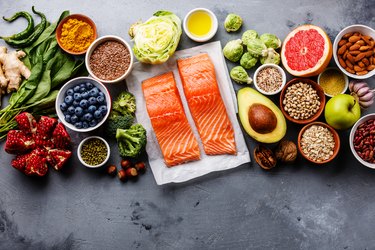
While the aforementioned foods are vulnerable to fungi and yeasts, certain foods have the ability to fight fungi and yeasts. Carrots, for example, contain the compound isocoumarin, which has antifungal properties. A 2008 study in the Journal of Applied Microbiology reported, "Purified ethanolic extracts of peeled and shredded carrots showed an antimicrobial effect against a range of food-borne micro-organisms." Garlic is also a natural antifungal food. In 2010, the African Journal of Microbiology Research published the potent antifungal properties of allicin, a component of garlic. "Allicin alone revealed to be potentially very good as antifungal compound." Along with carrots and garlic, many other vegetables, herbs and essential oils should be consumed regularly to fight yeasts and fungi.
Warnings
When beginning an antifungal and anti-yeast diet, there can often be a "die-off" reaction called a Herxheimer reaction, which is caused by hypersensitivity as a result of detoxification. The Jarisch-Herxheimer reaction was first known to be a common occurrence in the treatment of syphilis with use of the mold-derived antibiotic, penicillin. The development of new medications has led to the recognition of Herxheimer reactions in a variety of infections, including fungal infections. As the body detoxifies, it is not uncommon to experience flu-like symptoms, including headache, joint and muscle pain, body aches, sore throat, general malaise, sweating, chills, nausea or other symptoms. The Herxheimer reaction generally lasts from a few days to a couple of weeks.
References
- Journal of the American Medical Association: Mycotoxins
- Colorado Department of Agriculture: Understanding Mycotoxins
- Journal of Applied Microbiology: Antimicrobial activity of shredded carrot extracts on food-borne bacteria and yeast
- African Journal of Microbiology Research: In-vitro antifungal activity of allicin
- Emory University School of Medicine: Pathogenesis of the Jarisch-Herxheimer Reaction


Member Comments