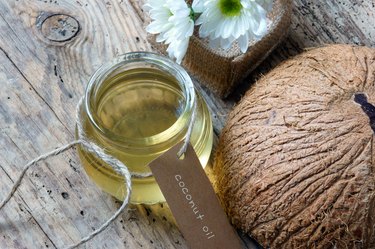
Saturated fat has gotten a bad rap over the years. Turns out, a type of saturated fat known as medium-chain triglycerides has a number of health benefits. Foods with medium-chain triglycerides, such as coconut oil may help you lose weight, provide instant energy for your brain and more.
What Are Medium-Chain Triglycerides?
Video of the Day
According to a January 2014 article in the Journal of the Academy of Nutrition and Dietetics (JAND), medium-chain triglycerides (also known as fatty acids) are saturated fats made with anywhere from six to 12 carbons.
Video of the Day
When compared to long-chain fatty acids, medium-chain fatty acids demonstrate substantial metabolic differences. For instance, they do not require binding to proteins to move through the body and are a preferred source of energy. The following are MCTs:
Caproic Acid (C6): Also known as hexanoic acid, this saturated fatty acid contains six carbon molecules. PubChem data shows it is used to make perfumes and may irritate the skin and eyes.
Caprylic Acid (C8): Also known as octanoic acid, PubChem data shows this saturated fatty acid is naturally occurring in the milk of some mammals. It is also a minor part of coconut oil and palm kernel oil.
Capric Acid (C10): Also known as decanoic acid, PubChem data shows this saturated fatty acid can also be found in mammal milk, coconut oil and palm kernel oil. It works as an antibacterial agent and an anti-inflammatory agent.
Lauric Acid (C12): Also known as dodecanoic acid, PubChem states it is the main fatty acid found in coconut oil and palm kernel oil.
According to a February 2015 meta-analysis of 13 trials, published in the JAND, replacing long-chain triglycerides with medium-chain triglycerides could promote weight loss without adverse effects. However, more research is required to confirm the efficacy of medium-chain triglycerides and to determine the appropriate dosage for weight management.
A June 2016 study published in the Journal of Lipid Research shows that MCTs enter your cells easily without being broken down. This allows them to be used as an immediate source of energy, while also reducing the likelihood they will be stored as excess fat.
Foods With Medium-Chain Triglycerides
Medium-chain triglyceride sources include dairy fat and coconut oil, according to the authors of the International Dairy Journal article. Other MCT foods include goat milk and palm kernel oil. Though the number of MCT foods is limited, if you drink milk, chances are you're still getting some in your diet naturally.
A review of the fatty acid profile of milk, published in June 2013 in the Veterinary Institute in Pulawy, took a closer look at the fatty acid content in cow, goat and sheep milk. The fatty acid profile across all three was highly similar, though goat milk had the highest concentration of medium-chain triglycerides.
The U.S. Department of Agriculture (USDA) nutrition data for coconut oil shows that a 100 gram serving contains 99.06 grams of fat. Of that amount, 82.4 grams are saturated fat, while 6.3 grams are monounsaturated, and 1.7 grams are polyunsaturated fats.
The USDA nutrition data for palm kernel oil shows that a 100 gram serving contains 100 grams of fat. 81.5 percent of the fat is saturated fat, while 11.4 percent is monounsaturated, and 1.6 percent is polyunsaturated.
Using Medium-Chain Triglycerides Supplements
If you find that you don't like the MCT foods listed above, thankfully you do not have to rely on foods with medium-chain triglycerides to include them. You can still get them in your diet through the use of medium-chain triglycerides supplements that are widely available on the market today.
MCT oil can be added to smoothies or protein shakes for an extra boost of healthy fat. You can replace other oils with it in cooking. Make a quick salad dressing, drizzle it over vegetables before roasting and more. Are you a coffee drinker? Add MCT oil or butter to your black coffee in the morning.
Adding MCT supplements to your diet should not replace the need for other fats in your diet. The fats in fruits and vegetables such as olives and avocados are also healthy. MCT supplements are man-made using fractionation to extract the fatty acids from coconut and palm kernel oils. If you don't want to use any man-made supplements, you'll have to rely on MTC foods.
If you decide to include medium-chain triglyceride sources in your diet, either through whole foods or supplementation, be aware the dose required to obtain various health benefits hasn't been established.
Though it is considered safe for most people, medium-chain triglycerides side effects can occur. While there haven't been any serious side effects or adverse reactions reported, there have been reports of minor medium-chain triglycerides side effects such as upset stomach, diarrhea, nausea and vomiting.
For those who don't like the idea of using medium-chain triglycerides supplements in oil form, you can also find it in capsule and powder form. Capsules allow you to get the MCTs you need by taking them like a daily multivitamin.
The powdered form is essentially oil that has been dried. It is useful when it comes to adding MCTs to solid products, such as baked goods. It's also possible to use the powder as a creamer for coffee. There are several flavored varieties available to choose from.
Because of the variety of medium-chain triglycerides supplements on the market today, it can be hard to know which one is best for you. Oil supplements are difficult to take with you on the go and to store. Powder versions are convenient for traveling and generally easier on the stomach, but are typically less potent than pure MCT oil.
In capsule form, you have the convenience of being able to take the supplement whenever and wherever you need to, but you can't add them to food and drink, and they take longer to digest than pure oil. If you experience any medium-chain triglycerides side effects, talk to your doctor and try a smaller dose.
- Journal of the Academy of Nutrition and Dietetics: "Position of the Academy of Nutrition and Dietetics: Dietary Fatty Acids for Healthy Adults"
- PubChem: "Hexanoic Acid"
- PubChem: "Octanoic Acid"
- PubChem: "Decanoic Acid"
- PubChem: "Lauric Acid"
- Journal of the Academy of Nutrition and Dietetics: "Effects of Medium-Chain Triglycerides on Weight Loss and Body Composition: A Meta-Analysis of Randomized Controlled Trials"
- Journal of Lipid Research: "Short- and Medium-Chain Fatty Acids in Energy Metabolism: The Cellular Perspective"
- Veterinary Institute in Pulawy: "Fatty Acid Profile of Milk - A Review"
- USDA National Nutrient Database: "Coconut Oil"
- USDA National Nutrient Database: "Palm Kernel Oil"
Is this an emergency? If you are experiencing serious medical symptoms, please see the National Library of Medicine’s list of signs you need emergency medical attention or call 911.