











































Calf muscle pain can be treated using conservative care methods. According to the Sports Injury Clinic website, calf pain can be caused by numerous factors, including calf muscle--gastrocnemius and soleus--strains, delayed onset muscle soreness and contusions or bruises, among other injuries. Most calf injuries can be treated conservatively, using massage therapy, manual therapies and physical therapy modalities to speed healing and reduce pain or discomfort.
Manual Therapies
Manual therapies for calf muscle pain involve various soft tissue manipulation and mobilization techniques applied to the lower leg by a manual medicine practitioner, such as a chiropractor, massage therapist or other bodyworker. Examples of manual therapies that can help reduce calf muscle pain include deep tissue massage therapy and other types of massage therapy, trigger point therapy, instrument-assisted soft tissue mobilization or cross-fiber friction, rolfing, myofascial release techniques and joint mobilization and manipulation. According to the Sports Injury Clinic website, sports massage may be particularly effective at reducing calf muscle pain, as it releases tension in the muscles and stimulates blood flow and tissue healing. However, for acute calf muscle strains, massage should be avoided until the patient is in the subacute phase of his injury.
Post-Isometric Relaxation
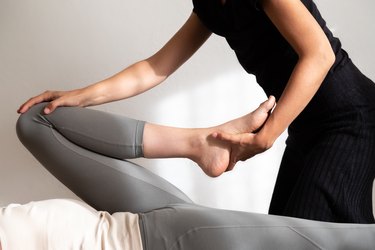
According to Dr. Warren Hammer, a chiropractic physician and author of the textbook "Functional Soft-Tissue Examination and Treatment by Manual Methods," post-isometric relaxation or PIR is an effective method for treating acute soft tissue problems, including calf muscle problems. Hammer adds that PIR--an active stretching technique involving both patient and practitioner--is a helpful treatment method for reducing tension that's often superior to modalities or passive care. To promote relaxation of a tight, painful calf muscles using PIR, the patient's calf muscles are elongated to their maximum length by flexing the ankle toward the head. The patient is then asked to push forward with his foot against resistance using about 20 percent of his maximum force. After 10 seconds of gentle muscle contraction, the patient is instructed to inhale deeply, then relax the calf muscles. When the calf muscles are fully relaxed, the practitioner should be able to further elongate the muscles. This process continues three to five times, until calf muscle tension and pain are reduced.
Physical Therapy Modalities
Physical therapy modalities, including transcutaneous electrical nerve stimulation or TENS, high voltage pulsed galvanic electrical stimulation, ultrasound, superficial heat and cryotherapy may be effective for reducing calf muscle pain. According to the Sports Injury Clinic, a sports medicine practitioner may use TENS as a way to decrease calf muscle pain caused by soft tissue injuries in the lower leg. The success rate of TENS treatments for calf muscle pain depends on several factors, including electrode arrangement, how long the condition has been present and the type of treatments the patient has already received. High voltage pulsed galvanic electrical stimulation may help reduce calf muscle spasms and soft tissue swelling following injury. Ultrasound--a deep heating modality--typically is used to improve connective tissue pliability, which makes calf muscle stretching easier. Thermal therapies, such as superficial heat and cryotherapy, are applied to the calf muscles to improve circulation and speed healing of injured tissues, along with reducing pain and inflammation.
References
- Sports Injury Clinic: Lower Leg, Calf Pain and Ankle Pain
- Sports Injury Clinic: Sports Massage for Calf Strain Treatment
- Dynamic Chiropractic: Postisometric Relaxation
- Sports Injury Clinic: Calf Contusion
- "Functional Soft-Tissue Examination and Treatment by Manual Methods"; Warren Hammer, D.C.; 2007


