






























Sodium Lauryl Sulfate & Health

Sodium Lauryl Sulfate & Health
Photo Credit shampoos and shaving foam lined up image by Georgios Alexandris from Fotolia.com

Sodium lauryl sulfate (SLS) is a surfactant used in shampoo, soap and toothpaste, as well as numerous other beauty and personal care products. It is an inexpensive detergent that causes suds, lather and foaming. Its negative impact on health has been studied extensively for many years, yet it continues to be a major ingredient that is used extensively.

Expert Insight

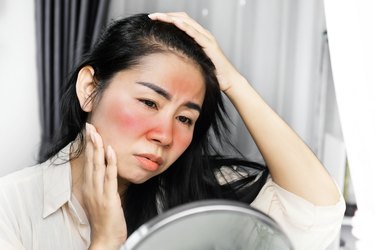
Sodium lauryl sulfate is a skin and eye irritant reported by the "International Journal of Toxicology" in 1983 to have a "degenerative effect on the cell membranes because of its protein denaturing properties." The Journal also reported that "high levels of skin penetration may occur at even low use concentration." According to Dr. Oz, sodium lauryl sulfate is a skin irritant that "fries skin proteins and destroys your good oils. It causes inflammation, free radicals, and you get a burning sensation and red, tight, and dry skin." He recommends reading the labels and avoiding any products containing SLS. Finally, the Mayo Clinic states that sodium lauryl sulfate in toothpastes and mouth rinses causes canker sores.

Considerations

The "International Journal of Toxicology" ironically concludes that sodium lauryl sulfate is safe in formulations that are designed for discontinuous, brief use followed by thorough rinsing. Shampoo, soap and toothpaste use generally falls under this category, but with daily use it is unclear if repeated exposure to minimal amounts of sodium lauryl sulfate is dangerous or not.

Warnings for Children

It may be especially wise for children to avoid the use of products containing sodium lauryl sulfate. The "Journal of the American College of Toxicology" says "tests show permanent eye damage in young animals from skin contact in non-eye areas" from SLS use. Furthermore it kept young eyes from developing properly and caused permanent damage.

Cancer Causing Agents

Although sodium lauryl sulfate has not been proven to be carcinogenic, in many cases, its presence in formulations is an indication that the product also contains other undesirable ingredients, such as formaldehyde and additional cancer-causing agents. In Germany, cosmetics and personal care products containing sodium lauryl sulfate cannot be certified or labeled as being natural.

Chemical Cousins

Many companies are switching from sodium lauryl sulfate to sodium laureth sulfate and ammonium lauryl sulfate, which are close chemical cousins to sodium lauryl sulfate. These products are slightly less irritating to the skin and eyes, but can have health risks of their own.

References

Article reviewed by AKanjuka Last updated on: Jul 21, 2010

Must see: Photo Galleries

Member Comments