




















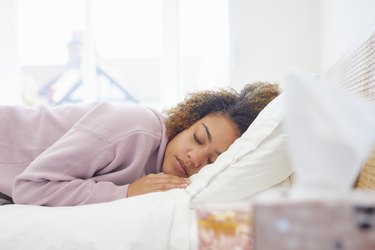






















Hot flashes and night sweats are common menopause symptoms. According to the North American Menopause Society, it is speculated that the hypothalamus gets a wrong signal that the body is too hot and this starts a chain reaction of cooling responses. The blood vessels near the skin's surface dilate causing a feeling of heat and a flushed appearance. When this happens at night while sleeping, these episodes are called night sweats. Women have found ways to reduce these annoying, uncomfortable and sometimes embarrassing responses. A medical doctor should be consulted to confirm that these symptoms are due to menopause.
Mindfulness-based Relaxation
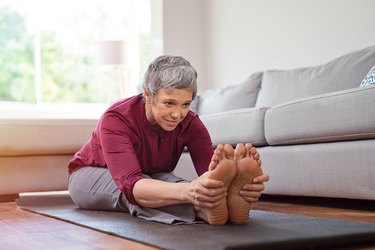
It may seem simple, but learning to relax is key to reducing hot flashes and night sweats. There is a direct correlation between stress and hot flashes. In the September 2006 issue of "Menopause" researchers reported that women who practiced mindfulness-based relaxation techniques such as yoga or deep breathing for 11 weeks reported 40 percent fewer hot flashes. When women take note of the things that cause them stress and then practice deep breathing and relaxation, hot flashes diminish.
Isoflavones
Soy has been shown to reduce hot flashes and night sweats by 57 and 43 percent, according to a report from the website Chinese Medicine News. The study referenced was conducted in Sweden with 60 postmenopausal women whose diet was supplemented with 60 mg of isoflavones. Isoflavones are flavonoids from soy products which are called phytoestrogens and have weak estrogen properties. Soy can be added to the diet in the form of soybeans, tofu, tempeh or soy milk drinks.
Temperature Control
Sometimes a warm room or hot weather can trigger a hot flash or night sweats. The ideal room temperature for sleeping is 65 degrees F and a daytime temperature of 70 degrees can help control hot flashes, according to Dr. Christiane Northrup, an author and medical doctor who specializes in women's health. A room fan positioned to circulate cool air will help reduce night sweats. A cold ice pack placed under the pillow is another treatment option that women find useful.
Light Clothing
During warm weather, women should wear light clothing of natural fabrics that help dissipate heat. Light layers will allow a woman to adjust her clothing for better comfort if temperatures rise.
Avoid Hot Spicy Foods
Some women find that hot spicy foods increase the incidence of hot flashes. By identifying these food triggers she can avoid them and the hot flashes, according to MayoClinic.com
Hormone Therapy
Women with severe hot flashes and night sweats may want to talk with a medical doctor about the options of taking oral estrogen or progesterone. This treatment should only be considered after a comprehensive history and evaluation by a medical professional.
References
- North American Menopause Society: NAMS Expert Advice - Menopasue Information at Your Fingertips
- PubMed/"Menopause": A Pilot Study of Mindfulness-Based Stress Reduction for Hot Flashes
- Chinese Medicine News: Soy Cuts Hot Flashes, Night Sweats of Postmenopausal Women
- Christiane Northrup, M.D.: Hot Flashes
- MayoClinic.com: Hot Flashes


Member Comments