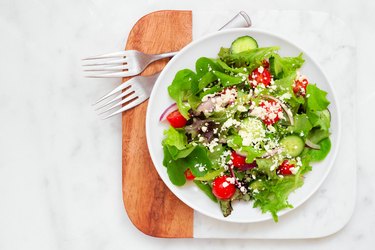
Avoiding meat? You can still eat a varied diet — a plant-based meal plan can certainly be interesting and inventive. And for those who want to consume some animal products, the lacto-ovo vegetarian diet is an option that includes plants, dairy products and eggs — though not fish, meat and poultry.
Types of Vegetarian Diets
Video of the Day
A 2016 Harris Interactive Poll commissioned by the Vegetarian Resource Group, a nonprofit organization that disseminates information about vegetarianism, found that approximately 8 million adults in the United States call themselves vegetarians. Additionally, approximately 3.7 million U.S. adults are vegan; 4.3 million are vegetarian, but not vegan.
Video of the Day
In general, those who follow a vegetarian diet totally exclude meat, fish and poultry. There are more specific types of vegetarian eating patterns, however, and the Mayo Clinic gives a good summary of the different vegetarian diets:
- Vegans (strict vegetarians) do not eat meat, poultry, fish or any products derived from animals, including eggs, dairy products, honey and gelatin.
- Lacto-ovo vegetarians do not eat meat, poultry or fish, but do eat eggs and dairy products.
- Lacto vegetarians eat no meat, poultry, fish or eggs, but do consume dairy products.
- Ovo vegetarians eat no meat, poultry, fish or dairy products, but do eat eggs.
- Partial vegetarians eat no red meat but may eat fish (pesco-vegetarian or pescatarian) or poultry (pollo-vegetarian).
There is also the "semi-vegetarian diet" — also known as a flexitarian diet — which is primarily a plant-based diet, but includes meat, dairy, eggs, poultry and fish on occasion or in small quantities.
Read more: The Pros and Cons of a Vegetarian Diet
Lacto-Ovo Vegetarian Food List
The USDA's ChooseMyPlate states that the key to staying healthy on a vegetarian lacto-ovo meal plan is to consume a variety of foods and the right amount of foods to meet your daily calorie needs.
It advises following the food group recommendations for your age, sex and activity level to get the right amount of food and the variety of foods needed for nutrient adequacy. Nutrients that vegetarians may need to especially focus on include protein, iron, calcium, zinc and vitamin B12.
A lacto-ovo vegetarian diet is more inclusive than a strict vegan diet that eschews all animal products. Milk, yogurt and cheese are rich natural sources of calcium and are permissible to eat when following a ovo-lacto vegetarian meal plan. For protein, you have many choices including eggs, low-fat dairy, legumes, grains such as quinoa, fortified cereals, brown rice and oatmeal, nuts and seeds, Swiss chard and collard greens.
Vegetables can also supply necessary nutrients. For example, leafy greens like bok choy, broccoli, Chinese cabbage, collards and kale contain calcium. Vitamin D can be found in mushrooms, although the easiest way to boost vitamin D intake while on a lacto-ovo vegetarian diet is through fortified dairy products.
The American Heart Association recommends eating eight or more fruit and vegetable servings every day; a simple way to help get all of your vitamin requirements is by "eating the rainbow" through consuming a colorful array of produce.
Read more: 5 Reasons People Become Vegetarian
Lacto-Ovo Vegetarian Diet Side Effects
The main concern with eating a vegetarian diet is ensuring you take in enough necessary vitamins and nutrients. People who follow a lacto-ovo vegetarian diet — and especially a vegan diet — may be at risk of getting insufficient vitamin D and vitamin K.
Although green leafy vegetables contain some vitamin K, vegans may also need to rely on fortified foods, including some types of soy milk, rice milk, orange juice and breakfast cereals. They may also want to consider taking a vitamin D supplement or multivitamin.
In general, when you eat a lacto-ovo vegetarian diet, eating a well-balanced diet consisting of a variety of fruits, vegetables and vegetable proteins will provide necessary daily nutrition for an active lifestyle. The Dietary Guidelines for Americans advises following a "healthy eating pattern" at an appropriate calorie level to help achieve and maintain a healthy body weight, support nutrient adequacy and reduce the risk of chronic disease.
Vegetarian Lacto-Ovo Meal Plan
An example of a daily lacto-ovo meal plan with foods from the lacto-ovo vegetarian food list includes:
- Breakfast: Bowl of steel-cut oats cooked in 2 percent milk, seasoned with ground cinnamon and maple syrup and topped with a handful of toasted walnuts and banana slices.
- Lunch: Spinach, zucchini and cherry tomato frittata and a green salad.
- Dinner: A medley of roasted root vegetables — examples include sweet potatoes, beets, carrots, turnips — served with quinoa and sauteed tofu.
- Snacks: A small portion of raw almonds, an apple or pear, or sliced cheese and whole-grain crackers.
Read more: A Vegetarian Diet Plan for Beginners
- U.S. National Library of Medicine: "Vegetarian Diet"
- The Mayo Clinic: "Vegetarian Diet: How to Get the Best Nutrition"
- National Institutes of Health, Office of Dietary Supplements: "Calcium"
- Harvard Health Publishing, Harvard Medical School: "Becoming a Vegetarian"
- The Vegetarian Resource Group: "How Many Adults in the U.S. are Vegetarian or Vegan?"
- American Heart Association: "Eating the Rainbow – Challenge Yourself to Try Fruits and Vegetables of Different Colors"
- USDA, Choosemyplate.gov: "Tips for Vegetarians"
- USDA: "Dietary Guidelines 2015-2020"