




























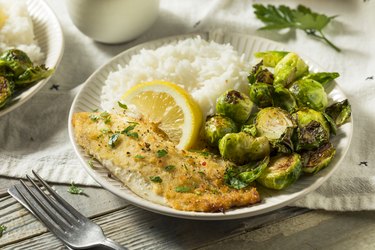



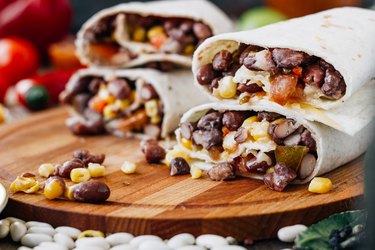

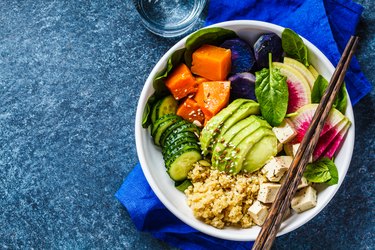








An anti-inflammatory diet consists of food designed to decrease low-grade inflammation in the body. According to Medicine at Michigan, too much inflammation in the body can destroy healthy tissue, leading to long-term health issues. Over-the-counter and prescription medications can reduce this inflammation, but it can also be done naturally through diet. Diets to reduce inflammation have significantly fewer potential side effects and allergy risks than medications.
Cold-water Fish
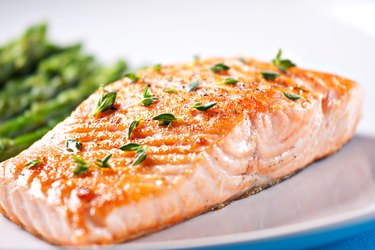
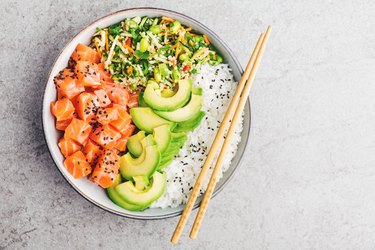
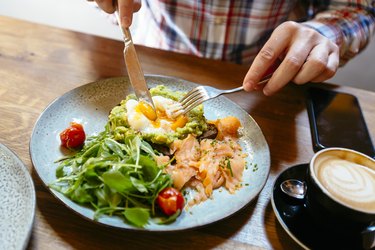
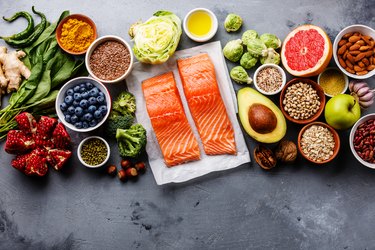
Cold-water fish such as salmon contain omega-3s, which are anti-inflammatory fats. Wild salmon, like Alaskan, have more omega-3s than farmed salmon, like Atlantic. Other cold-water fish containing omega-3s are tuna, rainbow trout, snapper, striped bass, whitefish and sardines, according to MetabolismAdvice.com.
Grass-fed Meat
Food that comes from animals raised on grass instead of grain has more inflammation-fighting properties. Some people are sensitive to gluten, a compound of grain, and may suffer inflammation from eating it. Grass-fed animal meat can lower inflammation in the body.
Olive Oil
Oleic acid found in olive oil is another good source of anti-inflammatory fats. Oleic acid can lower blood sugar and reduce inflammation, according to DLife. While you can use any cold-pressed oil, extra-virgin olive oil has the least amount of processing.
Vegetables
Some vegetables, especially green leafy and cruciferous, or members of the cabbage family, are high in inflammation-fighting properties. These vegetables include broccoli, turnip greens, collards, bok choy, cabbage and cauliflower, according to MetabolismAdvice.com. Other anti-inflammatory vegetables are sweet potatoes, leeks, green onions, peppers and garlic.
Fruits
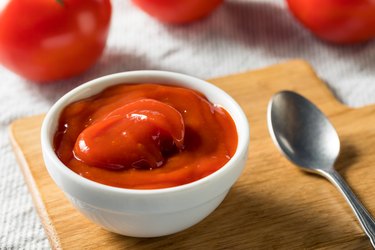
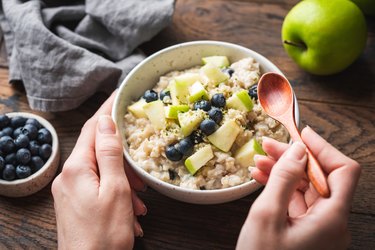
Fruits can be high in antioxidants and inflammation-fighting properties. Cherries and blueberries are especially good for fighting inflammation, according to DLIfe. Other fruits high on the anti-inflammatory food list are apples, pineapples, lemons, limes, oranges, papaya, strawberries, mulberries, kiwi, guavas, tomatoes and black currants.
Nuts and Seeds
Nuts listed on the MetabolismAdvice.com anti-inflammatory food list include walnuts, almonds and hazelnuts. Flaxseed or linseed and sunflower seeds also make the list.
Salads
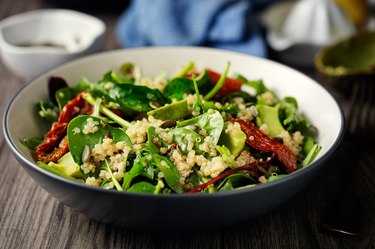
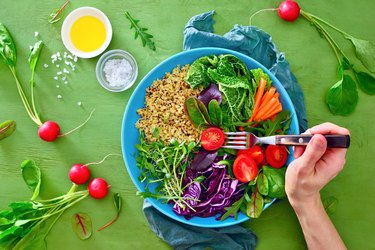
Salads can lower inflammation in the body, especially when prepared with olive oil or oil-and-vinegar dressings and plenty of anti-inflammatory vegetables. Start with a dark green lettuce with plenty of nutrients, like romaine or arugula, instead of iceberg, which is nutritionally void; toss in veggies and fruits, and hold the cheese.


Member Comments