
























Fifth disease is the common name used for an infection caused by the human parvovirus B19. The disease occurs most frequently among children; however, adults can be affected as well. The disease is transmitted by respiratory secretions including saliva, mucus and sputum. The most common symptom in children is a mild rash, which often appears on the face. The disease usually resolves within a week or two. Although severe complications are rare, they do occur in some cases.
Chronic Joint Pain
Adults with fifth disease may also develop a rash; however, swelling and painful joints are more common symptoms. Often, the joint pain is evenly distributed on both sides of the body, affecting the knees, hands and wrists. In most cases, the swelling and joint pain disappears after a week or two. However, some adults may suffer from joint pain and swelling for several months after becoming infected with fifth disease, reports the Centers for Disease Control and Prevention. In some cases, chronic arthritis may develop.
Risks for Pregnant Women
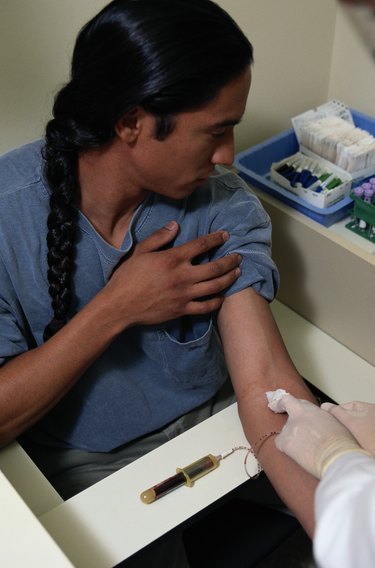
In some rare cases, fifth disease poses added risks to women who are pregnant. Some studies have found an increased risk of miscarriage and spontaneous abortion in women who became infected with fifth disease while pregnant, the New York State Department of Health explains. A pregnant woman who has been exposed to a person infected with fifth disease should consult her physician and possibly receive a blood test.
Sickle Cell Disease Complications
If a person with sickle cell disease or other conditions of chronic anemia becomes infected with fifth disease, severe complications may result. The infection may drastically worsen anemia, causing the person to feel very weak and tired, and turn very pale in complexion, the Centers for Disease Control and Prevention explains. After the infection is treated, anemia often improves.
Complications with Other Illness
Fifth disease may also cause more severe complications in people with immune deficiency diseases. Patients with inherited immune deficiencies, cancer, leukemia, or HIV, as well as recent transplant recipients, are at risk for severe episodes of anemia caused by fifth disease, explains the Centers for Disease Control and Prevention.
References
- Centers for Disease Control and Prevention: Parvovirus B19 (Fifth Disease)
- New York State Department of Health: Fifth Disease (Erythema Infectiosum, Parvovirus B19 Infections)
- Medline Plus: Fifth Disease
- Wisconsin Department of Health Services: Fifth Disease (Erythema Infectiosum, Parvovirus B19 Infections)


