































































Poor blood circulation is a common circulatory problem due to narrowing of the arteries from atherosclerosis, or hardening of the arteries. A fatty deposit, plaque, builds up inside the arteries, narrowing them and reducing blood flow to the brain, heart and extremities. According to the American Heart Association, poor circulation to the extremities is called peripheral vascular disease, to the heart is called coronary artery disease, and to the brain is called carotid artery disease. Risk factors include smoking, obesity, diabetes, high cholesterol and heredity.
Intermittent Claudication
Intermittent claudication is pain in the legs, particularly the calves, that occurs while walking and is relieved by rest, according to MayoClinic.com. The pain appears as cramping after walking a short distance or climbing stairs, and then disappears after a period of rest. The pain and cramping is due to a lack of oxygen to the muscles caused by reduced blood flow through a clogged artery. The pain can be mild to debilitating, depending on the extent of the blockage.
Sensory Changes
Poor circulation can lead to numbness in the extremities. The feet and hands are most likely to be affected. There is an increased risk for falling when numbness occurs in the feet, or for sustaining burns when it occurs in the hands. Tingling, pins and needles feelings also can occur in the extremities and can become so severe that the weight of clothes or bed sheets causes pain, according to MedlinePlus.
Temperature and Skin Changes
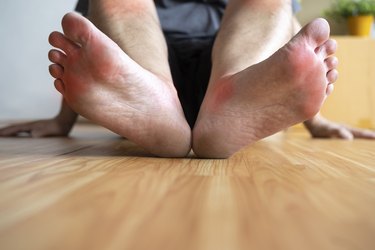
Decreased circulation to the extremities can lead to temperature changes, according to ePodiatry.com, leading the feet or hands to feel cold. The weakened arterial pulses can be hard to identify due to reduced blood flow. Color changes can occur in the skin of the legs, feet and hands, appearing very pale or red and shiny. The toes and fingers may appear bluish from a condition called cyanosis. Poor circulation can also cause hair loss on the legs.
Delayed Healing
A serious complication of poor circulation is delayed healing and the formation of open sores, called vascular ulcers, on the extremities. According to MayoClinic.com, this is caused by a severe loss of blood flow called critical limb ischemia. This inadequate blood flow makes it more difficult for wounds to heal, leaving them open to infection. In extreme cases, gangrene can develop and may lead to loss of the limb. Any wound that does not heal properly should be evaluated by a medical professional.
Heart and Brain Effects
Poor circulation to the heart is called coronary artery disease. According to the National Heart Lung and Blood Institute, when the coronary arteries are blocked, oxygen-rich blood cannot reach the heart, causing angina chest pain. Angina feels like a pressing or squeezing around the heart that radiates to the jaw, neck and shoulder. A heart attack can occur if an artery is completely blocked.
Poor circulation to the brain, or carotid artery disease, causes changes in mental acuity, such as memory loss and confusion. If the blockage is severe, it can lead to stroke.


