











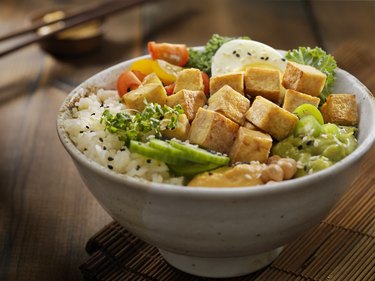

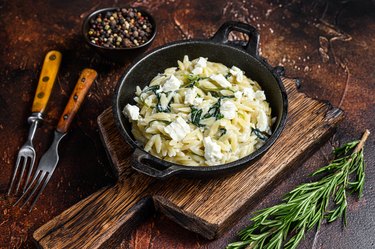


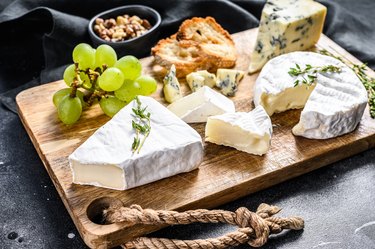







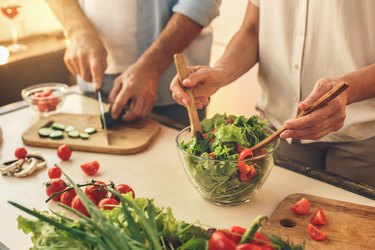
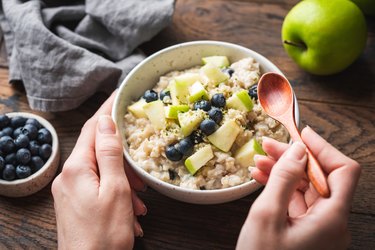



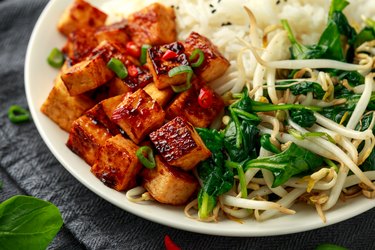

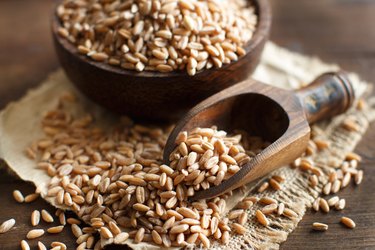


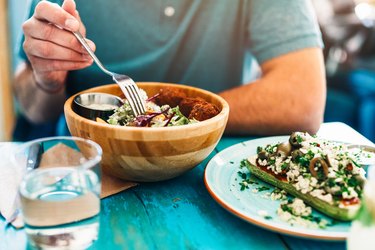



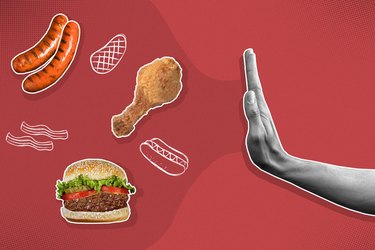

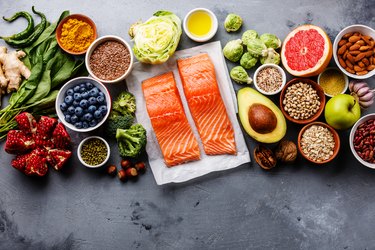

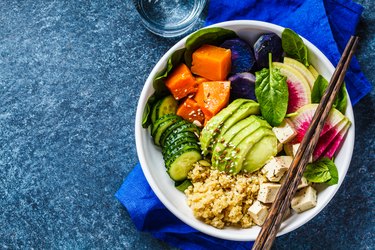






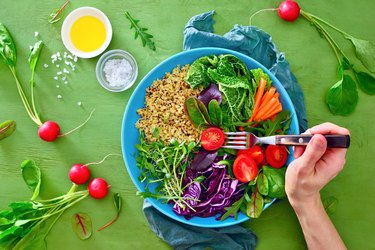

A balanced diet ensures that your body gets all the nutrients it needs for optimal health. Some diet plans encourage you to eliminate entire food groups, including carbohydrates or meat, but this is not usually healthy over the long term. When you eliminate an entire food group, your body may not get all the nutrients it needs.
Balance Over Time
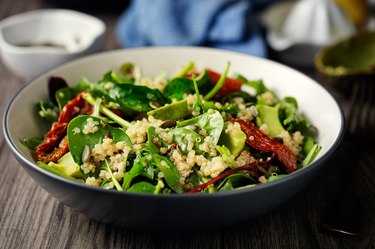
Every meal you eat may not include all six food groups. This is fine as long as you consume some of everything over the course of the day. For example, if you have a salad with fresh vegetables and low fat dressing for lunch, be sure you incorporate a protein and whole grain pasta or rice into your dinner, and have low fat yogurt with fresh fruit for dessert. In this way, you will have plenty of vegetables at lunch, and protein, grains, fruit and dairy for dinner.
Schedule Considerations
The key to a successful menu is planning around your schedule. Do not plan an extravagant or time-consuming meal for an evening you have to work late and the kids have extracurricular activities. Reserve time-consuming meals for the weekends and plan on simple, easy dinners for your most hectic evenings. This will help you avoid the temptation to give up on the menu and order a pizza or get fast food on the way home.
Favorite Foods
If your family tends to eat a lot of meat and considers vegetables to be garnish, do not make radical changes all at once. Instead, serve their favorite foods in smaller portions and include some of the less favored foods. For example, a family that rarely eats vegetables may be willing to modify their habits to include a shepherd's pie with some meat and plenty of vegetables.
Main Meals
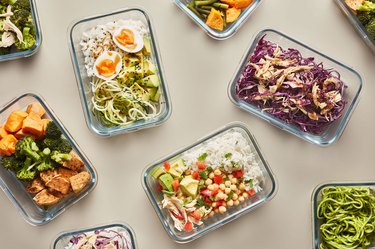
Write out each meal that you will eat over the course of a week. Include breakfast, lunch, and dinner. Include side dishes and beverages to go with the main dish. Take your list and sort each dish into categories based on the six food groups. This will help you see whether your menu is balanced or weighted too heavily in favor of one food group over others.
Snacks
Plan a variety of healthy snacks to complement your meal plans. Fresh raw vegetables, roasted nuts, and granola are all good options for snacking. Try to avoid high-fat, low-nutrition choices such as chips and candy bars.
References
- Weight Control Information Network: Weight Loss and Nutrition Myths
- "The What's-For-Dinner Cookbook: 52 Weeks of Balanced Dinners for Your Family;" Kathleen Botta and Claire Mendonca; 2002
- U.S. Department of Agriculture: Food Pyramid


Member Comments