






















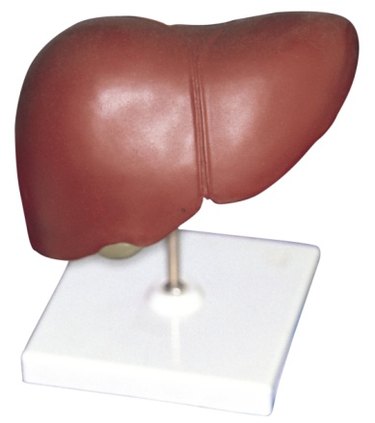



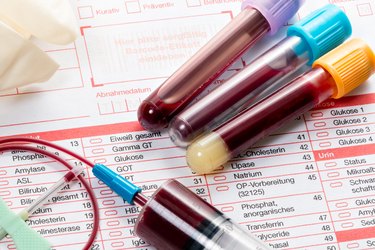
The liver is the largest organ within the human body, and it has many functions. It removes toxins, stores iron and makes bile, plasma proteins and clotting factors. The two kidneys make vitamin D and the erythropoietin hormone, eliminate waste, keep a balance between acids and bases and regulate electrolytes. The signs and symptoms of liver and kidney disease can reflect their decreased function.
Jaundice
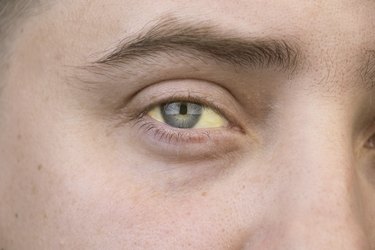
Jaundice is one of the best ways to tell that someone has severe liver disease, according to Marc Ghany, M.D., of the National Institutes of Health in "Harrison's Principles of Internal Medicine." Oxygen attaches to the hemoglobin protein in the red blood cell. When the lifespan of the red blood cell is over, the cell disintegrates and the hemoglobin is recycled. Part of the hemoglobin is changed to a substance called bilirubin, attached to a protein and carried to the liver. Normally, the liver changes bilirubin so it can be eliminated in the urine or bone marrow. In liver disease, the liver cannot change bilirubin. It accumulates in the bloodstream and makes the skin and the white part of the eye turn yellow. This is jaundice.
Itching
Bile is a substance that is made in the liver out of bilirubin, water, bile salts, electrolytes and cholesterol, as explained by Elizabeth Corwin, Ph.D., in "Handbook of Pathophysiology." Its job is to break down fats into small particles. When bile leaves the liver, it goes to the small intestines or is concentrated and stored in the gall bladder. In some liver diseases, people may develop cholestasis, where the bile flow is blocked from leaving the liver. This results in the bile getting into the bloodstream. People will then develop intense itching because of the high amount of bile acids circulating in the blood.
Hematuria
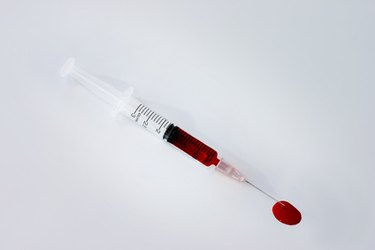
Hematuria is the medical term for red blood cells in the urine, and it can be either gross or microscopic. In gross hematuria, people will see a red or bloody urine when they urinate. In microscopic hematuria, the urine does not look red, but a urinalysis will be able to determine that there are red blood cells. Injury or disease in any part of the urinary tract can cause red blood cells in the urine, as explained by Seyed-Ali Sadjadi, M.D., Associate Professor of Medicine at Loma Linda University School of Medicine in "The Merck Manual for Healthcare Professionals." The urinary tract includes the urethra, bladder, ureters and the kidneys.
Flank Pain
The kidneys are in the lower part of the back with one on either side of the spinal column. The right kidney is a little lower than the left kidney, because the right side of the liver is larger than the left side. Flank pain means pain that is on the side, and it is usually a sign of kidney disease. In "The Merck Manual for Healthcare Professionals," Dr. Sadjadi writes that if people have pain when a physician uses a fist to gently pound against the flank or back area, it may mean they have pyelonephritis or that there are kidney stones blocking the flow of urine. Pyelonephritis is inflammation within the kidneys.
References
- "Handbook of Pathophysiology"; Elizabeth Corwin, MSN, Ph.D., FNP; 2000
- "Harrison's Principles of Internal Medicine"; Anthony Fauci, M.D., Dennis Kasper, M.D., Dan Longo, M.D. et al.; 2008
- The Merck Manual for Healthcare Professionals: Approach to the Renal Patient
- The Merck Manual for Healthcare Professionals: Isolated Hematuria


