

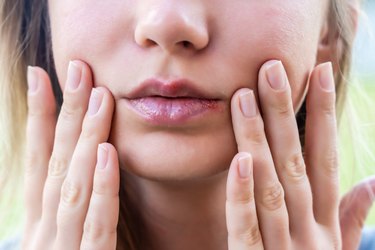























































Dry mouth is medically termed xerostomia. It can occur from chronic autoimmune diseases such as Sjogren's syndrome or be a side effect of cancer radiation treatment. Medications are also a common cause of dry mouth as are lifestyle and dietary choices, such as alcohol use, sugary foods and smoking, which can lead to temporary decreases in salivation. Saliva is important for killing potentially harmful microorganisms as well as countering tooth decay. Herbs for dry mouth can increase saliva production, but should be discussed with your doctor before use.
Jaborandi
Jaborandi is an herb native to the South American country of Brazil. The Green Pharmacy Herbal Handbook notes that this widely distributed herb was dubbed the name jaborandi, by the country's Tupi Guarani Indians for its meaning of "that which causes slobbering." The herb has a high concentration of the substance known as pilocarpine. Pilocarpine mimics the effects of the parasympathetic nervous system in that it leads to salivary gland stimulation and the increased production of saliva. The Green Pharmacy article notes that jaborandi is a difficult herb to come by, but that by investigating the effects of the herb, a synthetic pilocarpine drug has been derived and is presently awaiting U.S. Food and Drug Administration approval. The use of all herbs should be thoroughly discussed with a health care practitioner before use.
Echinacea
Echinacea is a common, household herb name. It is prized for its immune-boosting properties as a cold and flu preventive and treatment. An echinacea constituents known as echinacein, is noted by Botanical Online to also assist in stimulating salivation. As a potentially effective treatment for dry mouth, echinacea is useful in the forms of dried herb, made into tea; the fresh roots can be chewed; and tinctures and capsules, in addition. Fresh echinacea roots can be chewed and alcohol or glycerin tincture extracts are suggested to be taken in as a dropperful dose added to juice, according to the Green Pharmacy. A temporary numbing of the mouth is expected, but should not cause alarm as its effects wear away quickly. In supplement or capsule form, Botanical Online suggests doses of 200mg, taken three times per day, however all supplements should be discussed with a physician before use.
Prickly Ash
With the rising rates of cancer and the increased need for anticancer therapies, like chemo and radiation, herbs that may prevent or heal radiation induced xerostomia may prove to be very important. A Herbs 2000 document lists the herb, prickly ash as having dry mouth abating effects, specifically occurring secondary to radiation treatment. The tincture form of the herb is suggested, in 10 to 20 drop doses, consumed between 3 and 7 times per day. The drops are suggested to be mixed into a quarter cup of water and then swallowed. To avoid potential drug-herb interactions, the use of prickly ash as a treatment for dry mouth should be discussed with a health care practitioner before use.
Yohimbe
Yohimbe bark, an African plant, may be an effective herbal treatment for dry mouth. A Green Pharmacy article notes that this herb is a folk remedy for inducing salivation. The herb is most well known for its aphrodisiac properties and is considered a potent male tonic, helping to counter issues with male impotence. Yohimbe is noted in the article to have potentially dangerous side effects if taken without supervision in the dry herb form, and recommends that a person's doctor be consulted and a standardized and supervised dose of the herb prescribed.


