




































Vitamin D is the only vitamin that can be made by the human body through sun exposure. This nutrient is necessary for developing and maintaining strong bones as well as for proper immune system function. Vitamin D may reduce the risk of developing certain types of cancers. The recommended adequate intake, or AI, level for vitamin D is 200 IU for adults aged 19 to 50 years; after age 50, the AI increases to 400 IU daily. Foods rich in vitamin D include seafood, eggs, fortified dairy and soy products and other foods.
Fish and Eggs
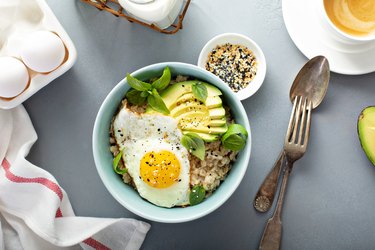
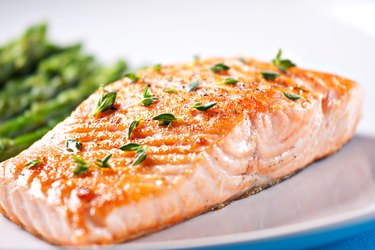
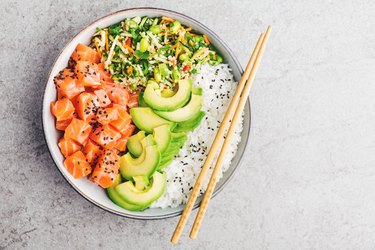
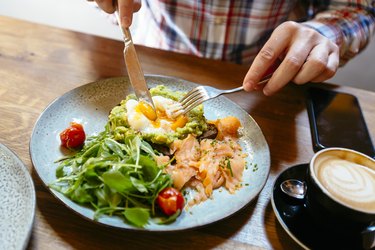
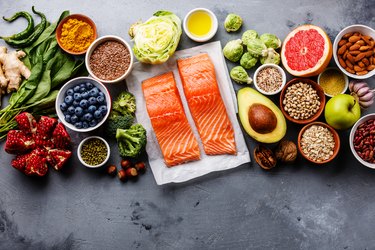
Certain varieties of fish are the best natural food source of vitamin D. Sardines, salmon, sardines, herring, tuna, mackerel and halibut are particularly vitamin D-rich. According to the World's Healthiest Foods, a 3.25-oz. serving of sardines offers 250 IU vitamin D; meeting approximately 62 percent of the Recommended Daily Value (DV). A 4-oz. portion of either cooked wild catfish, Chinook salmon or mackerel offer more than 400 IU of vitamin D (over 100 percent of the DV). A 3-oz. portion of water-packed canned tuna, drained, provides 154 IU vitamin D, meeting nearly 40 percent of the DV. Eggs, particularly egg yolks, are, like fish, a natural food source of vitamin D. Consuming two whole eggs provides approximately 50 IU vitamin D, which is 12 percent of the DV for this vitamin.
Dairy and Fortified Soy
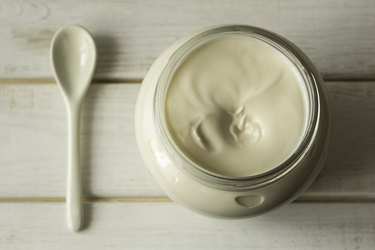
According to the National Institutes of Health Office of Dietary Supplements, vitamin A- and D-fortified milk and/or vitamin D-fortified yogurt are both excellent food sources of this nutrient. One cup of non-fat milk provides 115 to 124 IU, meeting about 30 percent of the DV, while a 6-oz. serving of fortified yogurt offers 80 to 120 IU vitamin D, which is over 20 percent of the DV. Fortified soy products, such as soy milk and yogurt, are also food sources of this nutrient--particularly important for those who do not consume cow's milk and yogurt. On average, a cup of fortified plain soy yogurt provides 50 IU vitamin D. Vitamin A- and D-fortified soy milk, on average, provides as much vitamin D as cow's milk, about 120 IU per cup.
Other Foods
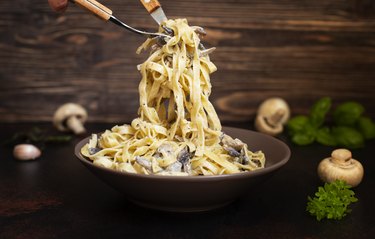
Because vitamin D is found naturally in few foods without fortification, new techniques for increasing the vitamin D content are in process. For example, while not yet commonly available, mushrooms that have been exposed to ultraviolet light are an excellent food source of vitamin D. In fact, a 3-oz. portion provides 400 IU or 100 percent of the DV. Not only is calcium-fortified orange juice available, but so is orange juice fortified with vitamin D. The exact content varies, but, on average, a cup provides 100 IU, meeting 25 percent of the DV. Many ready-to-eat breakfast cereals are fortified with vitamins and minerals, including vitamin D. On average, a 3/4 cup serving provides 40 IU, or 10 percent of the DV.


Member Comments