















































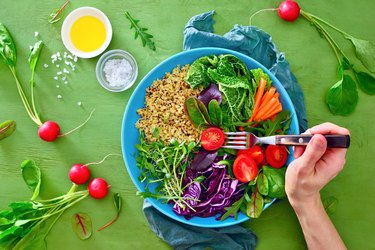

Eating a balanced diet means eating different types of foods from a variety of food groups --- and the right amount of each of these foods --- to get all the essential nutrients required for good health without consuming excess calories. Although everyone chooses foods from among the same groups, a balanced diet is actually quite flexible, and means different things to different people, because the great variety of foods found within each group allows for personal choices in meal planning.
Definition
The National Institutes of Health define a balanced diet as eating a variety of foods in the proper amounts to provide enough energy and nutrients to support growth and sustain a healthy body. That means getting just enough, but not too much, of any particular type of food or individual nutrient. A balanced diet is different for everyone, because the foods selected from within each food group will vary with individual taste, and sometimes with individual health concerns.
Guidelines
The U.S. Department of Agriculture's Dietary Guidelines for Americans and Food Guide Pyramid are tools developed to illustrate and provide guidelines for developing healthy, balanced diet plans based on age, individual food preferences and health concerns. A balanced diet, as illustrated by the Food Guide Pyramid, includes foods from six different groups, each of which provides essential nutrients in the diet. The Dietary Guidelines outline the essential nutrients needed in the diet and suggests types of foods that provide these nutrients.
Features
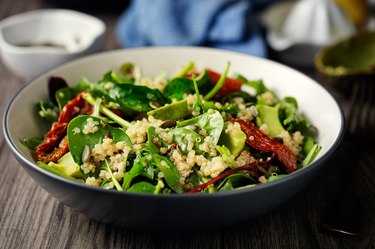
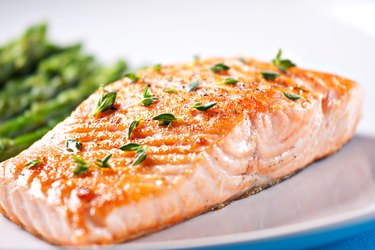
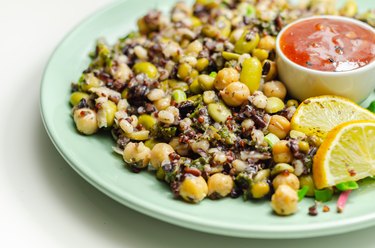
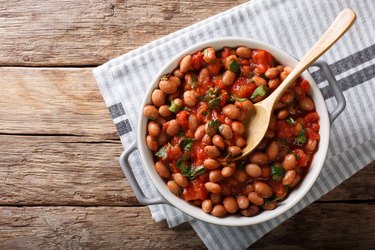
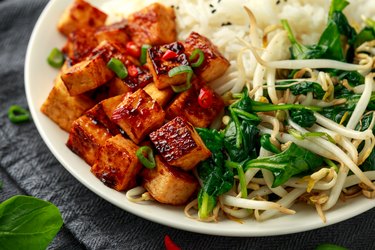
The six food pyramid groups that, together, represent a balanced diet, are grains, fruits, vegetables, meat and protein, dairy and healthy fats. There are many different types of foods, and substitutes for some foods, within each group. For instance, people who don't eat or drink dairy products can balance their meals with dairy substitutes, such as soy beverages fortified with the same nutrients, such as calcium, that other people get from milk. People who include dairy products in their diet but don't drink milk can get those same nutrients from yogurt and cheeses. A vegetarian can choose meat substitutes, such as soy products and legumes, from the meat and protein group.
Portions
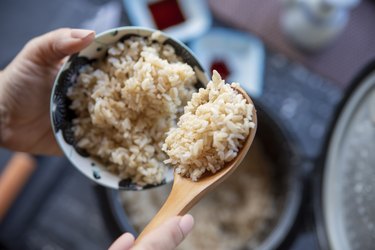
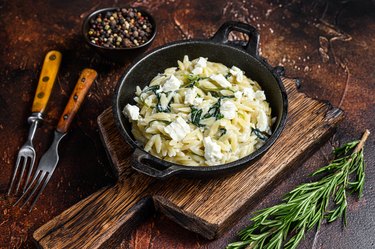
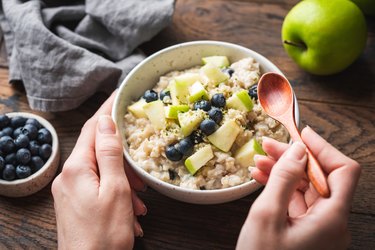
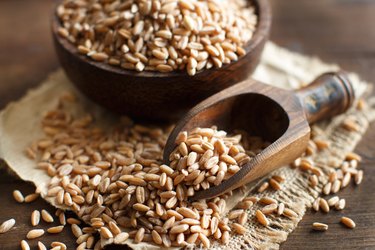
A balanced diet includes a specific number of servings of foods from each food group. According to the U.S. Department of Agriculture's Food Guide, a balanced, daily eating plan includes four servings of fruit, five servings of vegetables, 6 oz. of grains, approximately 5 1/2 oz. of meat or meat equivalents, 3 cups of milk or dairy equivalents and 6 teaspoons of oils. For example, the standard serving sizes for fruits and vegetables include one medium fruit, 1 cup raw leafy vegetables or 1/2 cup cut-up raw or cooked vegetable or fruit. The standard serving size of grain products includes one slice of bread, 1 cup of dry cereal or 1/2 cup cooked rice, pasta or hot cereal. In the protein group, one egg, 1/4 cup cooked, dry beans or tofu or 1 tablespoon of peanut butter is considered the equivalent of 1 oz. of meat. In the dairy group, 1 1/2 oz. of reduced-fat natural cheese or 2 oz. of low-fat or fat-free processed cheese is considered the equivalent of 1 cup of low-fat yogurt or milk.
Expert Opinions
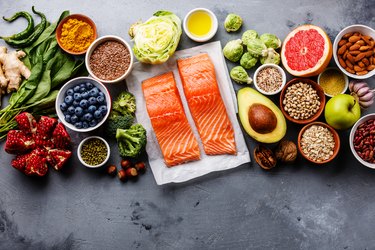
Eating a balanced diet also means eating the right amounts of the most nutritious foods available. That means choosing foods that are rich in disease-fighting nutrients, such as deeply colored fruits and vegetables, and, at the same time, eating just enough food overall to maintain a healthy weight. Most health experts, including the American Heart Association, the American Diabetes Association and the American Cancer Society, recommend eating a balanced, calorie-controlled diet that is relatively low in fat, particularly saturated fat, and includes an abundance of fruits, vegetables and whole-grain products, along with small portions of lean proteins and reduced-fat and fat-free dairy foods.


Member Comments