


























Many fad diets are designed with a one-size-fits-all approach to eating. Dosha-specific diets, based on the ancient principles of Ayurveda, or the "science of life," are designed to meet the needs of each individual constitutional type. Those with a vata-pitta constitution have unique needs based on elements of both doshas.
History
Ayurveda is the ancient system of medicine from India. Its teachings, which are both physical and spiritual, date back nearly 5,000 years. Its complex methods include therapies using nutrition, herbs, yoga, gems, mantras and meditation, as well as surgery. In Ayurveda, treatment is focused on balancing the doshas, or constitutional types. It is believed that when there is an imbalance of the doshas, poor health can result.
Types
There are three main doshas: kapha, or water; vata, or air; and, pitta, or fire. Most individuals have one dominant dosha, but may be a combination of two. In "Ayurvedic Healing," author and Vedic physician Dr. David Frawley explains the characteristics of each dosha. Vata types tend to be thin and have a hard time gaining weight. They tend to have light-brown hair, dry skin and delicate features. They prefer sour or salty foods, and may develop constipation. They tend to be hyperactive, but have poor endurance. Pitta types are of medium build with well-developed muscles. They tend to be athletic and goal oriented. They prefer sweet and raw foods, and often develop inflammatory diseases. Kapha types tend to be short and stocky. They have round features, and tend to have a sluggish metabolism. They prefer pungent or bitter foods, and do not like a lot of spices. They may be prone to respiratory illnesses.
Identification
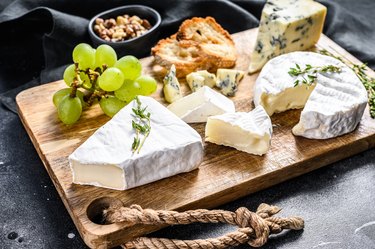
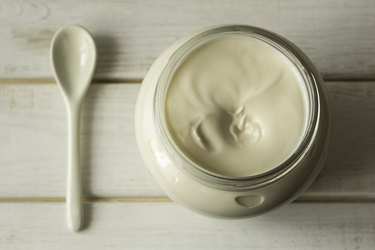
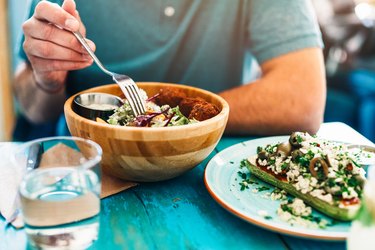
It is important to first determine an individual's dominant dosha before customizing a diet plan or other regimen. A vata-pitta type is a combination of both air and fire. Because vata types tend toward hyperactivity, and pitta types tend toward a fiery disposition, vata-pitta types need foods which are both calming and cooling. Yoga Journal recommends most dairy products for both types. In addition, coriander and mint are cooling, and coconuts, pomegranates, grilled vegetable salad, and rice pudding all reduce excess fire.
What to Eat
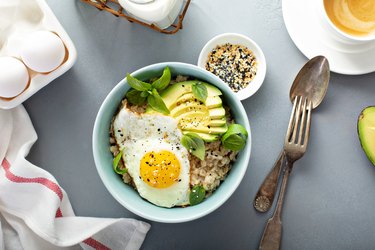
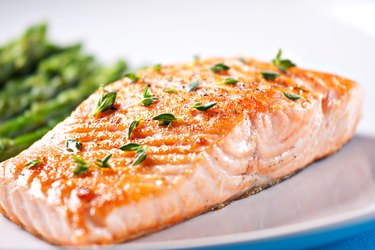
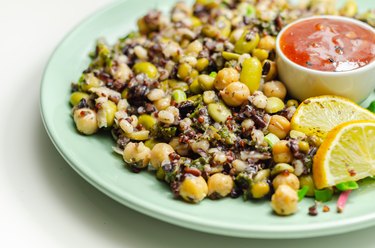
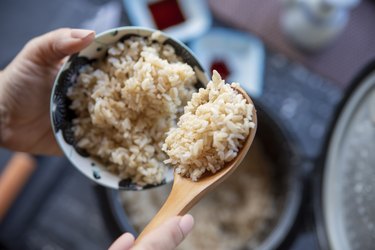
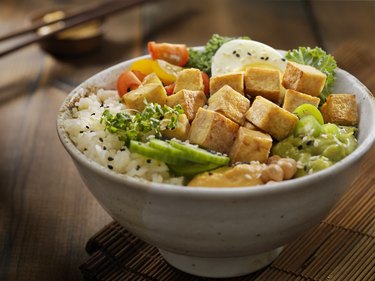
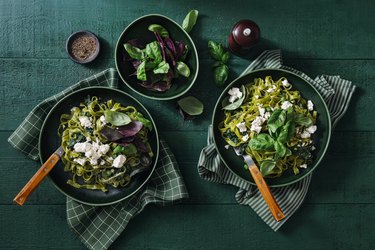
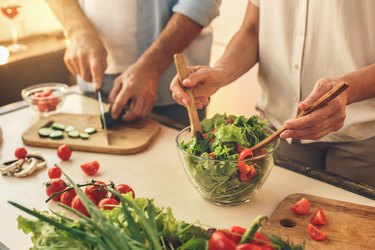
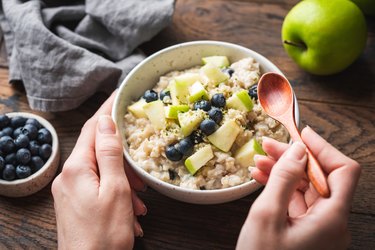
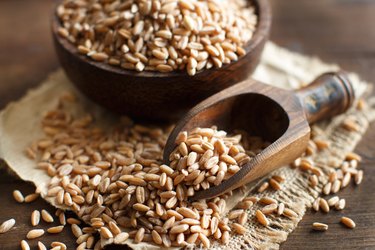
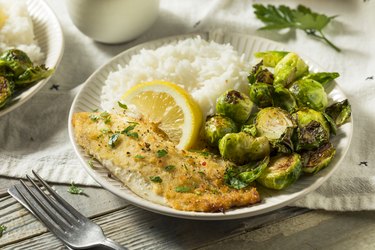
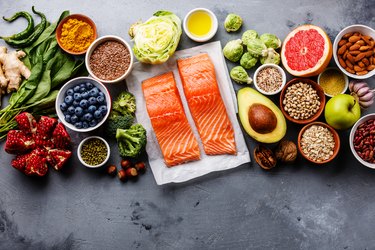
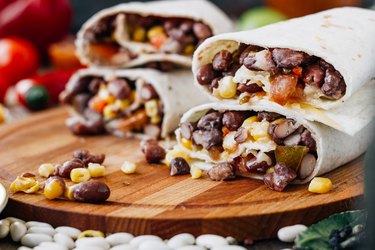
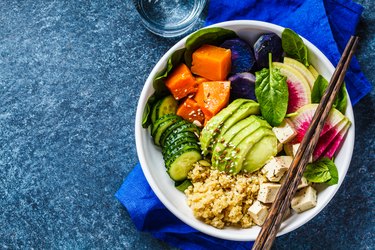
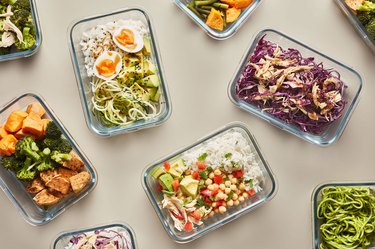
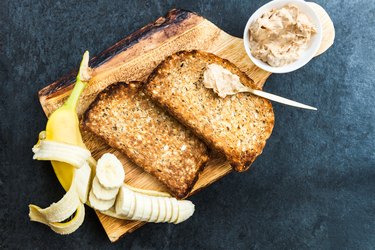
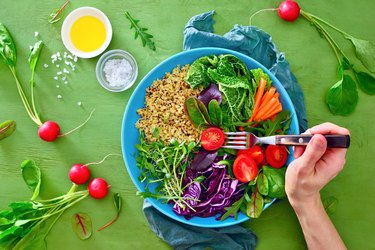
Because they tend to go back and forth between eratic and irritable, listless and hyper, determining what to eat for vata-pitta types can be tricky. Gary Gran, certified yoga teacher and Ayurvedic practitioner in Evanston, Illinois, makes some very specific recommendations for this dual dosha. Consider eating foods that are simple and easy to digest, such as seasonal fruits and vegetables as well as soups and stews. Well-cooked vegetables such as broccoli and asparagus, along with sweet fruits are best for vata-pittas. In addition, they should eat nuts and seeds rich in essential fatty-acids, easy-to-digest beans such as mung, and whole grains like rice, oatmeal, barley and wheat.
Considerations
Although Vedic principles are time-honored, these ideas may be foreign to those in the medical community. Always consult a health-care practitioner before making any drastic changes to your current diet. Natural therapies such as herbs and Ayurveda should be used in conjunction with, and not in place of, proper medical care.
References
- Florida Vedic College: The History of Ayurveda
- Yoga Journal: The Dosha Balancing Diet
- "Ayurvedic Healing"; Dr. David Frawley; 2000
- "Yoga Chicago"; Running Hot & Cold; Gary Gran RYT DAy: Jan/Feb 2007


Member Comments