






















































Candida is a type of yeast that occurs naturally in the body. In normal quantities, candida is harmless, but an overgrowth of the yeast can result in any of various symptoms, including skin conditions, brain fog, digestive problems, anxiety, mood swings, irritability, depression and fatigue. Treatment for candida commonly includes dietary changes, as well as the use of herbs and supplements. Consult a medical practitioner before making major dietary changes or using herbs or supplements.
Vegetables
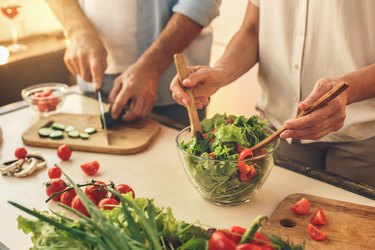
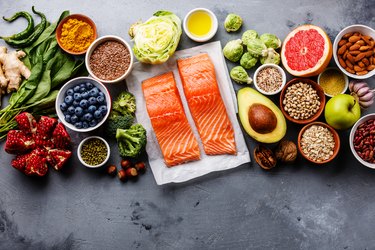
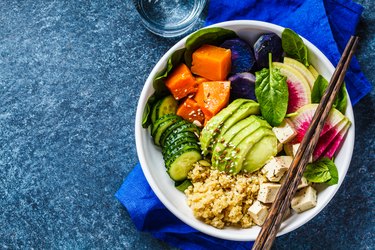
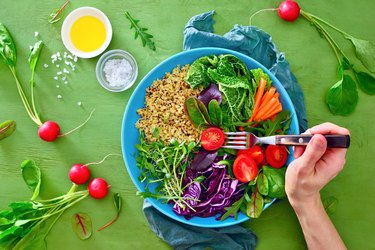
The candida treatment website WholeApproach.com reports that most vegetables are allowed on a candida cleanse diet. It recommends no limit on the amount of vegetables like asparagus, bok choy, broccoli, Brussels sprouts, carrots, cauliflower, chard, kale, leeks, onions, spaghetti squash, spinach and zucchini. Choose as many organic vegetables as possible. Limit your consumption of certain vegetables like sweet potatoes, cooked carrots, pumpkins, potatoes and starchy squashes.
Fruits
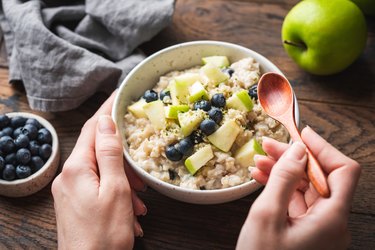
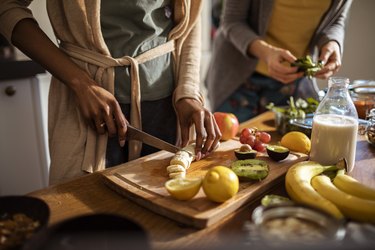
Eliminating sugar is an important aspect of a candida cleanse diet, reports NaturalNews.com, so anti-candida diets do not generally allow fruit. Some fruits, such as avocados, limes, lemons and cranberries, are acceptable, according to WholeApproach.com. After your symptoms have been reduced, you may start eating small amounts of some fruits, including apples, blueberries, peaches, pears, pineapples, strawberries and raspberries.
Protein
According to The Candida Diet website, proteins help restrict candida growth while helping you to feel full. The site recommends eating beef, chicken, fish and eggs, but avoiding processed meat.
Probiotics
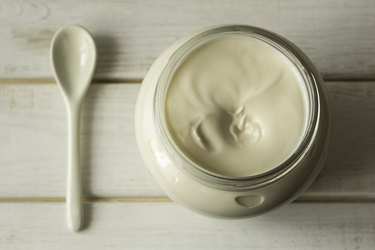
Probiotics, or friendly bacteria, may help with candida overgrowth by restoring the balance of bacteria in body. Probiotics can be taken as supplements, and are also found in foods such as yogurt, miso, tempeh and some soy beverages.
Herbs
Certain herbs, including pau d'arco and garlic, have antifungal properties, according to UMMC. The Candida Diet web site recommends cooking with black pepper, cayenne, dill, ginger, nutmeg, oregano, paprika, rosemary, thyme and turmeric. Some herbal treatments have side effects and can interact with other medications, so use them only under your doctor's supervision.


Member Comments