























































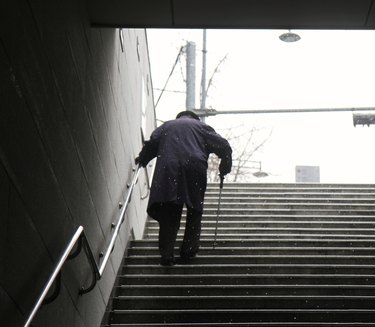
Snow shoveling is a vigorous activity, and unless you are in good physical health, it can prove dangerous. Cold weather alone puts extra stress on the heart, making it harder to breathe and work. According to North Dakota State University, shoveling snow can cause a sudden, rapid increase in heart rate and blood pressure. Those who are older, out of shape and have pre-existing heart conditions are more at risk for suffering a heart attack while shoveling snow.
Chest Pain
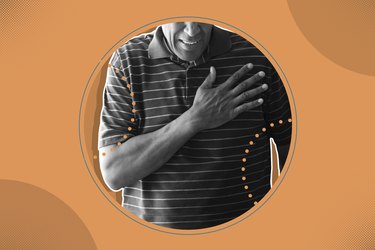
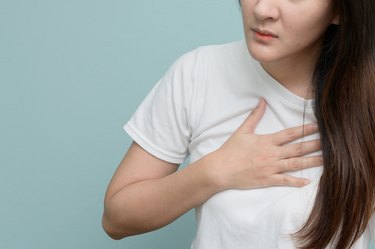
A heart attack occurs when plaque that builds up within the coronary arteries breaks off, causing a clot to form, which cuts off blood flow to the heart, according to the National Heart Lung and Blood Institute. One common symptom of a heart attack is chest pain. Pain or discomfort is typically located in the center of the chest and can feel like pressure, heaviness, tightness, squeezing or burning. It may last for a few minutes and go away, but will soon return. It can be mistaken for indigestion. A medical professional should immediately evaluate any chest pain that lasts for more than a minute or two.
Pain in the Jaw, Neck and Shoulder
The symptoms of a heart attack can vary from person to person and from women to men. Men may feel the classic pain radiating from the jaw to the neck and left shoulder. According to the Texas Heart Institute, women may feel the pain more as a burning in the upper abdomen and back. Many women ignore this type of pain because it is not the "typical" pain of a heart attack. If either type of pain is felt while shoveling snow, you should stop immediately.
Shortness of Breath and Choking Feeling
Suddenly becoming short of breath is another symptom of a heart attack. According to the Cleveland Clinic, you may have difficulty breathing, causing you to pant as you try to get enough oxygen. You may also feel fullness in your chest or have a choking feeling. A heart attack is a very serious medical emergency. As the blood to part of the heart is cut off, it loses its oxygen supply, and that section of the heart can start to die. If not treated immediately, the damage to the heart can be permanent.
Dizziness, Nausea and Sweating
A heart attack can also cause you to experience some symptoms of anxiety. You may feel faint, or dizzy, as if you are going to pass out. The heart may not be beating efficiently, causing an arrhythmia, or heart palpitations. According to MayoClinic.com, you may break out in a cold, heavy sweat and begin to feel nauseous. Stop shoveling snow at the smallest sign of a heart attack. Protect yourself by shoveling snow at a slow pace and using a snow blower or an ergonomic snow shovel. Never shovel snow if you have any type of heart disease without getting permission from your physician.


