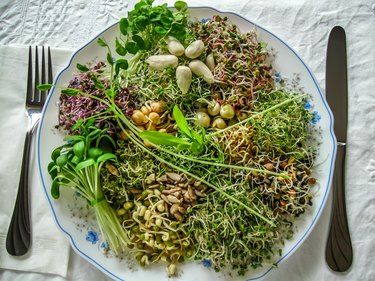
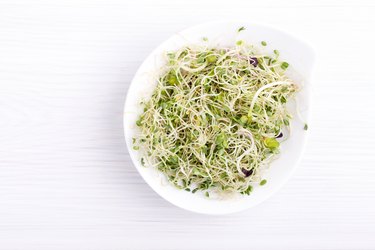
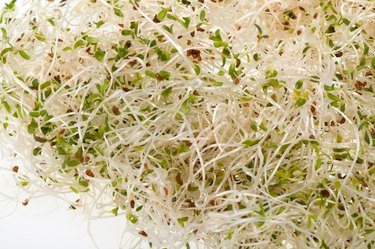
Alfalfa sprouts are considered to be the most nutritionally concentrated form of sprouts, primarily because their tiny seed produces a long root that reaches deep into the earth to access rich trace elements and minerals. Alfalfa sprouts are easy to harvest in most climates, making them a readily available source of nutrients throughout the year. Alfalfa sprouts have a mild flavor and can provide a nutritious addition to many sandwiches, salads and entrees.
Antioxidants
Alfalfa sprouts are among the top antioxidant providers of vegetables. Alfalfa sprouts contain beta carotene and isoflavones, which are naturally occurring antioxidants that protect your body's cells. Antioxidants protect your cells by prohibiting cell oxidation and by helping your body to fight free radicals. In this way the antioxidants found in alfalfa sprouts may help your body to protect against disease.
Enzymes, Vitamins, and Minerals
Alfalfa sprouts contain several important enzymes, which help to assimilate protein, carbohydrates and fats. Alfalfa sprouts also contain essential vitamins including vitamin A, vitamin C, vitamin E, and the bioflavonoids vitamin K and vitamin P. The mineral content of alfalfa sprouts boasts quantities of calcium, iron, potassium, magnesium, phosphorous, sodium, folate, niacin, riboflavin, thiamine and zinc. Each of the enzymes, vitamins, and minerals in alfalfa sprouts work together to provide your body unique benefits.
Chlorophyll
Alfalfa sprouts are abundant in chlorophyll. Chlorophyll in plants is similar to blood in humans--both allow for important metabolic functions such as respiration and growth. Human consumption of chlorophyll is found to provide health benefits, including enhanced delivery of oxygen to cells and tissues, assimilation of vitamins and minerals, and anti-inflammation. Chlorophyll also has antioxidant properties.
Protein
Alfalfa sprouts are also a source of protein. Alfalfa sprouts contain approximately 1 g of protein per cup. Protein is an essential component of your body's functioning. It helps with energy production, building and repairing tissues and bones, and maintaining healthy skin, hair and nails. Protein can also help with your hormone production and regulation. You can consult your physician to learn how much protein is right for your body.
Uses
Alfalfa sprouts have traditionally been used to treat various health conditions. The University of Michigan Health System reports that traditional Chinese medicine and Ayurveda both use alfalfa sprouts to treat issues with digestion. Ayurveda also considers alfalfa sprouts as therapeutic for arthritis. Native Americans used alfalfa sprouts for jaundice and to support blood clotting. More recent studies show that alfalfa is beneficial in blocking absorption of cholesterol and treating symptoms of menopause. However, it is important to note that consuming large quantities of alfalfa sprouts may be damaging to your health. Always consult your doctor to discuss your specific health conditions.
References
- "Healing With Whole Foods"; Paul Pitchford; 2002
- "Annual Review of Nutrition"; Kurtzer; 1997
- University of Michigan Health System


Member Comments