



















































Causes of a Pimple-Like Rash on the Face

Causes of a Pimple-Like Rash on the Face
Photo Credit woman washing her face image by Jarek Miarka from Fotolia.com

A pimple-like rash on the face can arise with a variety of infectious and noninfectious skin conditions that affect people of all ages. In many cases, the condition resolves without treatment. For chronic conditions, doctors often recommend topical or oral medications. Although pimple-like rashes often resemble acne, the causes and treatments often prove distinctly different.

Rosacea

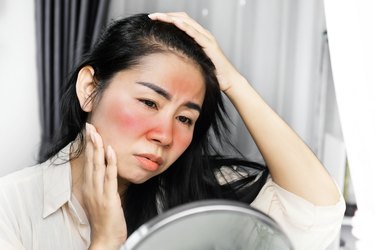
Rosacea, also known as acne rosacea, is a chronic skin disorder that most commonly affects fair-complected people between the ages of 30 and 50, according to the American Academy of Dermatology. The disorder typically begins with flushing, or redness, of the cheeks and nose. In some patients, pimple-like eruptions accompany the red rash. People with pimple-like lesions have the rosacea variant known as papulopustular rosacea. Treatment may include topical or oral antibiotics and other medicated lotions, creams or washes.

Sycosis Barbae

Folliculitis is a local infection of the hair pores, or follicles. Sycosis barbae is folliculitis of the skin area of the male beard. The bacterium Staphylococcus aureus most commonly causes sycosis barbae, according to the medical reference text "Principles and Practice of Infectious Diseases." Tender, pus-filled, pimple-like lesions occur on the chin, cheeks and area between the nose and upper lip. In most men, the condition resolves with topical washes and antibiotics. A break from shaving may help speed the resolution of the disorder. For patients with severe or repeated episodes of sycosis barbae, doctors may prescribe oral antibiotics or other treatments.

Milia

Milia are white, pimple-like bumps representing an accumulation of dead skin cells, commonly occurring on the face. Newborn babies often have milia, which clear without treatment, according to the National Library of Medicine encyclopedia Medline Plus. Adults can also develop facial milia, which resemble acne. Although milia pose no medical threat, adult patients may opt for removal for cosmetic purposes.

Measles

Measles, or rubeola, is a systemic viral illness, characterized by fever, runny nose, cough and a pimple-like rash. The rash typically begins near the hairline and spreads to the face, neck and chest, says the Centers for Disease Control and Prevention. The rash continues spreading to the arms and legs before resolving in approximately five to six days.

Measles is a vaccine-preventable disease. Few cases occur in the United States because of routine childhood vaccination. Unvaccinated children and adults, however, remain susceptible to the illness.

Shingles

Shingles, or herpes zoster, occurs when the varicella-zoster virus reactivates after a previous case of chickenpox. The varicella-zoster virus, which causes both chickenpox and shingles, remains inactive in the nerves after recovery from chickenpox. Many years later, the virus can reactive, causing shingles.

The face is the second most common site for shingles, says the National Institute of Neurological Disorders and Stroke. Shingles lesions erupt on one side of the face after several days of pain, itching or burning in the affected skin region. The bumps first appear as red blisters, which gradually become pus-filled before crusting and healing. The painful, pimple-like rash of shingles typically resolves in a few weeks.

References

Article reviewed by Eric Lochridge Last updated on: Mar 28, 2011

Must see: Photo Galleries