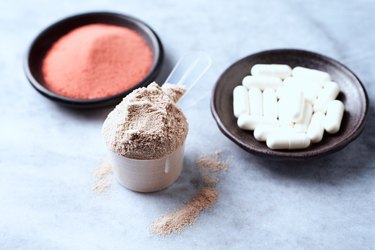
You may be familiar with whey protein as a supplement you drink post-workout to improve muscle development and foster repair. But because it's a natural food, you can include sources of whey protein in your diet without always having to go for a processed powder. Choose from a variety of whey protein foods.
Tip
The most common whey protein foods include dairy foods such as yogurt, cottage cheese and ricotta. Whey is also an additive in foods such as salad dressing and infant formula.
Video of the Day
So, What Is Whey?
Whey is a type of milk protein, and it's the translucent liquid that you see on top of some high-protein dairy products. Once considered a waste product that resulted from culturing milk to make yogurt or cheese, whey is actually full of branched-chain amino acids, functional peptides, immunoglobulins and antioxidants.
Video of the Day
Whey protein composes 20 percent of milk protein, with casein making up the rest. Protein powder is made by separating whey from casein and purifying it.
Read more: Is Whey Protein Good or Bad?
Whey protein is widely considered an exceptional supplement for active people. An analysis published in the journal Nutrients in July 2017 confirmed years of research supporting whey's ability to boost muscle growth. Whey protein supplementation actually stimulates the growth and maintenance of lean mass and improves recovery time following strenuous exercise.
Unexpected Whey Protein Foods
Whey may be used in products you're not expecting to see it in. The Journal of Food Science and Technology came up with a whey products list in November 2015. The paper notes it can be added as an ingredient in:
- Baked goods, including crackers, muffins and bread
- Salad dressings
- Emulsifiers
- Infant formulas
- Medical nutritional formulas
The whey in these products can be in forms known as demineralized whey, sweet whey, acid whey or reduced forms. Reduced forms and demineralized whey are the forms that are used in sports supplements.
Cheese Contains Whey
Ricotta cheese is a major source of whey protein. This unpressed, high-moisture cheese can contain quite a bit of whey, depending on whether it's been made only from whey or from a blend of whey and milk. Sometimes, ricotta is made only from milk.
Other cheeses contain some whey protein. For example, the liquid you see floating on top of cottage cheese when you remove the lid is whey protein. Even hard cheese contains a little whey.
Cow and Goat Milk Whey
About 20 percent of the protein in cow's milk is from whey. Compared to whey protein, cow's milk seems to be similarly effective in stimulating muscle growth when taken post-workout.
A study in an October 2015 issue of Nutrients showed that ingestion of 20 grams of whey protein and milk protein activated muscle protein synthesis in middle-aged men following a workout. The effects were remarkably the same.
The researchers were surprised by the results because whey protein supposedly has a speedier rate of digestion and greater leucine availability. Leucine is an amino acid particularly important for muscle stimulation and growth.
However, research that was published in Nutrients just a year later, in June 2016, found that ingestion of whey protein induced the fastest occurrence of muscle protein synthesis. Milk protein, they found, had an intermediate effect, and casein was shown to have the slowest effect. All three were superior to soy protein when used after exercise.
Goat milk contains proteins similar to that in cow's milk, including whey and casein.
The Whey in Yogurt
Among all the sources of whey protein available for you to choose from, yogurt is one of the best. It also contains calcium, potassium and probiotics to help with your gut health. Go for unstrained versions to get the greatest benefit.
To make Greek yogurt, manufacturers strain out much of the whey, which reduces the liquid content, explains the International Food Information Council Foundation. You're left with about 15 grams of protein per cup, 80 percent of which is casein.
Supplemental Forms of Whey
Whey supplements, in the form of bars, protein powders and ready-to-drink shakes and protein waters, are some of the best sources of whey protein. Whey protein powders come in different forms, each featuring a different type of processing. The type of whey you choose will depend on your specific needs and goals and will also depend on whether you have a problem with lactose intolerance.
For a quick shake, you simply mix protein powder into water, juice or milk. Blend whey protein with different combinations of fruits, vegetables and nut butters of your choice or with some ice to create a tasty meal replacement smoothie or post-workout snack. Protein powder can also be stirred into oatmeal, baked into pancakes or mixed into a savory casserole. Remember to go for the unsweetened, plain flavors for that type of use.
Concentrate, Isolate and Hydrolyzed
When whey is processed, it's dehydrated and lactose, ash and some minerals are removed. Whey concentrate typically contains more biologically-active components and protein, making it quite effective for athletes seeking muscle building and recovery.
Whey protein isolate is the purest form of whey available, but it's far more processed than concentrate. Almost every bit of lactose and fat is removed, so it's safe for those who are lactose intolerant. But, while the protein concentration of whey protein isolate is high, much of the protein is actually unavailable because it's been denatured, meaning that its structure has been destroyed and is less effective.
Hydrolyzed whey protein has been treated with acid and heated to high temperatures to isolate the protein. This manufacturing process is said to make the whey easier to absorb. Research in a January 2017 issue of the Journal of the American College of Nutrition found nearly identical results in muscle growth and markers of recovery between hydrolyzed whey and whey concentrate. The hydrolyzed protein was found to augment fat loss better than the concentrate.
Read more: The Seven Best Protein Bars and Three to Avoid
Protein Bars as a Source
Some protein bars contain whey, but not all. Read the ingredient list to find out the type of protein in your favorite bar. Many bars contain soy protein, and others may use a combination of plant-based proteins.
- Journal of Food Science and Technology: "Emerging Trends in Nutraceutical Applications of Whey Protein and Its Derivatives"
- Journal of Sports Science and Medicine: "Protein — Which is Best?"
- Nutrients: "Whey Protein Supplementation Enhances Whole Body Protein Metabolism and Performance Recovery After Resistance Exercise: A Double-Blind Crossover Study"
- Science Direct: "Ricotta Cheese"
- Bioinformation: "Study of Human Allergic Milk Whey Protein From Different Mammalian Species Using Computational Method"
- Nutrients: "Consumption of Milk Protein or Whey Protein Results in a Similar Increase in Muscle Protein Synthesis in Middle Aged Men"
- Nutrients: "Effects of Whey, Caseinate, or Milk Protein Ingestion on Muscle Protein Synthesis After Exercise"
- International Food Information Council Foundation: "Whey-ing the Options: Which Yogurt is Best?"
- American Dairy Products Institute: "Hydrolyzed Whey Protein"
- Journal of the American College of Nutrition: "Effects of Hydrolyzed Whey versus Other Whey Protein Supplements on the Physiological Response to 8 Weeks of Resistance Exercise in College-Aged Males"
- Dairy Processing Handbook: "Whey Processing"