




















































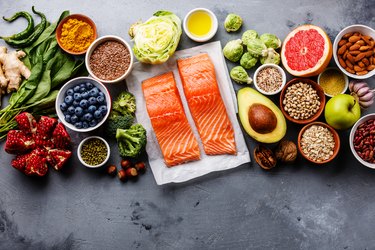















The Atkins diet was first developed in the 1960s but took hold as a popular diet regimen starting in 1992 with the publishing of "Dr. Atkins' New Diet Revolution," which has sold millions of copies since its introduction. The Atkins diet revolves around limiting the intake of carbohydrates due to their ability to encourage the production of insulin, which stimulates storing calories as fat. Before starting the Atkins diet, it's important to take into account some of the possible disadvantages of the plan.
Nutritional Deficiencies
Any diet that involves limiting a specific macronutrient, such as carbohydrates in the Atkins diet, can put you at a higher risk for a nutritional deficiency, especially if you cut out carbohydrate foods that are also high in vitamins and minerals, such as fruits like oranges and bananas. The Mayo Clinic recommends taking a multivitamin or nutritional supplement while on the Atkins diet to prevent these nutritional deficiencies.
Fiber
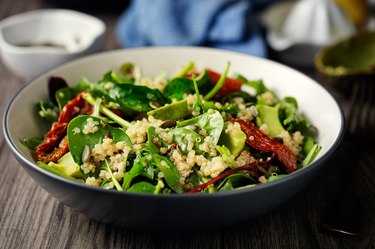
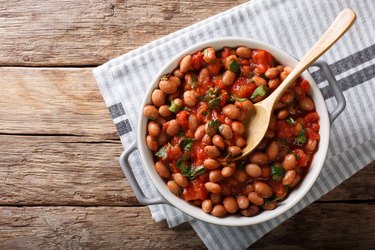
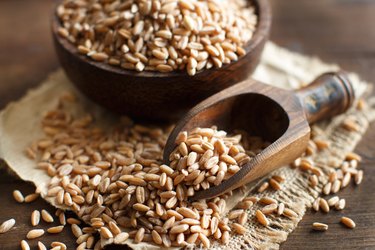
Another disadvantage of the Atkins diet is the lack of fiber that can occur while following the diet plan. Fiber is largely found in higher-carbohydrate foods such as breads, cereals, fruits and legumes. Cutting back on these foods can also cut back on your fiber intake leading to constipation and other possible digestive problems. However, eating plenty of vegetables can help counteract some of this fiber loss.
Restrictive
Another disadvantage to the Atkins diet is how restrictive the diet plan is in regard to what you can and can't eat, especially during the first phase of the plan. This restrictive menu could cause difficulties sticking to the diet until you reach your goal, according to the Mayo Clinic.
Kidney
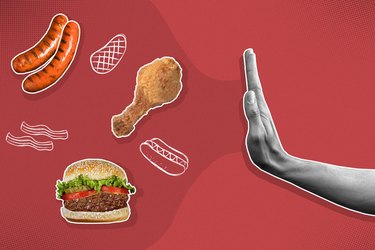
Those with kidney problems, such as renal disease, should not follow the Atkins diet. This is because of the effects a high-protein diet has on the kidneys. High levels of protein force the kidneys to work harder, which can be dangerous for those with pre-existing kidney health issues, such as renal failure. However, those with normal renal function should not have an adverse effect to the higher-protein diet, according to the American Academy of Family Physicians.
Pregnancy Considerations
Carbohydrates are an essential macronutrient during pregnancy. This makes the Atkins diet, especially the initial induction or weight-loss phases of the plan, not appropriate for those who are currently pregnant. Carbohydrates are needed to help fuel the development of the fetus as well as maintain the health of the mother.


Member Comments