





























































What Are the Causes of Broken Blood Vessels on The Face?

What Are the Causes of Broken Blood Vessels on The Face?
Photo Credit woman rosacea image by robert mobley from Fotolia.com

Facial blood vessels dilate easily, according to SmartSkinCare.com, causing abnormally enlarged veins near the surface of the skin. Known as telangiectasia, these capillaries, or tiny blood vessels, may be over-extended in diameter and can range from 0.05 mm to 3 mm wide. Telangiectasia are normally asymptomatic, but, in some cases, may be indicative of a more serious disease. Once established, the condition is hard to treat, making prevention the best line of attack.

Rosacea

Rosacea is a disorder of the skin that can cause redness, bumps, pustules and telangiectasia on the face. The National Rosacea Society states there is no known cause for the chronic disorder, although studies indicate that a protein called cathelicidin may cause an inflammatory response of the skin that may affect the capillaries.

Sun Exposure

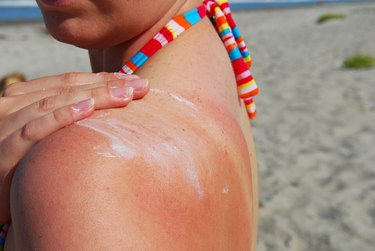
SmartSkinCare.com states that excessive exposure to the sun may cause telangiectasia. The sun's rays tend to damage blood vessel walls and prolong dilation of the veins. This over extension may lead to spider veins and broken capillaries under the skin. Factors such as age, hormonal changes and genetics also play a role in susceptibility to telangiectasia.

Liver Disease

Spider angiomas, or spider veins, may be seen in those suffering from liver disease. According to a study cited in a May 1999 article in "Scandinavian Journal of Gastroenterol," of the 82 men and women studied who had cirrhotic livers, 27 had spider veins. Of those, 41 percent suffered from alcoholism.

Telangiectasis is also seen during and after pregnancy with no relation to liver disease.

Ataxia-Telangiectasia

Ataxia-Telangiectasia is caused by a rare genetic disorder that affects one in 100,000 babies born in the United States. According to Louisiana State University School of Medicine, symptoms become evident between 1 and 4 years of age and include ataxia, or difficulty with balance, a compromised immune system presenting in numerous upper respiratory events and telangiectasia on the face and in the eyes.

References

Article reviewed by Mia Paul Last updated on: Mar 18, 2011

Must see: Photo Galleries