










































Scar Removal Methods

If a scar limits your movements or makes you feel self-conscious, you may be considering scar removal treatment. Though complete scar removal isn't always possible, scar revision can help make scars less visible. Your doctor can recommend the best revision method for you based on the location and type of scar.

Gels and Fillers

Topical gels can be helpful in reducing the size and color of existing scars. Gels are available in over-the-counter and prescription forms. If you have concave scars, your doctor may recommend treatment with an injectable filler that plumps up the scarred area. The American Society of Plastic Surgeons reports that one form of injection therapy uses steroidal-based compounds to reduce collagen formation and alter the appearance, size and texture of raised scar tissue. Collagen is a connective tissue protein that helps support the skin. Scars can form when too much collagen is produced.

Chemical Peels

Removing the top layers of skin with a chemical peel can make a scar less visible.
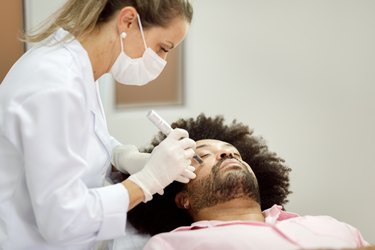
During a chemical peel, your doctor applies special chemicals to the scarred area, causing the top layers of skin to separate and slough off, revealing smoother skin with a more even skin tone. Chemical peels are not helpful for deep scars, according to the American Academy of Dermatology.

Dermabrasion

Dermabrasion is also used to remove the top layers of skin containing a scar. Doctors use a handheld device equipped with a diamond head or wire brush to mechanically scrape away the top layers of skin. The scraping continues until the surgeon reaches the safest level that make the scar or wrinkle less visible, according to the American Society of Plastic Surgeons.

Laser Treatment

Doctors use laser treatments to reduce the appearance of keloid, hypertrophic and atrophic scars, according to the Consumer Guide to Plastic Surgery. Hypertrophic scars are raised red scars that form over the wound site. Keloid scars are also red and raised but grow beyond the wound margins. Atrophic scars are small, depressed scars, such as the type that may occur if you have had severe acne. Some layers burn away the top scarred layer of the skin; others stimulate collagen growth in deep skin layers.

Surgery

Some scars are so large that they require surgical removal. During surgery, doctors can also move a scar to make it less visible or increase mobility if a contracture limits movement. Contractures form when an injury or burn causes significant tissue loss. These scars may also develop if the wound occurs over a joint. Contractures form when tissue and skin pull together too tightly, limiting movement of the affected body part and causing pain. If there is not enough tissue available to close the incision after scar removal, pharmaceutical tissue substitutes can be used, according to the American Society of Plastic Surgeons. Surgeons may also place an inflatable tissue expander under the skin before surgery. The expander stretches the skin, allowing doctors to remove the scar and stitch together the incision without the need for skin grafts.

References

Article reviewed by Anton Alden Last updated on: Sep 25, 2010

Must see: Photo Galleries

Member Comments