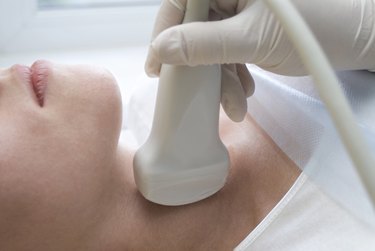
Thyroid surgery may consist of a biopsy or lumpectomy, in which only a small portion of the gland is removed, or a lobectomy, in which half of the gland is taken out. More complete removal of thyroid tissue is called a thyroidectomy. Doctors may recommend thyroid surgery for a number of reasons, including a suspicious nodule, cancer or a benign nodule or goiter that is causing symptoms. Recovery from thyroid surgery is generally quick, and you will be able to return to all your normal activities and exercise routines following your recovery.
Post-Operative Activity
Video of the Day
Your doctor will most likely encourage you to be up and walking soon after you have sufficiently recovered from the effects of anesthesia. For the first few days after surgery, you will experience some degree of pain at the site of the incision, and you may have discomfort when swallowing. You should avoid any physically taxing work or exercise until after you see your doctor at your post-operative appointment, usually scheduled for seven to 10 days after your operation. At this time he will evaluate the progress of your healing and you can ask him if any modifications are necessary as you return to your favorite kinds of exercise.
Video of the Day
Neck Exercises
Thyroid surgery necessitates that you have your neck extended, or bent backwards, for the duration of the operation. This may result in a muscle spasm leading to neck pain and tension following surgery, particularly in those individuals with pre-existing neck problems. The Endocrine Surgical Unit at the University of Sydney recommends that patients perform neck exercises both before and after surgery to help reduce any muscle strain. These gentle stretches include flexion and rotation of the sternocleidomastoid muscle, flexion and extension of the posterior neck muscles, lateral side bends to stretch the sides of the neck and shoulder shrugs to relax the back and sides of the neck.
Vocal Exercises
Thyroid surgery can sometimes cause bruising or injury to your recurrent laryngeal nerve, which affects your speaking voice. Five out of every 100 thyroidectomy patients experience hoarseness for up to six months, according to the Weill Cornell Medical College Department of Surgery. If you continue to have problems with a hoarse or weak voice, you may require voice therapy. Through individualized exercises, a trained voice therapist can assist you in developing coping strategies to achieve a more normal-sounding voice.
Considerations
The incision on your neck will heal quickly and eventually become hardly noticeable. New scar tissue is vulnerable to the ultraviolet rays of the sun, however. Especially for the year after surgery, you should protect your scar from the sun to achieve the best appearance. Once your incision has healed, use a sunscreen with a high SPF on your neck whenever you are participating in exercises that require you to be outdoors, such as swimming, bicycling or hiking.
- American Thyroid Association: Thyroid Surgery
- EndocrineSurgeryNC: Postoperative Care Following Thyroid Surgery
- University of Sydney: Endocrine Surgical Unit - Neck Exercise for Thyroid and Parathyroid Surgery
- Weill Cornell Medical College Department of Surgery: Endocrine Surgery - FAQ About Thyroid Disease
- New York Eye and Ear Infirmary: Voice and Swallowing Institute - Neurological Trauma & Disease Vocal Program - Vocal Fold Paralysis