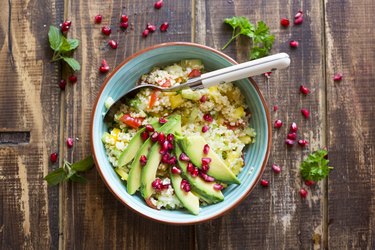
Bulgur wheat is a staple of Middle Eastern cuisine, traditionally used to make pilaf and tabbouleh. This chewy grain is made by parboiling, drying, cracking and milling wheat berries, or whole wheat kernels. Its mild flavor, nutty taste and short cooking time makes this nutrient-rich grain a popular and versatile addition to the diet.
Bulgur is convenient to make since its preparation simply requires soaking in warm water. Available in fine, medium and coarse grain, bulgur is a tasty and nutritious addition to soups and salads and works well in pilaf recipes. What's more, whole grains such as bulgur boast numerous health benefits and play a role in preventing and managing several health conditions.
Video of the Day
Video of the Day
Bulgur Nutrition
One cup of cooked bulgur contains about 142 calories, a half gram of fat, 34 grams of total carbohydrates (less than one gram of sugar, 8 grams of fiber) and about 6 grams of protein, per the USDA. This whole grain is also naturally low in fat and sodium, cholesterol free, and a good source of the minerals iron, magnesium and manganese.
In addition, bulgur is a rich source of antioxidants and phenols, a group of protective plant compounds, a December 2011 study in the International Journal of Food Sciences and Nutrition found.
Gut Health Benefits
Whole grains, including bulgur, are rich sources of gut-friendly dietary fiber, according to the American Heart Association. Most of the fiber found in bulgur is insoluble, which increases stool bulk and helps to speed transit of stool through the intestines. Whole grains, with the help of adequate fluids, work to soften stools and prevent constipation.
The oligosaccharides and resistant starch found in bulgur are carbohydrates that resist digestion and act as prebiotics, enhancing the growth and activity of the health-promoting bacteria in the gut, a March 2015 study in Advances in Nutrition reports.
An April 2017 study in the Journal of Translational Medicine demonstrates that a healthy gut microbiome has a profound impact on health and may improve immunity, metabolic processes in the body and decrease inflammation.
Diabetes, Heart Health and Anti-Cancer Benefits
Whole grains, including whole wheat and bulgur, are linked to improved blood sugar control, a benefit in part associated with their slower digestion, which leads to a slower rise in blood sugar after meals, a July 2012 study in The Journal of Nutrition found.
Whole grains and other high-fiber foods may also improve blood sugar control by enhancing the action of insulin and favorably impacting gut health, per the Harvard T.H. Chan School of Public Health. Whole grains also improve fullness after meals, helping to control appetite.
A meta-analysis published in the June 2016 issue of Circulation reported that two to three daily servings of whole grains reduced the risk of type 2 diabetes by 21 to 32 percent. One serving of whole grains may be a half cup of cooked bulgur, one slice of whole wheat bread, or a half cup of cooked oatmeal.
Consumption of whole grains such as bulgur is also associated with a reduced risk of heart disease, cancer and a reduction in the overall risk of death, the 2016 Circulation study found. Specifically, people who ate three to five daily servings of whole grains had a 21 peercent lower risk of heart disease and were less prone to weight gain.
In addition, bulgur and other whole wheat foods contain antioxidants, nutrients and other protective plant chemicals that promote health by protecting the body from damage.
An August 2015 study in Food and Energy Security explains that wheat contains a "range of essential and beneficial components to the human diet" including protein, B vitamins, dietary fiber, and phytochemicals. The study highlights that wheat's fiber is linked to a reduced risk of heart disease, type 2 diabetes, and certain forms of cancer.
Precautions
While bulgur is considered a nutritious and healthful food, not everyone should consume this whole grain. For instance, anyone with a wheat allergy should avoid bulgur.
In addition, bulgur is a source of gluten, so anyone with celiac disease or gluten sensitivity will need to choose gluten-free options instead. If you have been told to restrict dietary fiber, also discuss the use of bulgur with your doctor or dietitian.
- International Journal of Food Sciences and Nutrition: "Bioactive Healthy Components of Bulgur"
- Journal of Translational Medicine: "Influence of Diet on the Gut Microbiome and Implications for Human Health"
- Food and Energy Security: "The Contribution of Wheat to Human Diet and Health"
- Circulation: "Whole Grain Intake and Mortality From All Causes, Cardiovascular Disease, and Cancer: A Meta-Analysis of Prospective Cohort Studies"
- The Journal of Nutrition: "Greater Whole-Grain Intake Is Associated with Lower Risk of Type 2 Diabetes, Cardiovascular Disease, and Weight Gain"
- Advances in Nutrition: "Microbial Degradation of Whole-Grain Complex Carbohydrates and Impact on Short-Chain Fatty Acids and Health"
- USDA: "Bulgur, cooked"
- American Heart Association: "Whole Grains, Refined Grains and Dietary Fiber"
- Harvard T.H. Chan School of Public Health: "Whole Grains"
Is this an emergency? If you are experiencing serious medical symptoms, please see the National Library of Medicine’s list of signs you need emergency medical attention or call 911.