



























































Angina occurs when blood vessels become clogged and reduce the flow of blood to the heart. The chest pains associated with angina cause a severe pressure on the chest, report doctors at the Mayo Clinic. Angina is one of the symptoms of degenerative heart problems or coronary artery disease that can recur whenever the patient exerts himself, or it can be an unstable form of the condition that comes on suddenly, often precipitating a heart attack.
Chest Pain
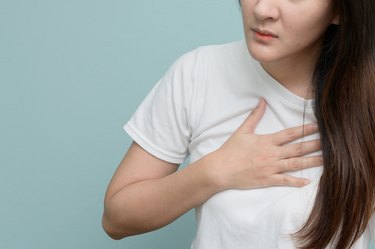
The chest pain associated with angina is a crushing pressure that is often described as a vise squeezing the area. Some patients describe the feeling as being like someone is standing on their chest. The pain may feel like the chest is full and ready to explode. Chest pain typically appears in the center of the chest during an angina attack. Women might feel the chest pain in more stabbing or pulsating forms. The severity of the pain may vary. When the pain increases significantly, it could signal the onset of a heart attack.
Nausea
Nausea that feels like gas or indigestion could be a sign of an angina attack. The nauseous feeling typically passes within 5 or 10 minutes and goes away when the patient lies down or takes angina medicine. Nausea often occurs while the chest pain is going on as well. Doctors at the Mayo Clinic report that women are more likely to experience nausea during angina attacks than men.
Other Signs
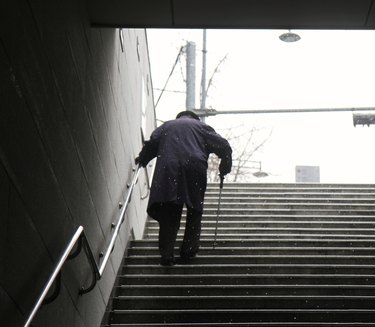
Other signs of angina include fatigue, dizziness and sweating, usually at the same time as the tightening chest pain. Some patients experience shortness of breath, particularly when climbing stairs. At times, the pain spreads down the arms and hands or across the back or in the throat. Dizziness can characterize an angina attack and often is predictable, happening during activities when the patient previous became dizzy and had pressure on the chest.
Anxiety
Patients usually feel anxious when angina symptoms appear. The attacks often are precipitated by an emotionally difficult situation or stress. At other times, the anxiety can appear for no apparent reason, even when the patient is at rest. Extreme temperatures can trigger the anxiety that brings on chest pains, report doctors at the American Heart Association. On the other hand, variant angina, also called Prinzmetal's angina, occurs when there is no emotional stress going on, particularly when the person is at rest. Variant angina often strikes while there is the least amount of stress, between midnight and 8 a.m.


