































Entropion in Children

Entropion in Children
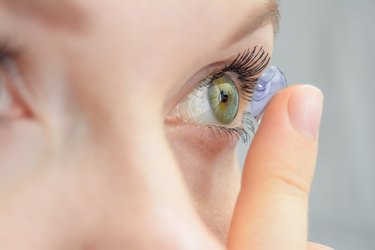
Photo Credit auge b/w image by sun_orbiter from Fotolia.com

Entropion is an eyelid abnormality---rare in children---that causes irritation and discomfort, according to the Mayo Clinic. Most common in adults, the condition may occur at birth or develop during childhood. Proper medical diagnosis and treatment are necessary to avoid serious health complications. By learning more about the condition and treatment options, you can recognize the warning signs and prevent permanent eye damage in your child.

Identification

Entropion is a rare condition in children in which the edges of the eyelid turn inward, the American Society of Ophthalmic Plastic and Reconstructive Surgery explains. The condition may be present at birth. In most cases, it affects the lower eyelid, adds the Mayo Clinic.

Causes

The Mayo Clinic links abnormal fetal development with entropion in babies. Babies with the condition also tend to have an extra fold of skin on the upper or lower eyelid known as epiblepharon. According to Meltem F. Soylev and colleagues in a February 2005 article in the "Journal of the American Association for Pediatric Ophthalmology and Strabismus," congenital entropion may be associated with other anomalies, including cardiovascular, musculoskeletal and central nervous system abnormalities.

In older children, additional causes of entropion include scarring or skin diseases and infections or previous eye surgery. Eye skin scarred from trauma, surgery or chemical burns can affect the natural curve of the eyelid, leading to entropion, the Mayo Clinic reports. Skin infections or disease such as ocular herpes are also a risk factor for entropion.

A study by Nonette Y. Pasco and colleagues in the March/April 2007 issue of "Ophthalmic Plastic and Reconstructive Surgery" identified facial paralysis in pediatric patients as another cause of lower eyelid entropion. The authors noted reduced muscle function from the paralysis as a contributing factor.

Symptoms

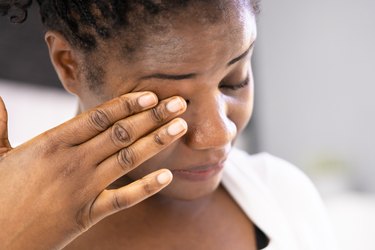
Children with entropion display several symptoms. When the eyelid turns inward, it rubs against the eye, causing redness, irritation, pain, watery eyes and sensitivity to light and wind, the American Society of Ophthalmic Plastic and Reconstructive Surgery notes. In babies, symptoms are less severe because their lashes are soft, reducing irritation on the eye and damage to the cornea, explains Medline Plus.

Complications

Entropion can have serious consequences in children. Left untreated, it can result in eye infections, scratching of the cornea and corneal ulcers, according to Medline Plus. Corneal ulcers, which are open sores on the cornea, can lead to light sensitivity, vision loss or scarring, adds the Mayo Clinic.

Treatment

Artificial teardrops are a temporary, first-line treatment for entropion in your child. The drops help to lubricate the cornea and relieve dryness, Medline Plus explains. Alternatively, your child's doctor may opt to turn your child's eyelid outward using two or three stitches in certain spots along the base of the eyelid, explains the Mayo Clinic. A doctor may also inject botulinum toxin into the lower eyelid to reverse the condition. This procedure is successful in adults, and a July 2004 case study in the "American Journal of Ophthalmology" suggests that it is also beneficial for treating babies with the condition. According to Gregory Christiansen and colleagues, a 3-week-old infant treated with 5 units of botulinum toxin for entropion showed no recurrence of the condition seven months later.

In severe cases, a doctor will use a surgical procedure under local anesthesia to treat entropion. A number of techniques exist but the most common aims to tighten the eyelid to return it to its normal position, according to the American Society of Ophthalmic Plastic and Reconstructive Surgery. Symptoms usually disappear immediately after surgery.

References

Article reviewed by Nancy Jacoby Last updated on: Oct 3, 2010

Must see: Photo Galleries

Member Comments